
Estimate spray painting cost per part over a run of hanging racks in one color. Add the cost of the booth time, the labor that loads and unloads the frames, and the paint and consumables used. Book the full cost of the color change to the run that required it. Divide the combined run cost once, by the number of parts that pass inspection. A faster spray pass only changes the estimate if it reduces a resource charge or frees a bottleneck.
Why the rack is the right starting point
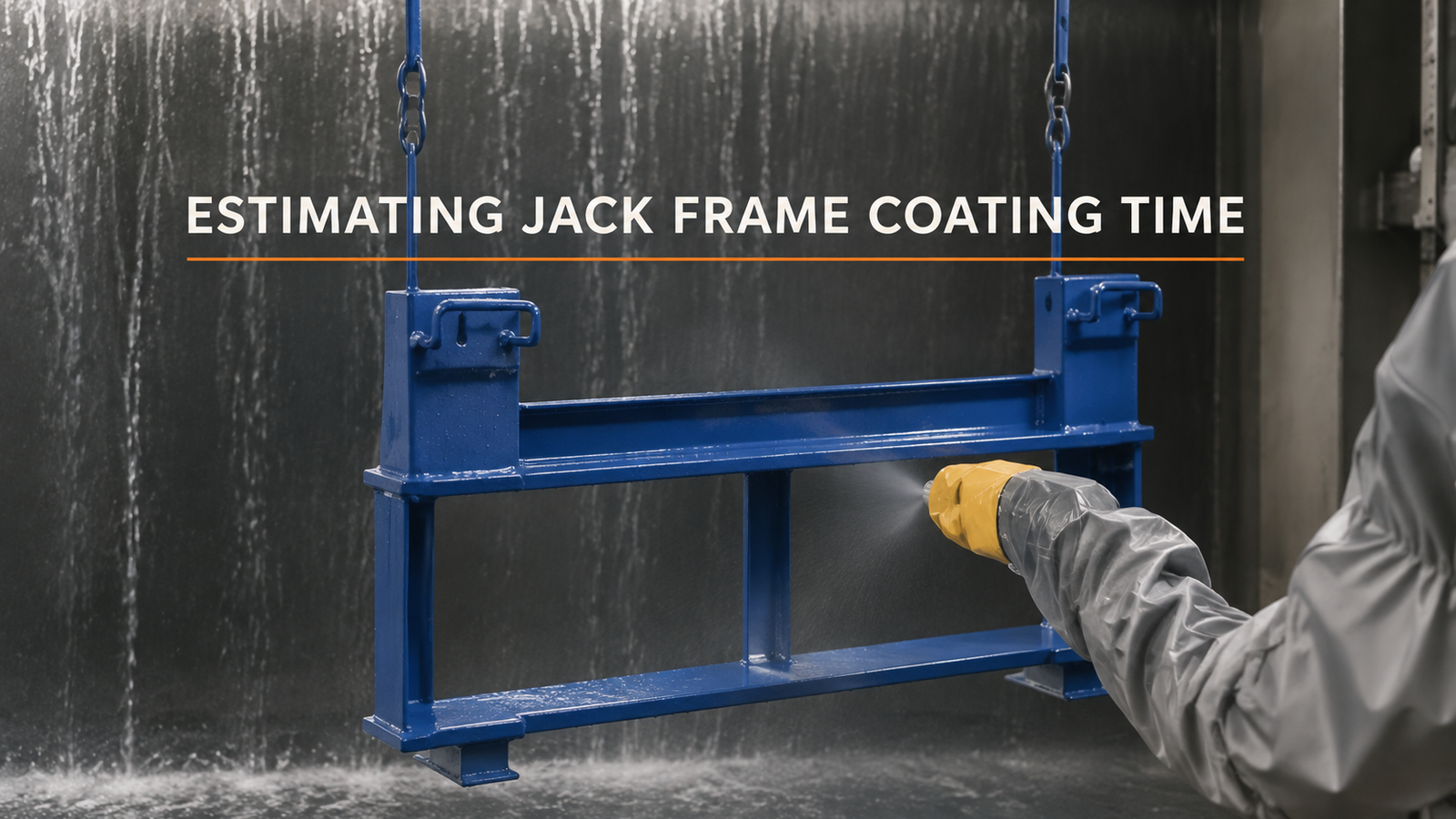
The filmed jack frame hangs in front of a water curtain. The spray gun approaches its upper and lower rails, end plates and feet from different directions. On a proposed line, load a rack as it would be loaded in production. Check access to the lower rails and end faces with neighboring parts in place. Use the highest rack load that still meets the agreed finish criteria, then pay attention to how many of those parts are accepted. A loosely loaded trial rack can hide access problems that cut the usable count.
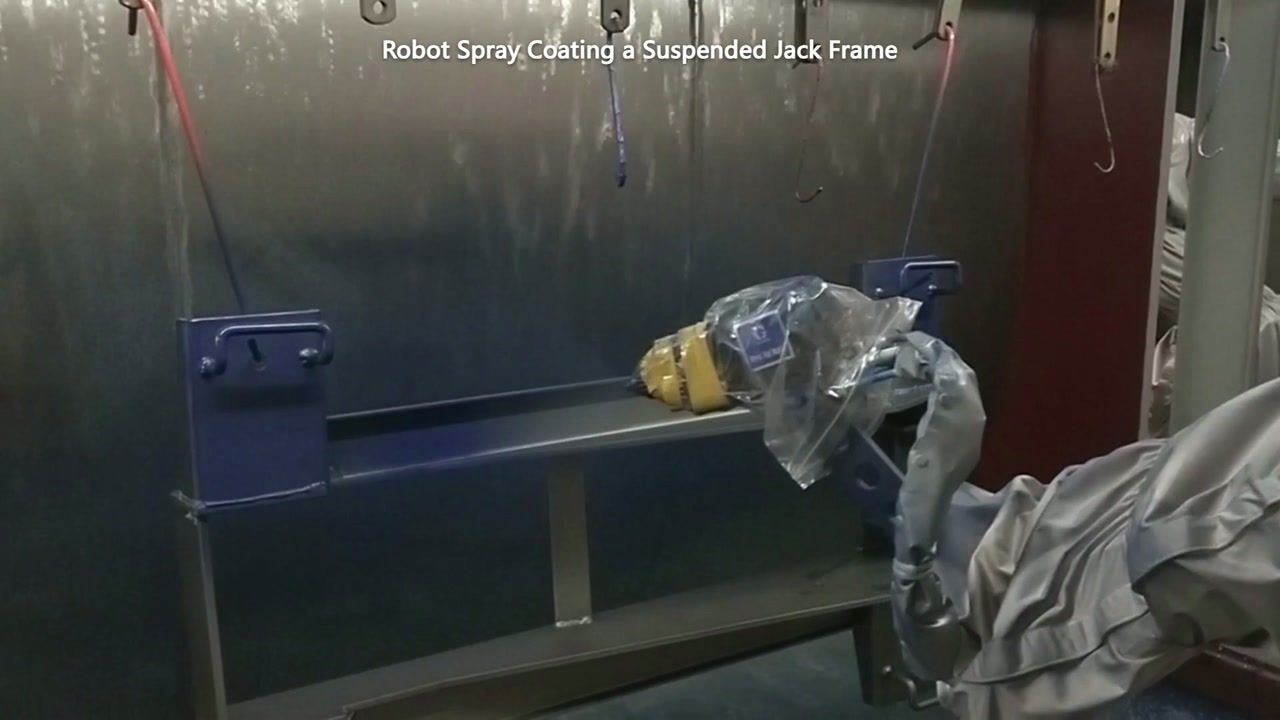
00:19 in the video. The spray gun approaches the upper rail and the end of the suspended frame.
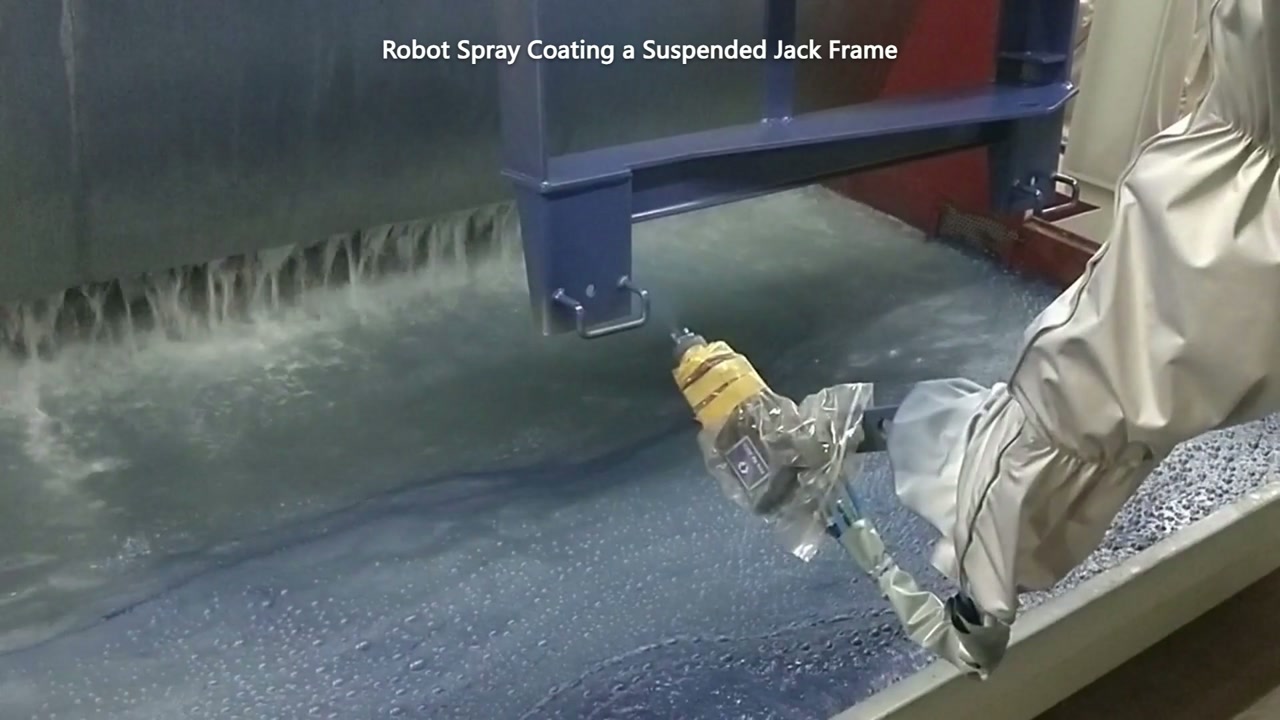
00:42 in the video. The gun turns downward toward the lower rail and foot area.
Keep three records for each color run
- Booth record. Separate the spray pass from the time the booth is occupied. For a liquid paint system that flushes and refills during a color change, time the interval when the change prevents production. Capture the paint or cleaning material used during the change as a separate consumables entry.
- Labor record. Record the actual minutes spent hanging, unloading, inspecting and handling rework, attributed to the people doing each task. If one operator hangs the next rack while another rack is sprayed, both resources carry cost. Those overlapping minutes occupy one interval on the production clock.
- Output record. Count the accepted frames in the run, including reworked frames only after acceptance. Record rework time and consumables in the numerator. If you already include these amounts in a supplier rate, keep the same boundary across quotes to avoid charging them twice.
Estimated cost per accepted frame = (booth cost + labor cost + paint and consumables cost + other agreed charges) ÷ accepted frames in the color run. Apply the relevant cost-per-minute rate to each timed resource. Compare two offers at the same color sequence and finish criteria. A quote that spreads one change over a full rack run and another that spreads it over a short order are quoting different operating conditions.
For capacity, time the interval between accepted racks at the output once the line settles. If loading takes longer than spraying and there is no ready rack when the booth clears, improving the spray pass alone will leave the output interval unchanged. If you are evaluating similar frames, share a rack photo, typical counts per color and the planned color sequence to discuss which activities to time for a comparable quote.