
By 以物思编辑团队 · 经审核 以物思编辑团队 · 最后更新日期:2026年10月19日
方法:有界案例视频分析和工程参考 编辑政策 · 纠正政策 · 条款
Robot tending for a long part depends on three connected handoffs: establish a repeatable grip at the left machine or holding station, control the part’s far-end sweep through the route, then place it on the right roller table with a clear gripper exit. The case video shows an orange industrial robot gripping a long metal rod-like part and moving between those two stations.
请求对机器人转移概念和循环研究进行审查 with the part drawing, daily output target, incoming presentation and roller-table layout.
沿着两个交接区之间的路线行进
The left machine or holding station and the right roller table define the two ends of the visible route. Between them, the robot changes position and end-effector orientation. This repeated motion gives the project team a practical starting point for defining pickup, retained transfer, placement and withdrawal as one continuous sequence.
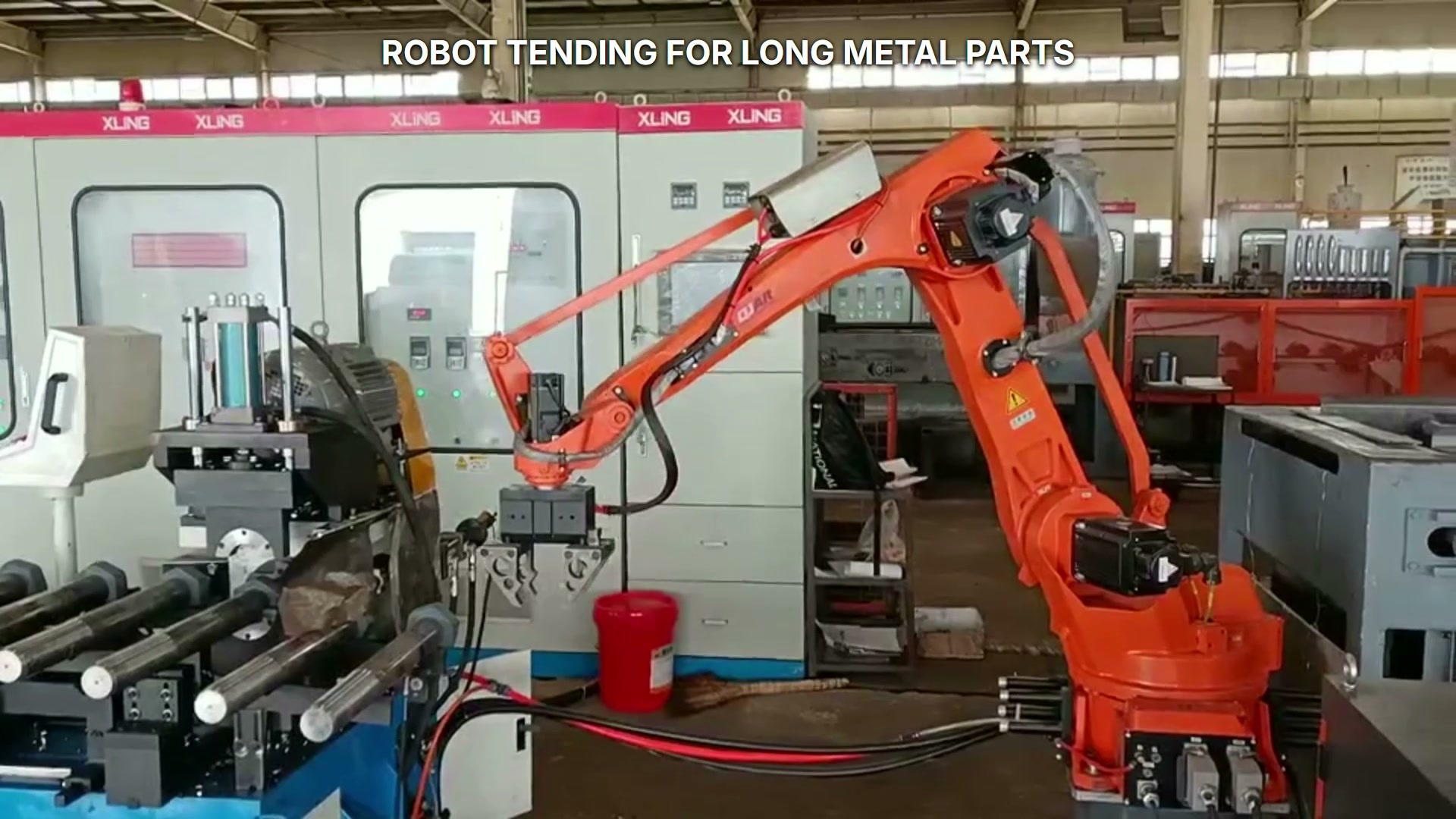
Route overview: the robot connects the left machine or holding station with the right roller table receiving area.
定义一个可重复的拾取条件
Long-part pickup starts with the part datum, grip location and the unsupported length on each side of the gripper. The project must provide geometry, mass, center of gravity, stiffness, permitted contact zones and incoming position variation. The left station should support the part without blocking the gripper approach or withdrawal.
记录零件日期和允许取货的状态。如果多个零件或变体进入同一工位,则需定义控制系统如何识别正确的零件位置并进行编程。只有在明确这些条件后才能选择传感功能。
Check the complete long-part load path
A gripper creates a local holding region, while the long part extends beyond it and reacts to acceleration, orientation changes and external disturbance. Tool design should consider jaw geometry, contact materials, grip force, part retention confirmation and tool stiffness. Part geometry, mass, center of gravity, stiffness and permitted contact areas are necessary inputs.
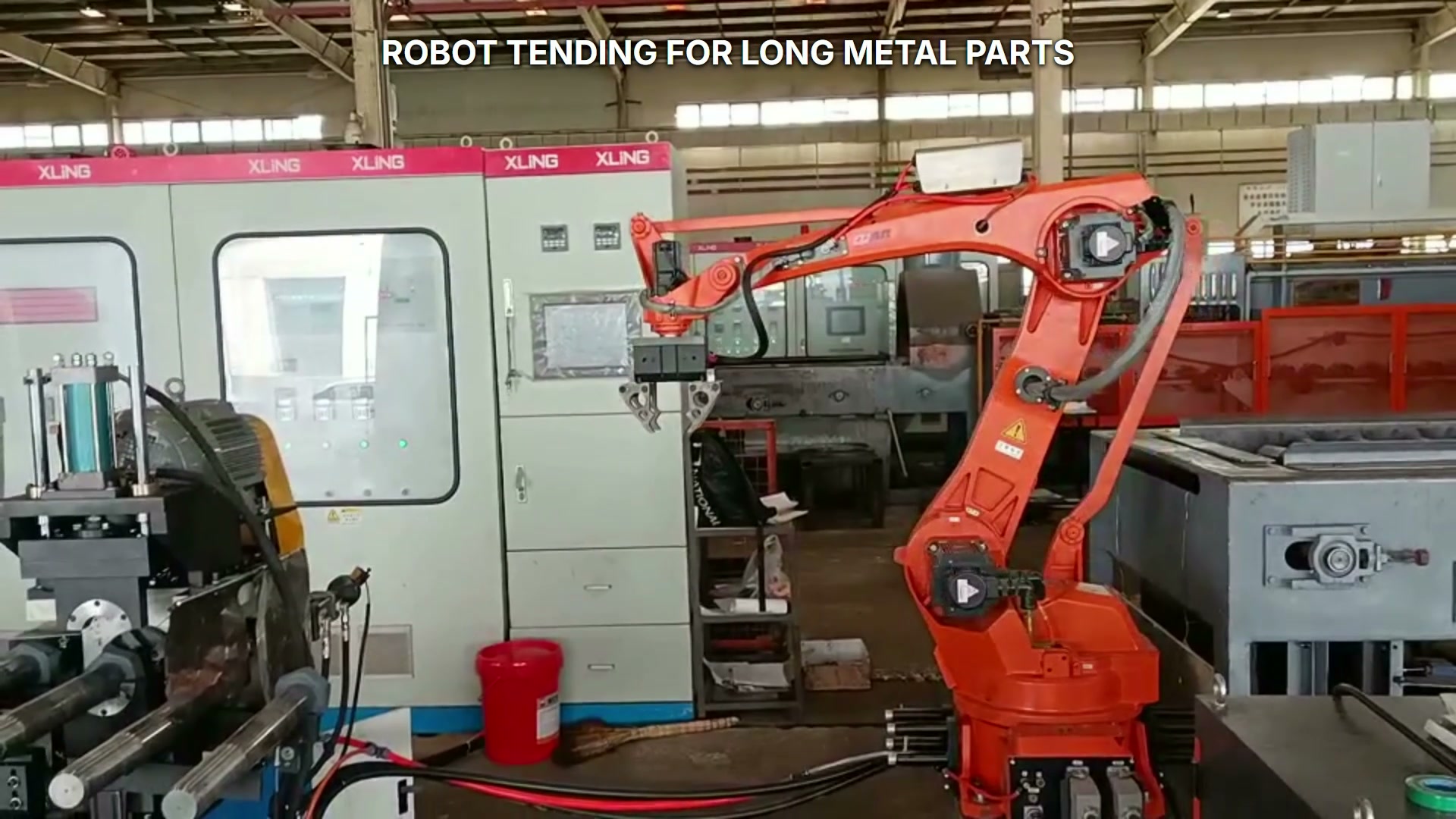
Rear-station view: the robot positions its gripper above the station.
Validate the complete tool-and-part envelope rather than the robot tool-center point alone. Include jaws, brackets, services and both ends of the longest expected part. Review clearance at the left machine or holding station, along the connecting motion and above the receiving area.
将工程决策与项目输入相匹配
| 工程决策 | 项目所需投入 | 验收 |
|---|---|---|
| 取货演示 | 零件图、进料位置、可用基准和表面状况 | 该工具到达规定的接触区域后撤离,不会干扰供气站。 |
| Gripping tool | Part mass, center of gravity, stiffness, contact restrictions and jaw data | 代表性部件在每次经过验证的方向和运动中都能得到支撑。 |
| 转运路线 | 机器人型号、安装位置、工具几何形状、软管和周围设备 | 整个机器人、工具和零件的体积范围可以清除两个工位和连接路径。 |
| Roller-table receiving area | Roller geometry, placement datum, allowed area and access direction | 零件到达预定接收区域后,工具无接触退出。 |
| 序列和信号 | 零件可用、握把确认、接收区域许可和释放确认 | 每一次转变都始于一个已识别和确认的状态。 |
| 生产目标 | 日产量、产品组合、补货计划和允许等待时间 | 代表性试验在约定的条件下测量整个序列。 |
| 恢复和访问 | 停止状态、访问任务和现场安全要求 | 团队可以确定零件位置并执行受控回收。 |
此表将应用因素与工程选型分开。它还为买家提供了一个共同的基础,用于比较工具概念、机器人位置和工位布局。
Define the roller-table handoff and tool exit
The receiving area needs a datum or permitted placement zone, an approach direction and enough space for the gripping tool to release and withdraw. Define how the part remains supported after release and how the system confirms that the receiving area is ready for the next transfer.
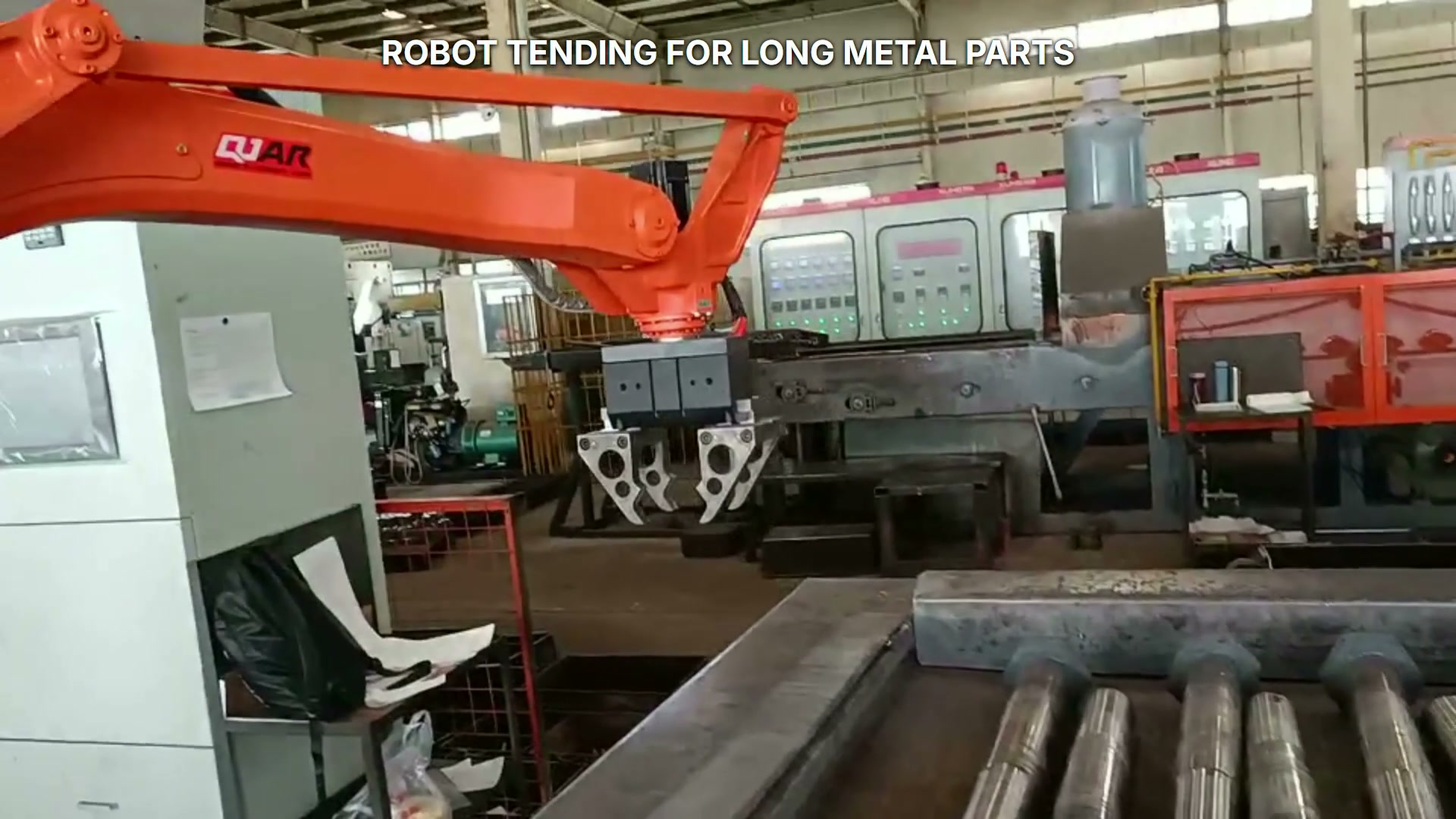
Roller-table view: the robot positions its gripper near the right roller-table station.
Include roller-table position variation, replacement or replenishment tasks and access for recovery in the layout review. If the real project requires a pattern, layer or separator sequence, those requirements must be supplied as project inputs and verified during trials.
根据权限和确认信息构建序列
一个有效的控制序列可以用六个条件来表示:
- 确认供应站是否有所需的正确零件。
- Enter the pickup zone and engage the gripping tool at approved contact areas.
- 提货前请确认项目所需的保留部分条件。
- 进入接收区前,请确认接收区已准备就绪。
- 将零件放置在规定的放置基准点或区域,然后释放并撤回。
- 在允许下一个站点操作或传输之前,请确认接收状态。
实际的传感器、阈值和控制架构应根据零件、工具和场地进行选择。代表性试验应包括正常转移、零件缺失、运动中断和受控恢复等情况。
围绕实体部分制定恢复计划
After a stop, the part may remain at the supply station, be held by the gripping tool or rest in the roller-table station. Recovery starts by identifying that physical state and the permission status of both zones. A defined recovery route should prevent a second pickup, an unintended release or entry into an occupied area.
OSHA的 工业机器人系统技术指导 机器人应用被描述为集成系统,其中可以包括末端执行器、工作台、夹具、工艺设备和其他机器。 机器人标准概述 为美国一体化、安保和危险能源相关参考资料提供了一个起点。合格人员必须根据具体国家、设备和任务确定适用的路径。
测量完整的申请流程
循环评估应使用明确的起始状态和结束状态,并包括零件的准备、取货、抓取确认、转移、放置、释放、取出和工位等待。测试代表性零件以及预期的工位变化。记录任何影响计划生产日的补货、换型和恢复步骤。
验收应确认取货通道畅通、物料转移顺利、路线畅通、接收区域放置妥当、工具退出、受控停止和回收等情况。任何放置公差或表面验收要求均须出自项目规范,并按约定条件进行测量。
To discuss a long-part machine-tending project, 将零件图纸和每日产量目标发送给EVST以及供货和收货区域的布局。 机器操作申请页面 提供更多项目范围界定背景信息。
买家经常问的问题
买家首先应该准备哪些信息?
Start with the part drawing, mass, center of gravity, stiffness, permitted grip areas, incoming presentation, roller-table geometry and daily output. Add product variants and replenishment tasks so tooling and layout can be reviewed together.
How should a gripping tool be evaluated?
Review jaw geometry, contact material, grip force, retention confirmation, service routing and tool stiffness against representative parts. Validate every required orientation and motion under agreed trial conditions.
实际接收区域的定义是什么?
Provide a placement datum or allowed zone, roller-table position variation, approach direction, support after release and clear tool withdrawal. Include roller-table access and replacement tasks in the layout.
何时应该测量周期时间?
在两个交接区之后,对完整路线、控制权限和恢复状态进行测量,并选取具有代表性的部分进行分析。测量内容应包括项目定义的实际站点等待时间和补给活动。
Footage boundary: the video shows an orange industrial robot gripping a long metal rod-like part and moving between a left machine or holding station and a right roller table; it does not establish the specific machining process, material grade, robot model, payload, cycle time, placement accuracy, sensing method, production benefit, customer identity or installed safeguarding.