
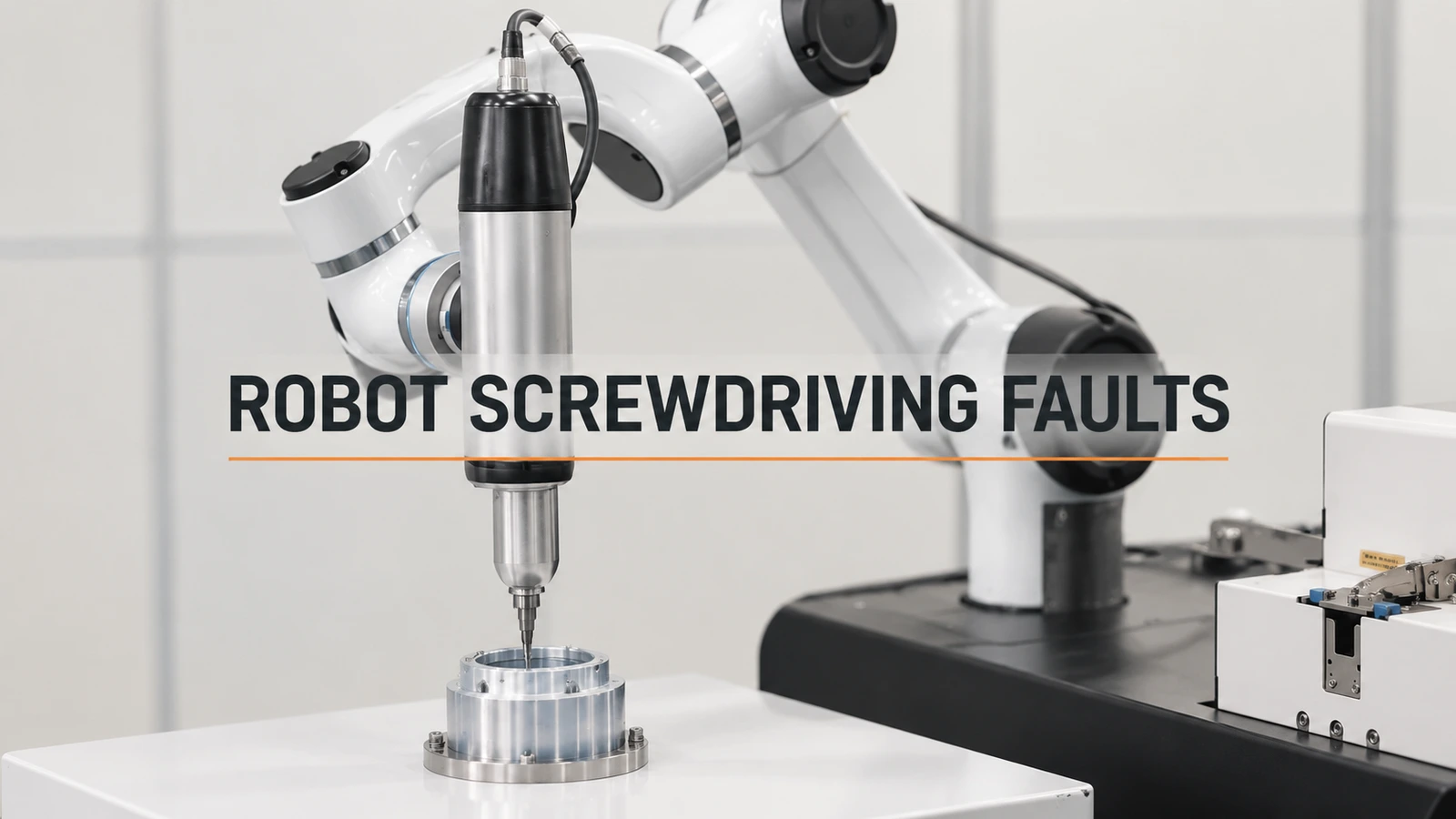
When an automatic screwdriver occasionally leaves a screw high, diagnose where the sequence first departs from normal. A missing screw at pickup, a misaligned entry and abnormal resistance during rundown call for different changes. Raising the final torque before separating those stages can leave the original cause untouched.
Follow the fastener before adjusting the tightening program
The example moves between a screw-presenting station and positions around a ring-shaped metal component. Close views show the tool approaching the presenting position; wider views show it lowering and lifting over the workpiece.
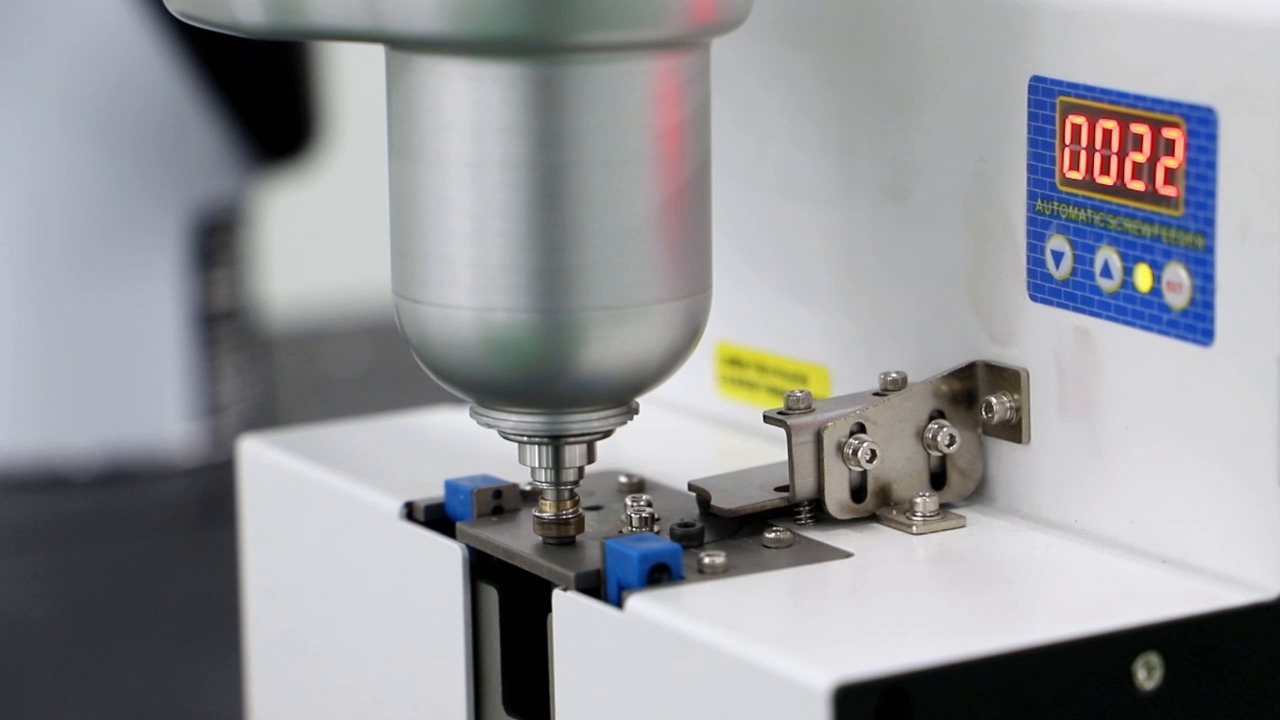
00:10 — The tool approaches the fixed screw-presenting position.
For a similar project, we start with a staged trial using the proposed screw, tool and workpiece. The first question is whether the fastener reaches the next stage in the intended position. Only after that is repeatable does a tightening adjustment have a useful context.
| First observed problem | What to inspect before changing settings | Trial that separates the cause |
|---|---|---|
| No screw reaches the tool | Presentation position, screw orientation and tool engagement | Repeat pickup with actual production fasteners, including after replenishment |
| The screw is acquired but lost during transfer | Retention arrangement and transfer motion | Observe the fastener from pickup through approach, rather than checking only the feeder |
| Resistance occurs as entry begins | Hole alignment, guidance and workpiece support | Compare a correctly located sample with an agreed offset sample under a controlled trial procedure |
| The head remains high after the tool stops | Entry condition, hole/thread condition and actual seating | Compare the physical joint with available depth or tightening data; use known faulty samples to test the proposed rejection |
The table describes diagnostic trials, not defects observed in the recording.
Pickup and blow feeding need different evidence
A station that presents a screw for the tool to collect is different from a system that blows screws through a hose into a nosepiece. The fastener geometry and access space influence which is suitable. We would request trials with the real screw and its expected supply condition, rather than accept a demonstration with an easier substitute.
In a pickup trial, watch what happens after the tool leaves the station: a repeatable presenting point is of little value if the fastener is not retained during the transfer. Include replenishment and a missing-fastener condition in the test plan so the recovery action is defined.
Establish entry before judging the finish
The bit must engage the screw while the screw enters the hole in the intended direction. A displaced component, unsuitable guide or insufficient support can disrupt that relationship. Axial compensation is also a tooling choice to evaluate with the actual joint, not permission to force the screw into a misaligned hole.
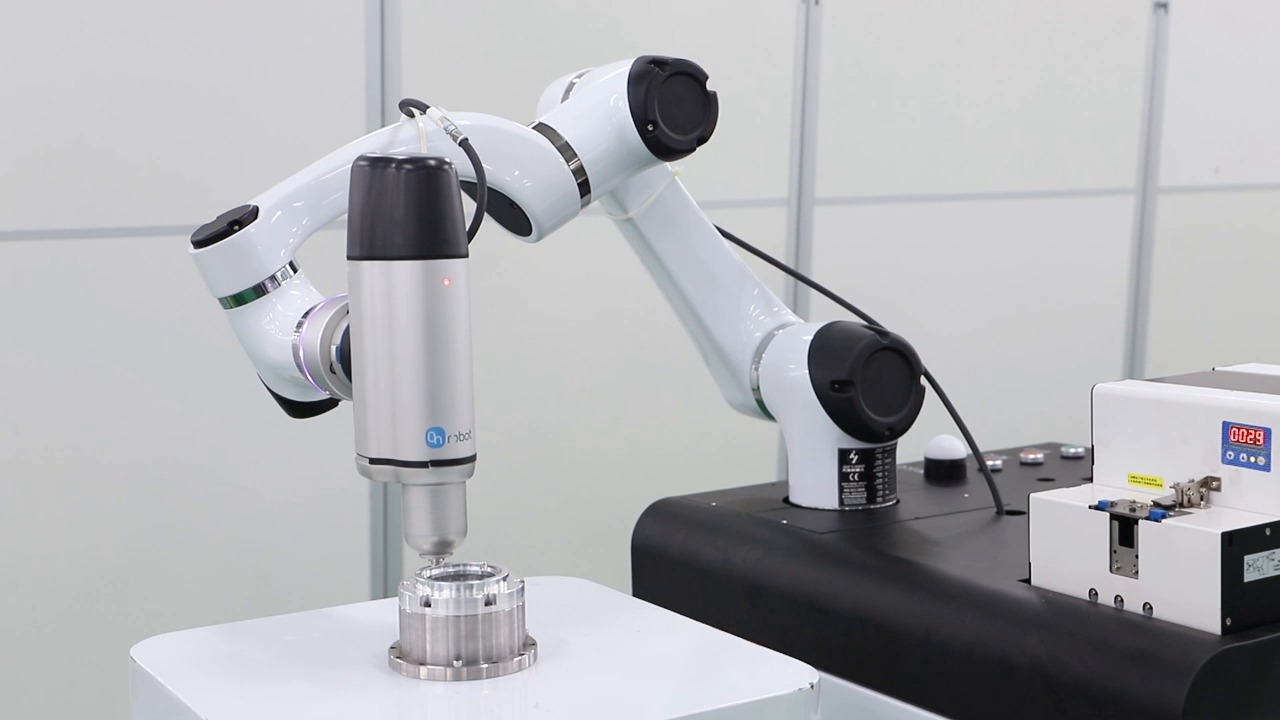
00:29 — The vertical tool is lowered at one of the positions around the component.
If a screw meets resistance early, inspect the sample rather than simply increasing force or torque. In a joint with an existing thread, misalignment, damaged or contaminated threads and inadequate hole depth are among the possible causes. A final torque value alone does not identify which occurred. Where the proposed equipment measures angle or depth, establish the relevant windows using the actual joint and compare them with the physical result.
Accept the fault response as well as the normal operation
We would agree a small set of representative faults with the customer and tooling supplier: absent fastener, an agreed entry error and a known unseated condition, where applicable to the joint. Demonstrate what the cell detects, what it stops and what action allows production to resume. A retry must follow a defined recovery method; repeating the same command is not a diagnosis.
El separado screwdriving tool and guarding layout review considers access for setup and fault handling. This staged trial adds the process question: at which handoff does the fastener stop behaving as intended?
For an EVST application discussion, provide screw and hole details, workpiece drawings, photographs of the actual defect, the feeding method and signals available from the tightening controller. Those inputs let us discuss tool, fixture and feeder interfaces around faults that can be demonstrated.