
When a release-spray result changes, do not begin by adding robot path points. First separate three questions: can the spray reach the required mold areas, does the nozzle produce the expected pattern, and is the delivered output stable? A repeatable arm movement addresses only part of that problem.
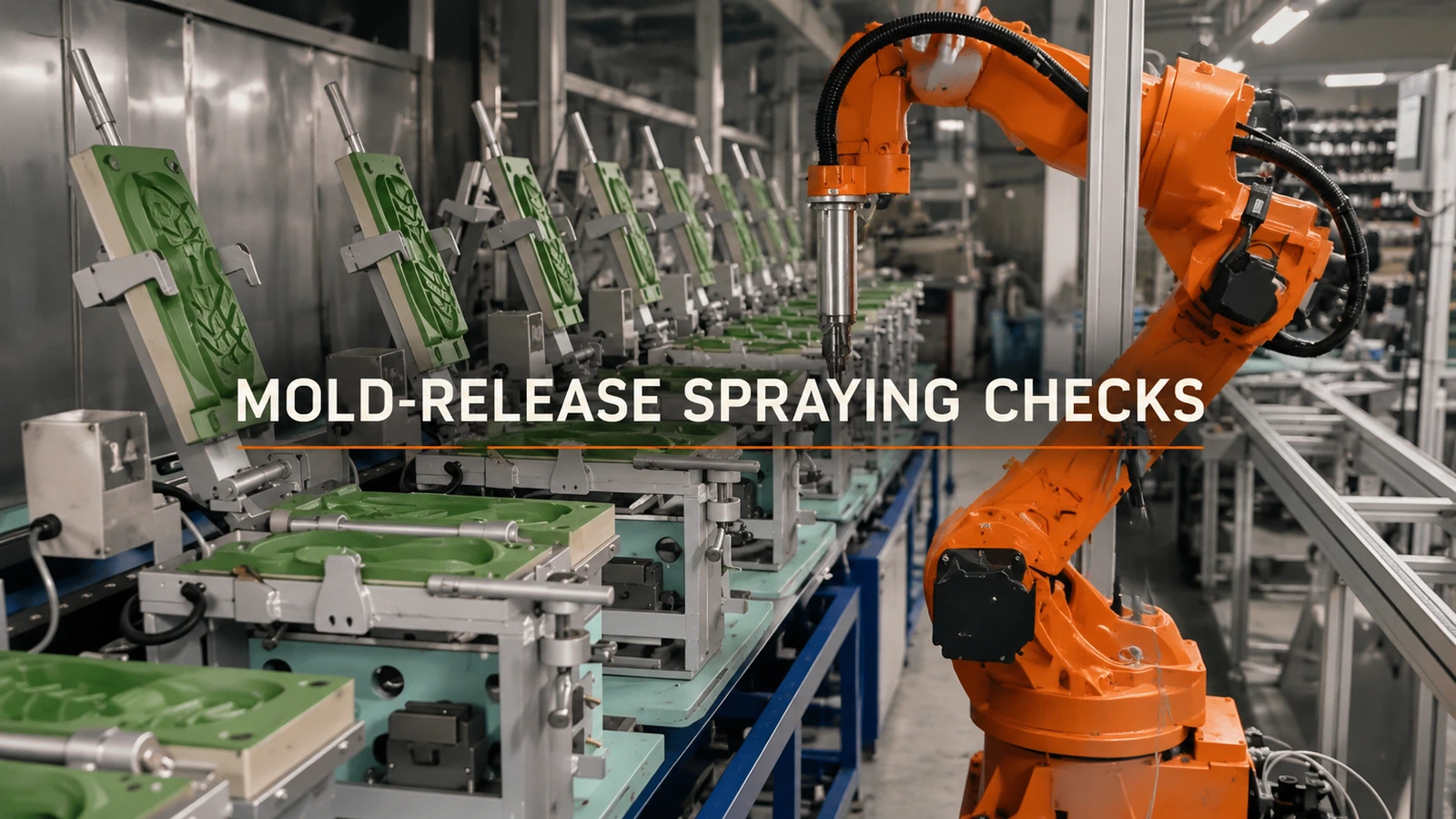
The filmed example shows an orange robot directing a spray tool over open green mold surfaces. The arm changes its tool pose while mold positions change, and visible mist accompanies the surface-directed movement. The process is release-agent spraying.
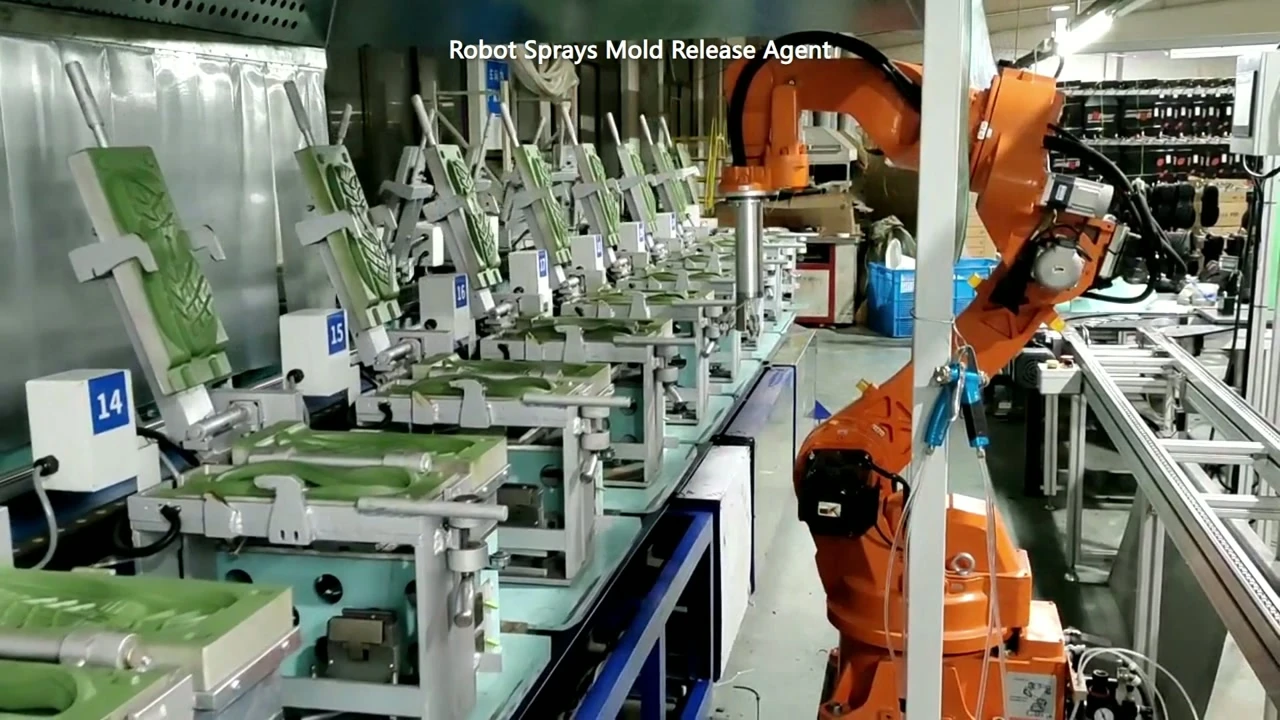
Spray tool beside the open green mold surfaces.
A visible sweep can still leave a difficult area
Spray coverage has a geometric relationship with spray angle and nozzle-to-target distance. A footprint that spans a broad open surface does not automatically reach the side of a recess or an area screened by another mold feature.
For a trial, identify the surfaces that need application and mark the difficult regions on a cavity photograph. Compare those regions with the tool’s approach directions. If the missing region is physically screened, increasing time on the same approach may simply apply more material to surfaces already exposed. A changed approach, a different nozzle arrangement or a revised presentation should be considered against the actual access problem.
รักษาความแตกต่างระหว่าง nominal footprint และ แอปพลิเคชั่นที่เป็นประโยชน์. Geometry helps plan the path; the relevant application check establishes whether the required surface receives an acceptable film under the specified conditions.
A nozzle can change while the program stays the same
Nozzle wear is not reliably assessed by looking at the nozzle alone. A maintenance check can compare collected output over a measured period at a defined pressure with an appropriate reference, and examine the spray pattern for changes in width or distribution. The method must suit the nozzle, fluid and supply system being used.
A useful baseline records the nozzle identity, test conditions, measured output and pattern observation together. Comparing unlike supply conditions can make a good nozzle appear faulty or hide a real change. A check of total system flow also needs interpretation if several nozzles operate together; it does not by itself identify which outlet has changed.
More spray time can conceal the wrong fault
If application is inconsistent, distinguish a stable access problem from changing delivery. A difficult corner that is missed repeatedly points to a different investigation from an otherwise unchanged pattern whose output varies between runs. Inspect the spray supply and nozzle condition before compensating through robot speed or dwell.
Any fluid-specific preparation, dilution, evaporation interval or reapplication rule should come from the release agent’s applicable instructions. There is no useful universal interval to copy from a different molding process.
A practical trial record
Record the required regions, nozzle arrangement and operating conditions before the run. After it, compare the relevant application observations at the marked areas and record any changes made. Altering the path, nozzle and supply settings together makes it harder to learn which change solved the problem.
For an initial discussion, bring EVST mold photographs, the current agent instructions, the nozzle arrangement and the troublesome locations. Those inputs allow the spray trial to start with a specific coverage or delivery question, instead of a general request to make the robot move differently.