
Specify the finished mark before specifying its inspection equipment. Detecting that a mark exists, checking its content, reading a code and measuring code quality answer different questions. A robot-tended marking proposal should include the checks the product actually needs, with samples that demonstrate the difference. A marking-complete signal alone does not define those checks.
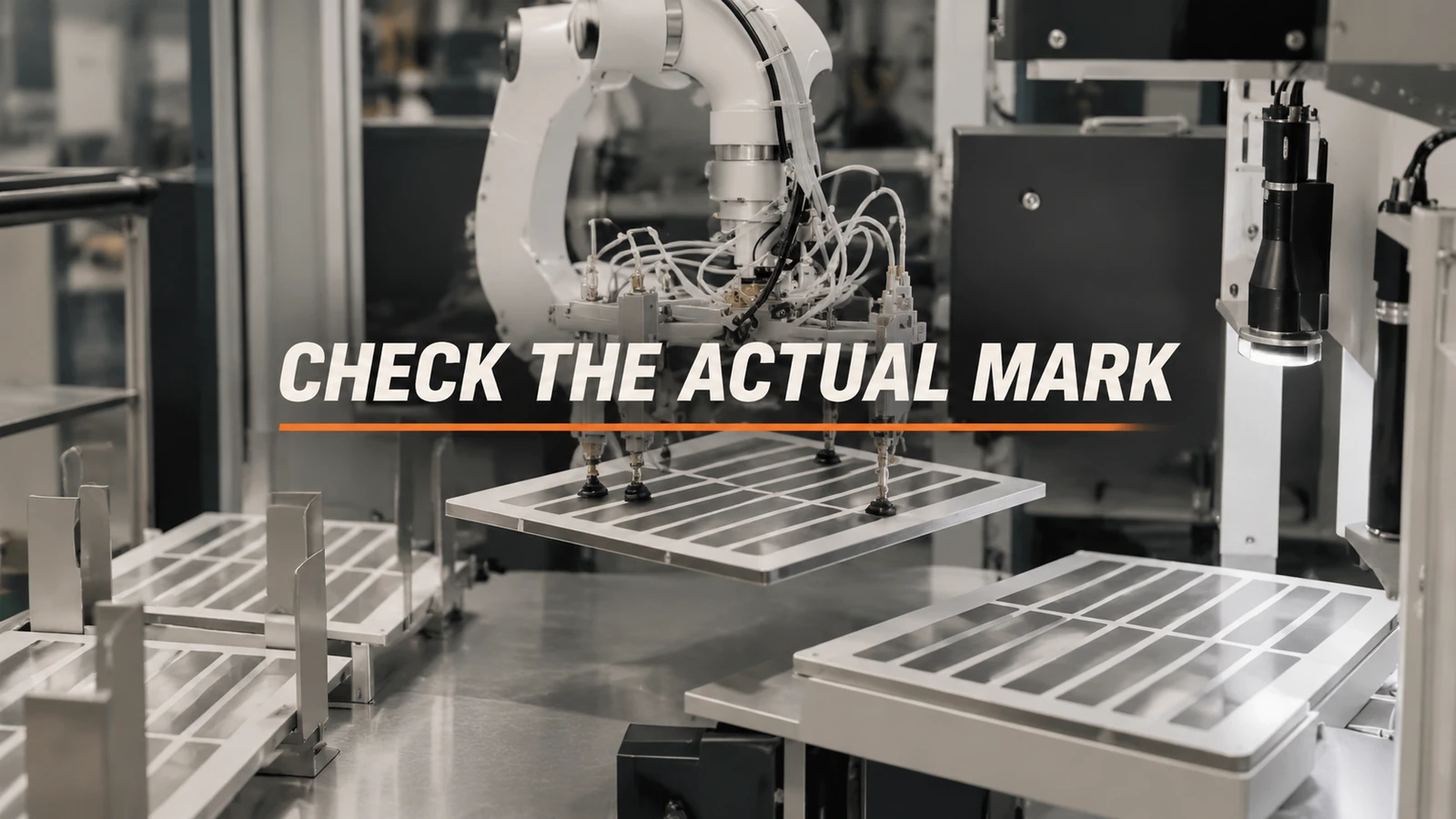
The accompanying application shows a white robot using a rectangular tool with multiple hoses and contact points to lift and transfer a large rectangular grid-like board or carrier between work areas. A closer view includes the marking equipment. For a similar handling project, the useful purchasing question is which finished-mark checks belong in the scope alongside the transfer.
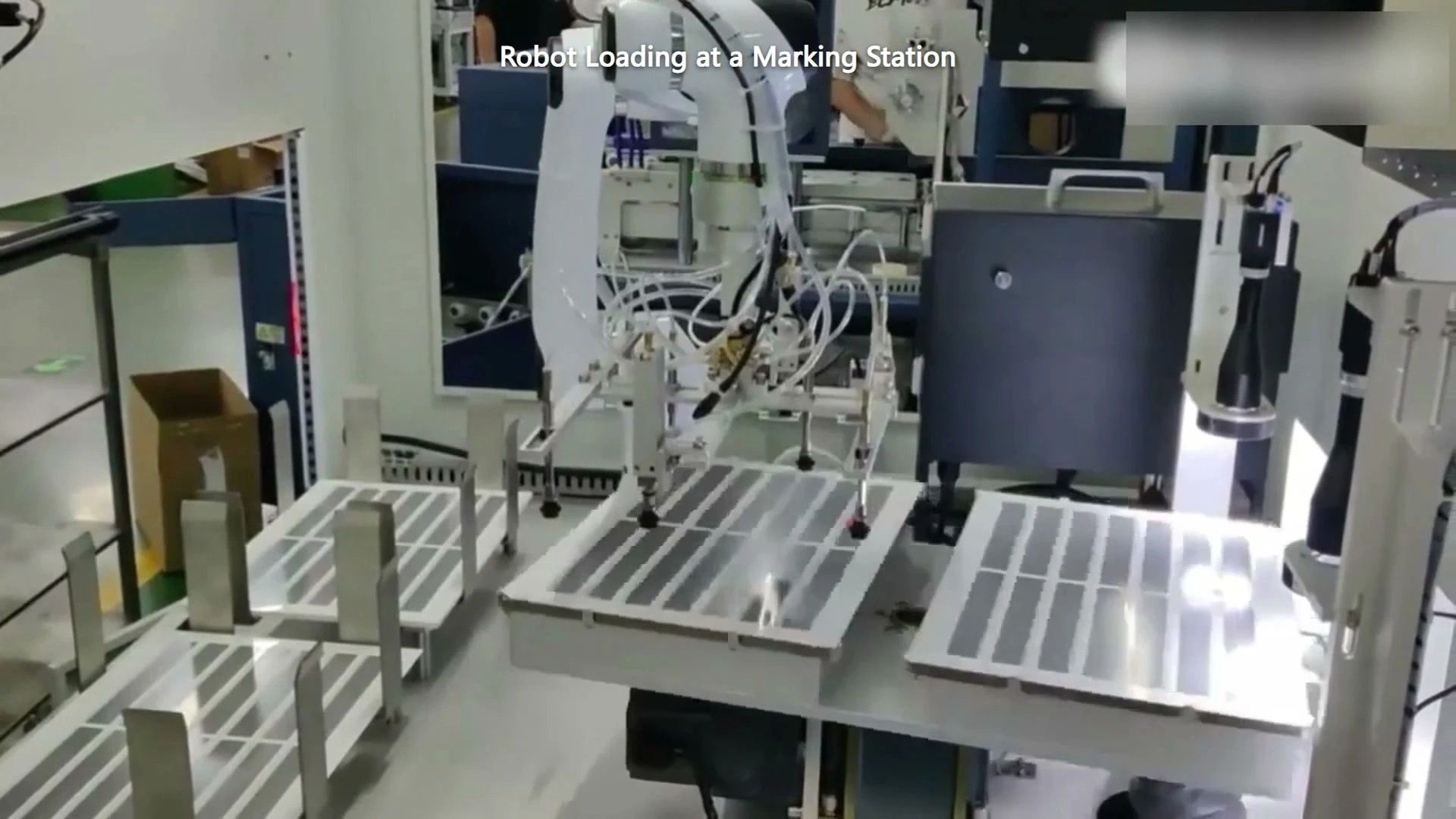
Video at 00:11 — White robot transferring a large rectangular grid-like board or carrier.
Is the requirement “there is a mark” or “this is the right content”?
A presence check asks whether something was marked in the expected region. It can be useful when a missing operation is the defect of concern, but it does not establish that the characters belong to the intended job.
For text, distinguish reading characters from comparing them with an expected string. A recognition function can return the characters it sees; a comparison function can judge them against the declared requirement. The proposal still needs to identify where the expected content comes from. A clear, perfectly readable old batch code can be wrong for the current batch.
Bring examples of the actual content, including which fields change and which remain fixed. State whether missing characters, substituted characters, misplaced text or an incorrect variable field must be detected. This is a more precise scope than requesting “a camera to check the marking”.
For a machine-readable code, is read-back enough?
A read-back test asks whether the selected reader can decode the symbol in the agreed arrangement and what data it returns. Compare that data with the expected content when correctness is part of the requirement.
Formal code-quality verification instead measures specified characteristics of the symbol using a defined method. It is a separate purchasing decision when required by the customer or product specification. A successful read on one device does not supply a quality grade, and a quality result does not independently establish that the encoded identifier belongs to this part.
The distinction prevents two opposite mistakes: buying more inspection than the product requires, or accepting a simple decode demonstration when the contract requires measured code quality. Agree the applicable method, conditions and acceptance criterion before selecting equipment. Do not borrow a grade from another industry’s example.
Will the check work in the proposed presentation?
Use the production marking surface and the intended part position for the trial. For a requested quality-verification method, include its specified calibration, lighting and presentation conditions. One published direct-part-mark verifier procedure, for example, requires calibration and controlled placement relative to the symbol; a handheld demonstration at an arbitrary angle is a different setup.
For any proposed check, record where the mark sits when inspected and what can vary after robot placement. Ask the supplier to demonstrate the agreed acceptance under those declared conditions. A hand-selected sample held specially for the camera does not establish the result for the intended handling arrangement.
Which samples will expose an incomplete scope?
Agree challenge samples before acceptance rather than inspecting only a set of good marks.
| Condição da amostra | Question it helps test |
|---|---|
| Expected marking region left blank | Is a missing mark detected? |
| Clear but incorrect content | Is content compared, or only presence/readability checked? |
| Correct content with a deliberately unacceptable mark condition | Does the chosen method detect the defect required by the product specification? |
| Mark outside the agreed position | Is location checked if it is an acceptance requirement? |
Use controlled test samples and declare the expected disposition. The important outcome is that the inspection scope matches the product requirement; not every marking project needs every row of this table.
To discuss a marking-machine handling project with EVST, provide the actual marking content, photographs or samples of acceptable and unacceptable marks, how the mark is used downstream, and any customer acceptance requirements. These are practical starting points for defining what belongs in handling and what belongs in inspection. Discuss the marking and inspection scope.