
By تیم تحریریه EVST · بررسی شده توسط تیم تحریریه EVST · آخرین بهروزرسانی ۸ اکتبر ۲۰۲۶ · سیاست تحریریه · سیاست اصلاحات · اصطلاحات
Seedling trays arrive as stacked groups, so a palletizing cell has to manage more than one box at a time. In this example, an orange robot uses a rectangular tool to pick a stack of black seedling trays from the right, carry it to a blue pallet on the left and place it on the growing load. Later cycles change the tray orientation and placement position to form alternating layers. When the pallet is complete, the conveyor moves the full load out.
Planning a similar line? Send us the tray drawing, stack details, pallet size and daily output for a layout and cycle-time estimate.
The cycle from infeed to discharge
- The robot picks a stacked group of black seedling trays at the right-hand pickup position.
- It carries the stack across the cell to the blue pallet.
- It descends and places the stack at the assigned position on the top layer.
- The tool releases and returns empty for the next pick.
- Successive cycles change position and orientation to build the layer pattern.
- The completed pallet travels toward the camera on the roller conveyor.
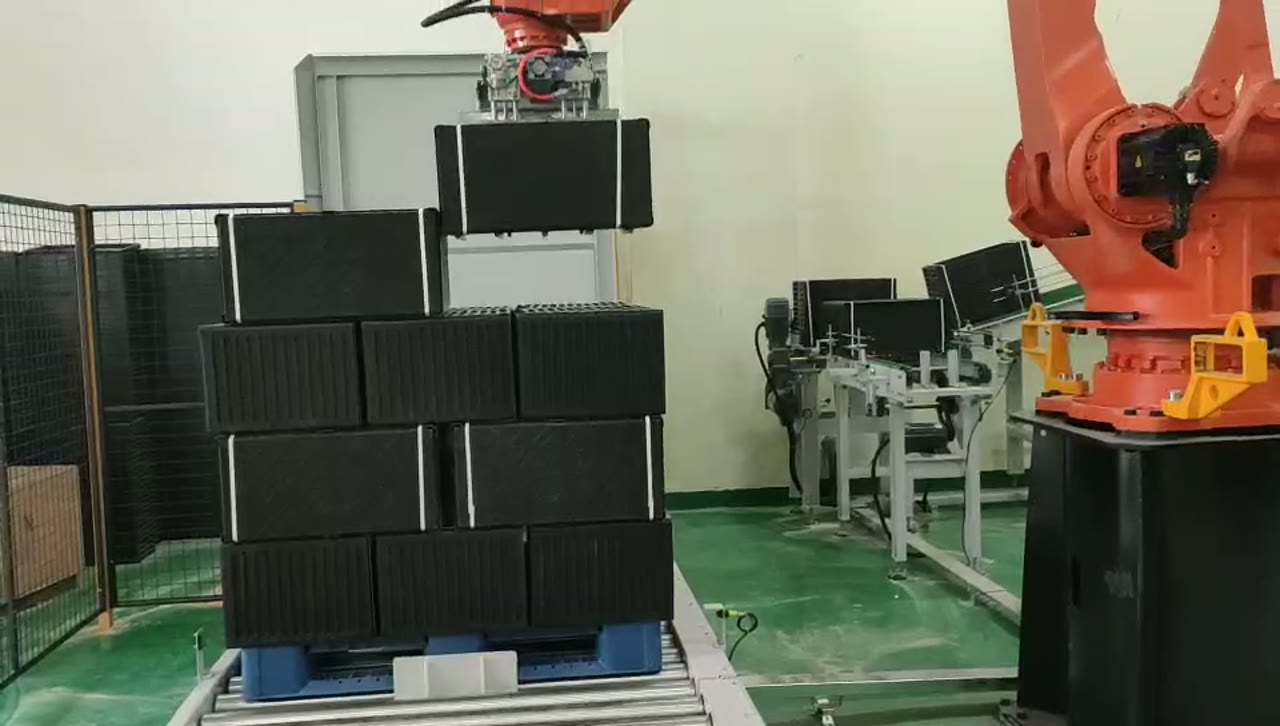
Treat the stacked group as the handled unit
The tool is not handling an isolated tray. The stacked group has its own height, stiffness and tolerance, and those characteristics influence pickup and placement. The project therefore needs the minimum and maximum stack height, stacked-group variation and the points where the tool may safely engage the stack.
The pickup station must present each stack at a repeatable location. If stack height varies, the cell needs a defined way to find or constrain the pickup level. Tool clearance should be checked around the tray rim and around nearby stacks, especially during a vertical lift.
Alternating layers start with a placement map
The video shows stacks placed in different orientations and positions. A useful pallet recipe defines every placement as a row, column, layer and orientation. That map makes the intended alternation explicit and lets engineers check whether the tool can reach each position without crossing the completed part of the load.
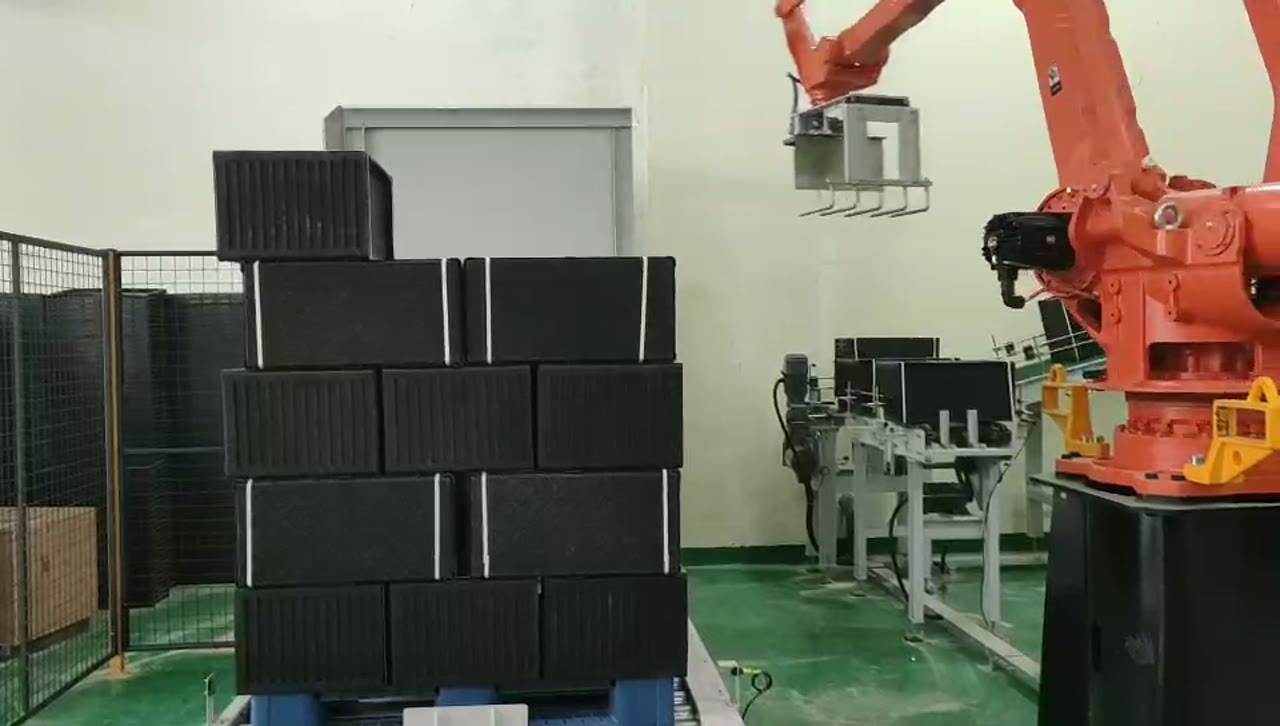
The layer change also affects approach height. As the load grows, the robot needs a clear vertical approach above the highest placed stack, then a controlled retreat before traveling back to the pickup side. Check corner positions and the layer nearest the robot base for wrist and tool clearance.
| ورودی برنامهریزی | چرا از آن مهم |
|---|---|
| Tray and stacked-group dimensions | Defines tool engagement and stack spacing |
| Pallet size and allowable overhang | Defines the placement grid |
| Layer orientation sequence | Defines the robot recipe and load pattern |
| Full-load height | Defines vertical reach and overhead clearance |
| Conveyor datum and stop position | Aligns the pallet recipe with discharge |
The conveyor is part of the palletizing cycle
After the last placement, the robot must clear the pallet and the conveyor must know that the load is ready to move. The discharge shown at the end is therefore part of the cell sequence, not a separate logistics detail. The handoff should include robot-clear, pallet-complete, conveyor-ready and pallet-released conditions.
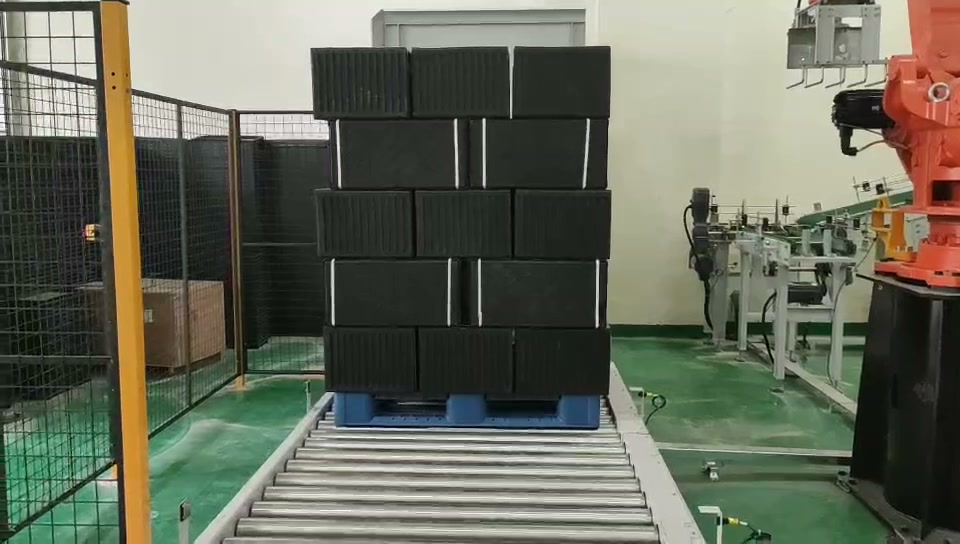
The next empty pallet also needs a repeatable stop against the same datum used by the pallet recipe. Otherwise every placement point shifts together.
What to validate in a trial
Use actual trays and representative stacked groups. Confirm that the tool can pick the stack without disturbing adjacent material, carry it through the fastest planned move, place it without dragging across the layer, and release cleanly. Build the complete pattern, including the highest and furthest positions, then run the discharge and empty-pallet exchange sequence.
چی برامون بفرستن
- Tray drawing, material and stacked-group range.
- Stack count or height presented at pickup.
- Pallet dimensions, layer pattern and maximum load height.
- Infeed and discharge conveyor layout.
- Daily output, shift pattern and empty-pallet method.
- Load acceptance and transport requirements.
تماس با EVST or email sales@evsrobot.com with these inputs for a palletizing concept and cycle-time estimate.
Final tool design, layer pattern, load stability and production rate require validation with the actual trays, pallet and conveyor.