
Automating carton opening is easier to justify when repeated box forming occupies a substantial, separable job or regularly interrupts packing. The business case is different when the same person also loads products, checks them and replenishes materials. Removing the opening motion may make that person’s work easier without removing a complete position. The purchasing question is therefore what useful work becomes possible after opening is automated?
Follow the carton beyond the robot’s grip
In the accompanying footage, a robot takes a flat carton blank, opens the box and brings it onto a roller conveyor. The sequence makes an otherwise small manual task visible: obtaining the blank, establishing its shape and handing it to the next stage.
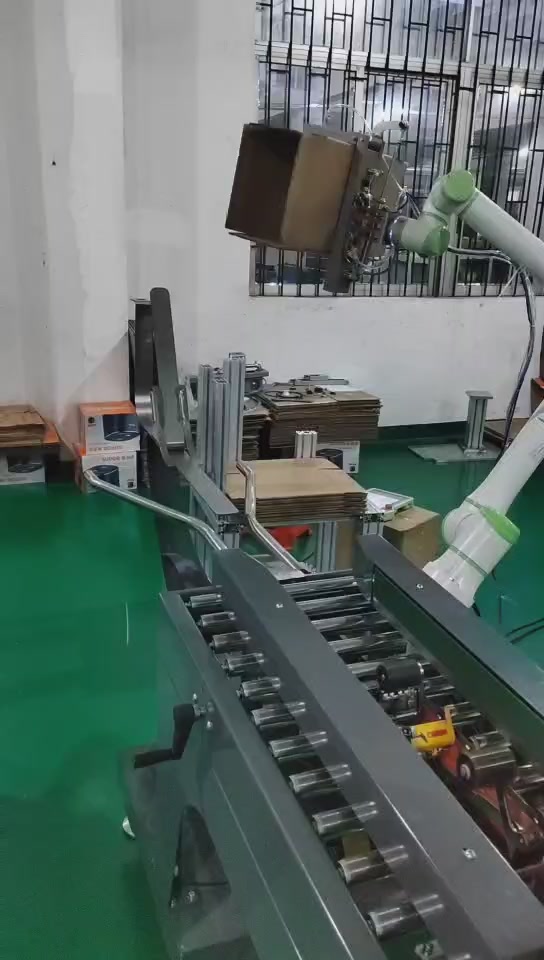
The clip shows opening and transfer. It does not establish bottom-seal quality, a complete packing process or staffing savings. Those boundaries matter in a quotation: a machine that presents an open box and one that presents a squared, bottom-sealed box may leave different work for the operator.
Two packing stations can need very different solutions
A dedicated box-forming job and a combined opening-and-packing job leave different work behind when opening is automated. Compare the revised assignment, including replenishment, format changes and interventions, before assigning a whole-person saving.
These are planning scenarios, not observations of the filmed site’s staffing. They lead to different investment comparisons:
| Current work pattern | Useful target for automation | Evidence that would change the decision |
|---|---|---|
| A person repeatedly supplies empty boxes to packers | Maintain box supply while moving that person’s main assignment elsewhere | Packers receive boxes when needed; replenishment and interventions fit the revised assignment |
| One person opens, fills and inspects each box | Remove a recurring interruption from the packing task | More good packages or a more manageable task, with the remaining manual work included |
| Short runs with frequent changes in carton format | Reduce repetitive forming without making changes disproportionately difficult | Actual changeover effort and start-up losses across the carton mix |
Do the freed seconds form a usable block of time?
A saving on a stopwatch becomes useful only if the work can be rearranged around it. An operator may gain a few seconds during each box cycle but still need to remain at the station for product loading. Alternatively, a magazine may allow a longer interval between replenishments, making an adjacent task practical. The layout and timing decide which of those happens.
Observe the current station over a period that includes replenishment and a normal format change. Mark when the operator is forming boxes, packing, inspecting, bringing materials or dealing with a stoppage. The purpose is to find which of those duties still prevents reassignment after opening is removed. Avoid adding together scattered seconds and presenting the total as an available person.
For an existing bottleneck, follow the waiting in both directions. If packing waits for an empty box, improved box supply may help output. If open boxes already accumulate while filling remains busy, increasing opening speed will mainly create a larger queue. In the second situation, the stronger reason to automate may be work allocation or repetitive-task reduction, rather than higher line output.
Compare the delivered box, not just the equipment label
A dedicated case erector deserves comparison alongside a robot-based arrangement. Ask each proposal to deliver the same carton condition at the same handoff point: opened, correctly oriented, and with any required squaring or bottom closure included in scope. Otherwise a lower equipment price may simply leave additional manual work outside the quotation.
A robot arrangement is worth examining where the pickup or handoff layout and required motions favour a programmed arm. A dedicated mechanism may suit a stable carton family and a fixed forming route. Neither choice automatically resolves the supply of usable blanks or the work that follows opening.
The difficult carton belongs in the trial
Use production-representative blanks, including the formats and conditions that currently cause opening problems. A carton that needs manual assistance on the existing line should not quietly disappear from the automated trial. Observe whether the system picks one blank, opens it consistently and releases it in a state the next operation can accept.
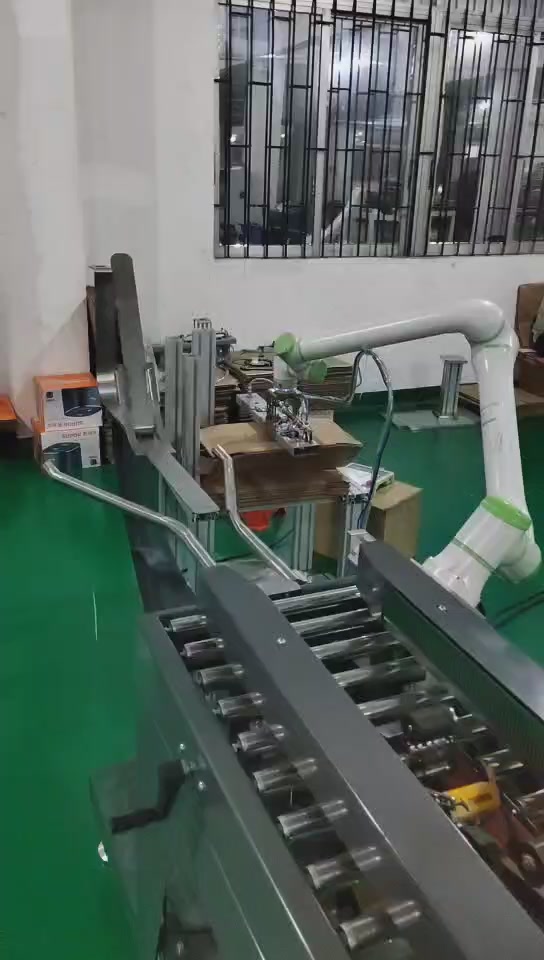
The contact surface deserves attention here. Match the proposed suction arrangement to the carton surfaces it will actually encounter, rather than accepting a successful pickup on a convenient sample as evidence for the whole carton range.
If a problematic blank repeatedly needs intervention, the useful response may be a different gripping or opening arrangement, better blank control, or a change to the carton specification. If opening is reliable but the operator still spends the same shift loading products, revise the labour-saving case. Those findings should change the proposal before purchase.
Discuss the job around the carton
For an EVST packaging-automation enquiry, show the carton style and the working sequence from obtaining a blank through loading the product. Include the intended empty-box handoff position. This gives us a basis to discuss opening equipment, robot handling and the work that remains on the packaging line. Contact EVST about carton-opening automation.
Method: Application-footage review, manufacturer documentation and explicitly conditional work-allocation scenarios. Редакційна політика · Виправна політика · Умови використання