
By the EVST Editorial Team · Last updated: June 7, 2026
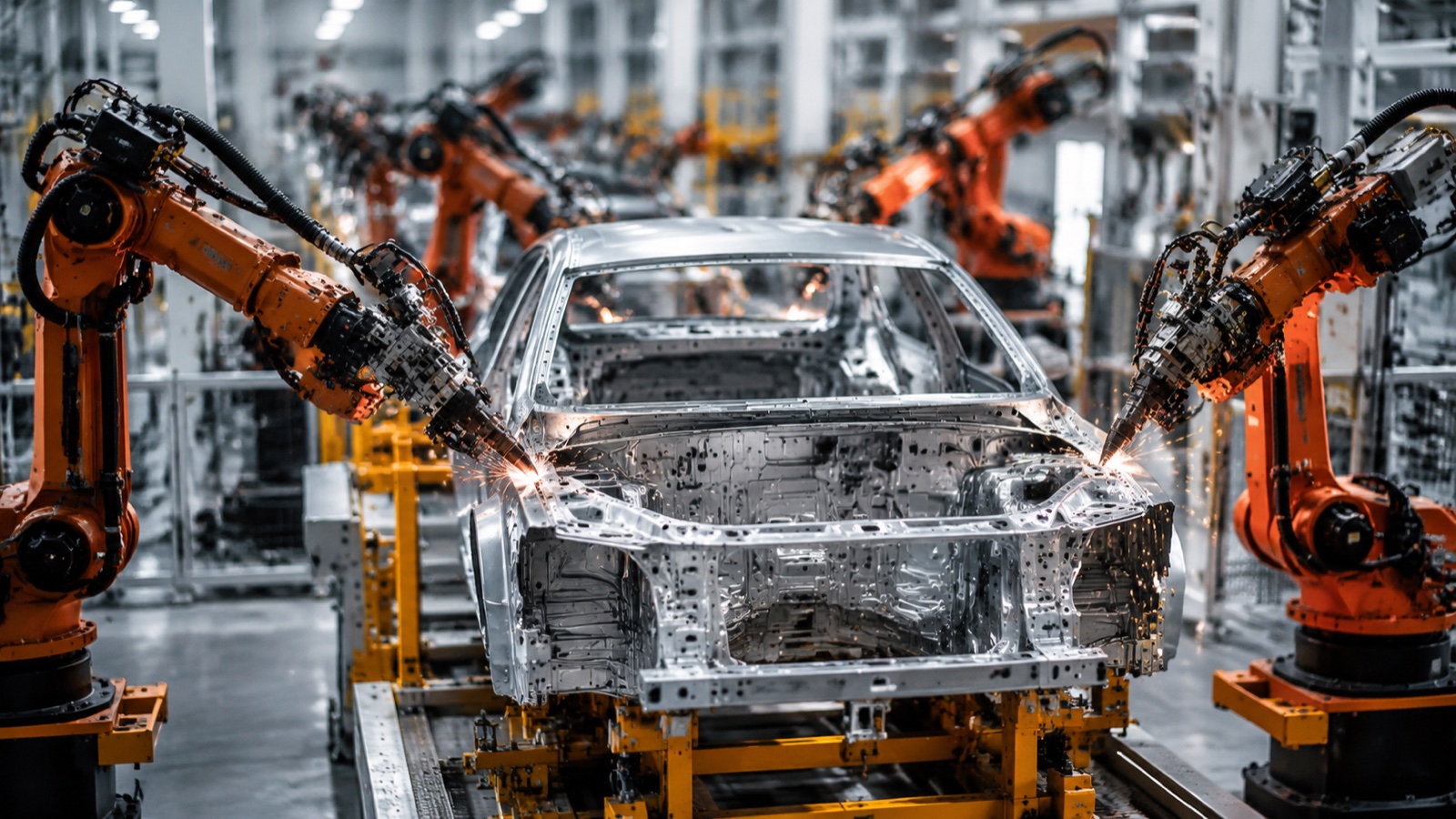
The automotive industry is the largest user of industrial robots, applying them across body welding, material handling, assembly, painting, and increasingly EV battery production. Robots deliver the consistency, speed, and traceability that automotive volumes and quality standards demand. In 2026, the main shifts are electrification, flexible lines that handle multiple models, and tighter automotive-grade quality requirements such as IATF16949.
Why Automotive Leads in Robotics
According to the International Federation of Robotics, the automotive sector has long been among the top adopters of industrial robots, driven by high volumes, strict quality, and demanding cycle times. A car body alone can need thousands of welds, far beyond what manual labor can do consistently. Robots provide repeatable quality and full traceability, which is why automotive plants are among the most heavily automated in any industry.
Where Robots Work in a Car Plant
| Area | Robot tasks | Common robot type |
|---|---|---|
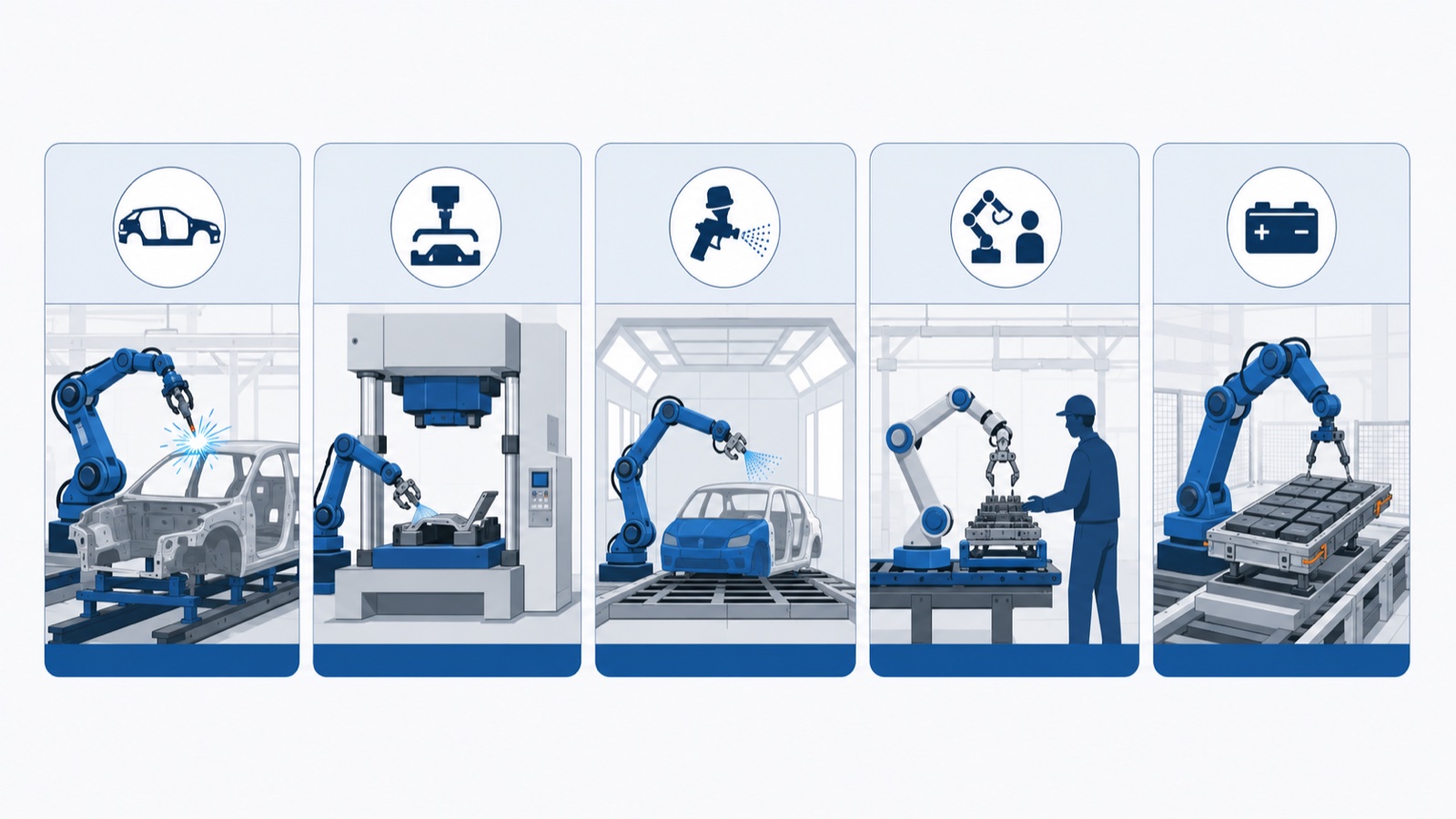
| Body shop (body-in-white) | Spot and arc welding, sealing | 6-axis welding robots with positioners |
| Press shop | Loading and unloading stamping presses | 6-axis handling, often on tracks |
| Paint shop | Spraying and sealing in hazardous booths | Explosion-proof painting robots |
| Powertrain and assembly | Screwdriving, part handling, dispensing | 6-axis and collaborative robots |
| EV battery | Tray riveting, module handling, sealing | Heavy 6-axis robots |
According to industry observations, the body shop and press shop remain the most robot-dense areas, while assembly is where collaborative robots are growing because they can work alongside people on smaller tasks. EVST supplies across these areas, including welding robots with positioners and tracks, explosion-proof cobots for painting, and heavy QJAR robots for battery-tray work.
The 2026 Trends Reshaping Automotive Automation
- Electrification: EV battery production adds new tasks, tray riveting, module handling, and sealing, that need heavy, precise handling robots.
- Flexible lines: plants build multiple models on one line, so robots and fixturing must change over quickly.
- Collaborative assembly: cobots take on smaller assembly and inspection tasks alongside operators.
- Quality and traceability: automotive-grade standards push vision inspection and data logging into more cells.
According to industry observations, electrification is the single biggest driver of new automotive robot demand, because battery and electric-drive production introduces tasks the traditional combustion line did not have. This favors suppliers that can cover both legacy body and powertrain work and the new battery tasks.
Why Automotive-Grade Manufacturing Matters
Automotive supply chains require IATF16949, the sector’s quality management standard, which governs how parts and equipment are made and traced. A robot or cell going into an automotive line is expected to meet these expectations for consistency and documentation. EVST runs an IATF16949 automotive-grade manufacturing line for its collaborative robots, alongside CE, SGS, and TUV certification, which is why its equipment is specified for automotive work. For choosing the robot class behind these cells, see our industrial robot selection guide, and for safety, the collaborative robot safety guide.
Frequently Asked Questions
How are robots used in the automotive industry?
Robots are used across body welding (spot and arc), press loading and unloading, painting and sealing, powertrain and final assembly, and EV battery production. The body shop and press shop are the most robot-dense areas, while collaborative robots are growing in assembly. Automotive is the largest single user of industrial robots.
What robots are used for car body welding?
Car body welding uses 6-axis welding robots, usually with positioners that orient the body so seams stay in the optimal position, and often linear tracks so one robot can reach a long body. A single car body can require thousands of welds, which robots deliver with repeatable quality and full traceability.
How is EV production changing automotive robotics?
Electrification adds tasks the combustion line did not have: battery-tray riveting, module handling, and sealing, which need heavy, precise handling robots. This is the single biggest driver of new automotive robot demand in 2026, and it favors suppliers that can cover both traditional body and powertrain work and the new battery tasks.
What is IATF16949 and why does it matter for automotive robots?
IATF16949 is the automotive industry’s quality management standard, governing how parts and equipment are made and traced. Robots and cells going into automotive lines are expected to meet its consistency and documentation requirements. A supplier with IATF16949 automotive-grade manufacturing, such as EVST, is built to those expectations.
Are collaborative robots used in automotive plants?
Yes, and increasingly. Cobots take on smaller assembly, inspection, and machine-tending tasks where they can work alongside operators at safety-rated speed. They complement, rather than replace, the high-speed 6-axis robots in the body and press shops, which remain fenced for throughput.
About the author: This guide was prepared by the EVST Editorial Team. EVST (EVS TECH CO., LTD) is a Chengdu-based robotics manufacturer founded in 2018, supplying automotive-grade industrial and collaborative robots, welding positioners, and linear tracks to more than 100 countries, with IATF16949, CE, SGS, and TUV certification.
Last updated: June 7, 2026. This is a general industry overview; confirm application requirements and certification against current standards before specifying.