
Agree on a reference part, viewing conditions and protected features before accepting a cookware-handle polishing trial. “Bright” or “mirror-like” does not define the whole result. The buyer and supplier need to recognise the same acceptable surface, preserve the required shape and show that the result can be repeated beyond a selected demonstration piece.
Is a photograph or a finish name enough?
A photograph is useful for starting a discussion, especially when it identifies the visible face and the defect that matters. It is a weak final acceptance reference if the lighting, exposure and viewing direction differ between images. A finish name also leaves room for disagreement about visible lines, haze or variation across a curved part.
Use an accepted physical sample where available, together with a rejected or borderline example that explains the difference. Compare under an agreed lighting arrangement and viewing direction. Appearance-measurement guidance explains that perceived gloss depends on the surface, illumination and observer; changing those conditions can change the judgement without changing the part.
Identify the relevant zones. The long visible face, a curved transition and the area near the attachment may not look alike or have the same requirement. Mark them on a photograph or drawing so that “match the sample” has a defined scope.
Which features must polishing leave intact?
Separate appearance requirements from shape and fit. Identify edges, transitions, holes and attachment features that must retain their specified geometry. A visually attractive surface does not establish that the handle still fits the next operation.
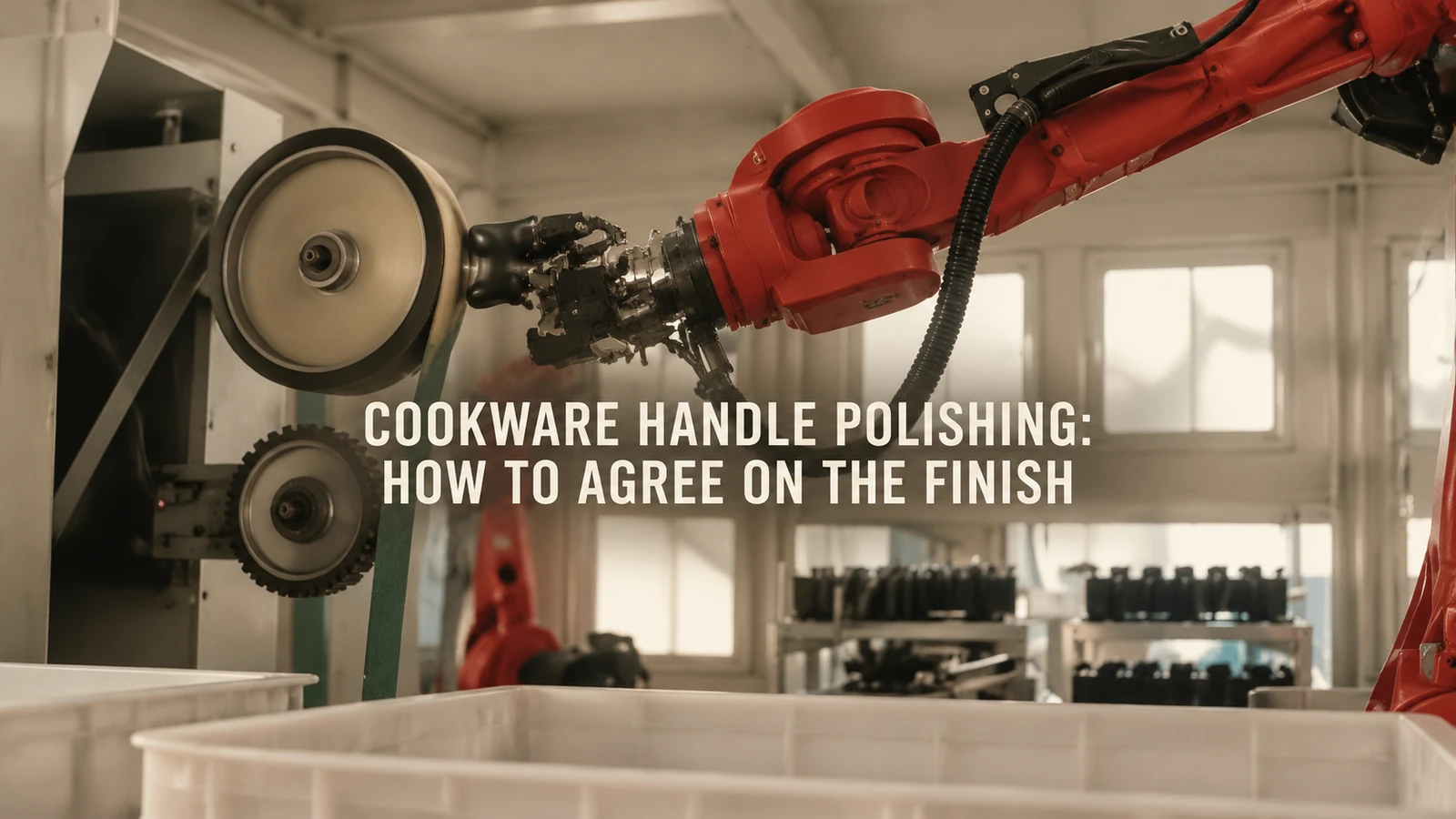
In the recorded application, robots hold small parts near fixed finishing equipment, changing their orientation around a wheel arrangement. The source identifies handle polishing. Those movements are useful process context; the required final appearance and protected dimensions should come from the buyer’s sample and part requirements.
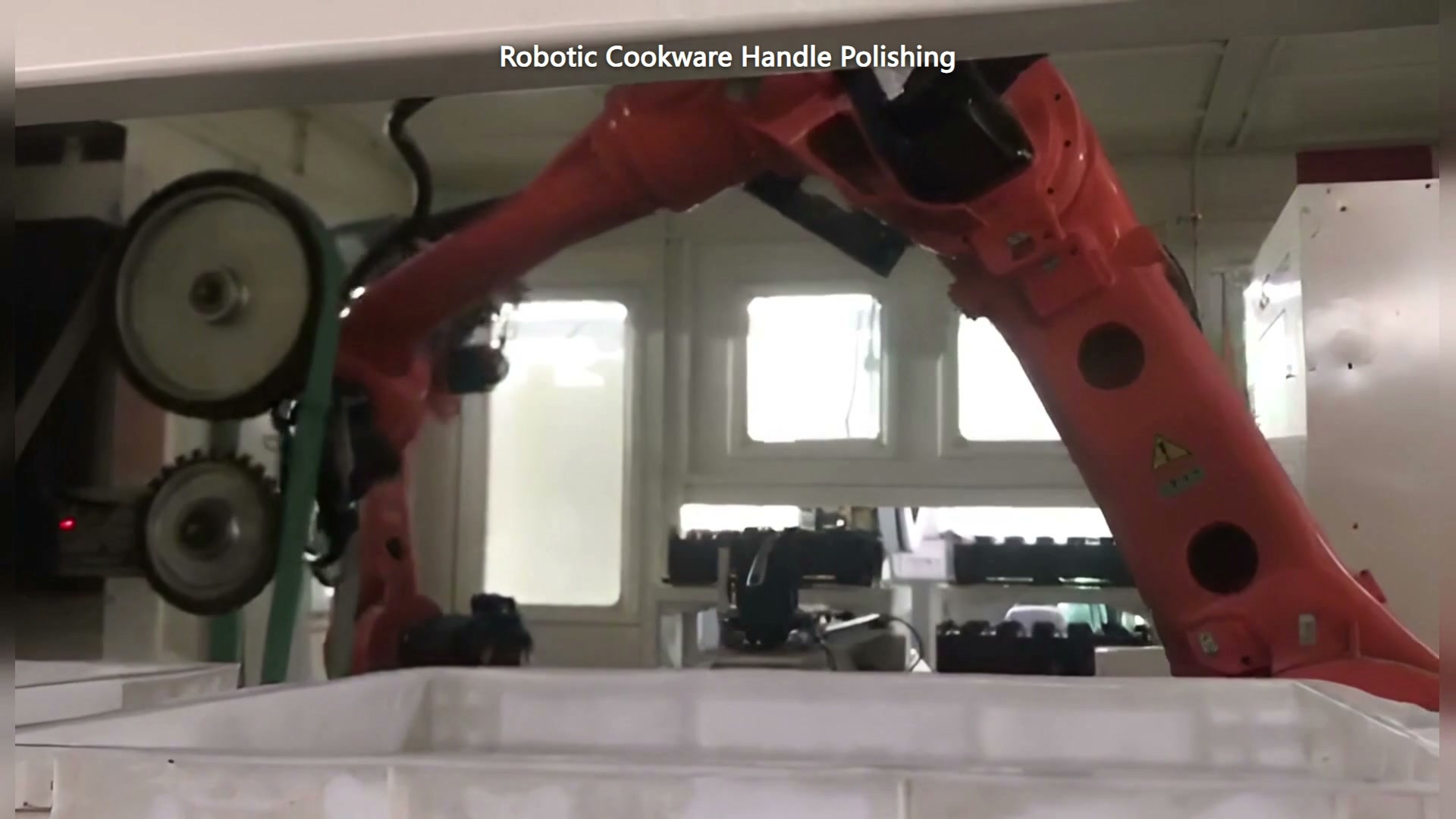
00:16 — The robot holds a small part beside the fixed wheel arrangement.
Ask for the trial part to be checked in the relevant assembly or checking arrangement as well as under the agreed light. If an edge looks different, compare the contour requirement separately from the reflected appearance. This prevents a discussion about brightness from hiding a shape issue, or a lighting difference from being mistaken for dimensional change.
Can one gloss number settle the discussion?
Only when the measurement is appropriate to the surface and requirement. Published instrument guidance describes limitations on curved and structured surfaces: geometry and the area presented to the instrument affect the interpretation. A reading from one convenient location should not silently stand for every visible region of a curved handle.
If numerical measurement is useful, agree the instrument’s applicability, measurement locations and repeatable positioning before setting a limit. Do not invent a roughness or gloss threshold to replace an undefined appearance target. A numerical result and the reference sample should answer complementary questions rather than contradict each other without a resolution method.
What should a trial demonstrate about a batch?
Ask for a sequence of samples with the operating and consumable states recorded, not just the most attractive piece. Compare the relevant zones under the same observation conditions as the run progresses. Where tool or abrasive condition changes, check whether the surface still matches the agreed reference and whether protected features remain acceptable.
Use the trial results to establish when adjustment, servicing or consumable replacement is needed for the buyer’s finish. Choose the sample quantity and intervals for the planned run and the variation it reveals.
What should happen when the sample fails?
Describe the failure before requesting “more polishing.” If the comparison changes when the light changes, stabilise the inspection conditions. If an agreed viewing setup reveals a local appearance difference, identify the region and process state in which it appears. If the part no longer fits, investigate the protected geometry rather than trying to solve it with a different gloss target.
For a discussion with EVST, bring accepted and rejected samples, or photographs taken under the same conditions, along with the important appearance zones and downstream requirements. That gives the trial a result to reproduce and a clear reason to reject a surface that is merely shiny.