
A brake-pipe assembly feeding trial should prove that the agreed incoming conditions can be converted into the pose required at the assembly fixture. Begin with the pipe variants, permitted gripping regions and actual bin conditions. Recognizing a part, extracting it without interference and delivering it in a usable orientation are separate requirements that need to meet in the same trial.
Which incoming conditions does the quotation accept?
Supply photographs or representative batches showing how the pipes really arrive. Describe the container, fill range, possible orientations and any separation or arrangement performed upstream. If tangled, damaged or otherwise out-of-scope parts can arrive, agree how those conditions are dealt with rather than silently excluding them from a successful demonstration.
A proposed vision-based picking system needs usable information about object shape and pose. Occlusion or an indistinct visible feature can make that information different across a bin. This is a reason to test actual incoming conditions, not evidence that adding a camera makes every arrangement pickable.
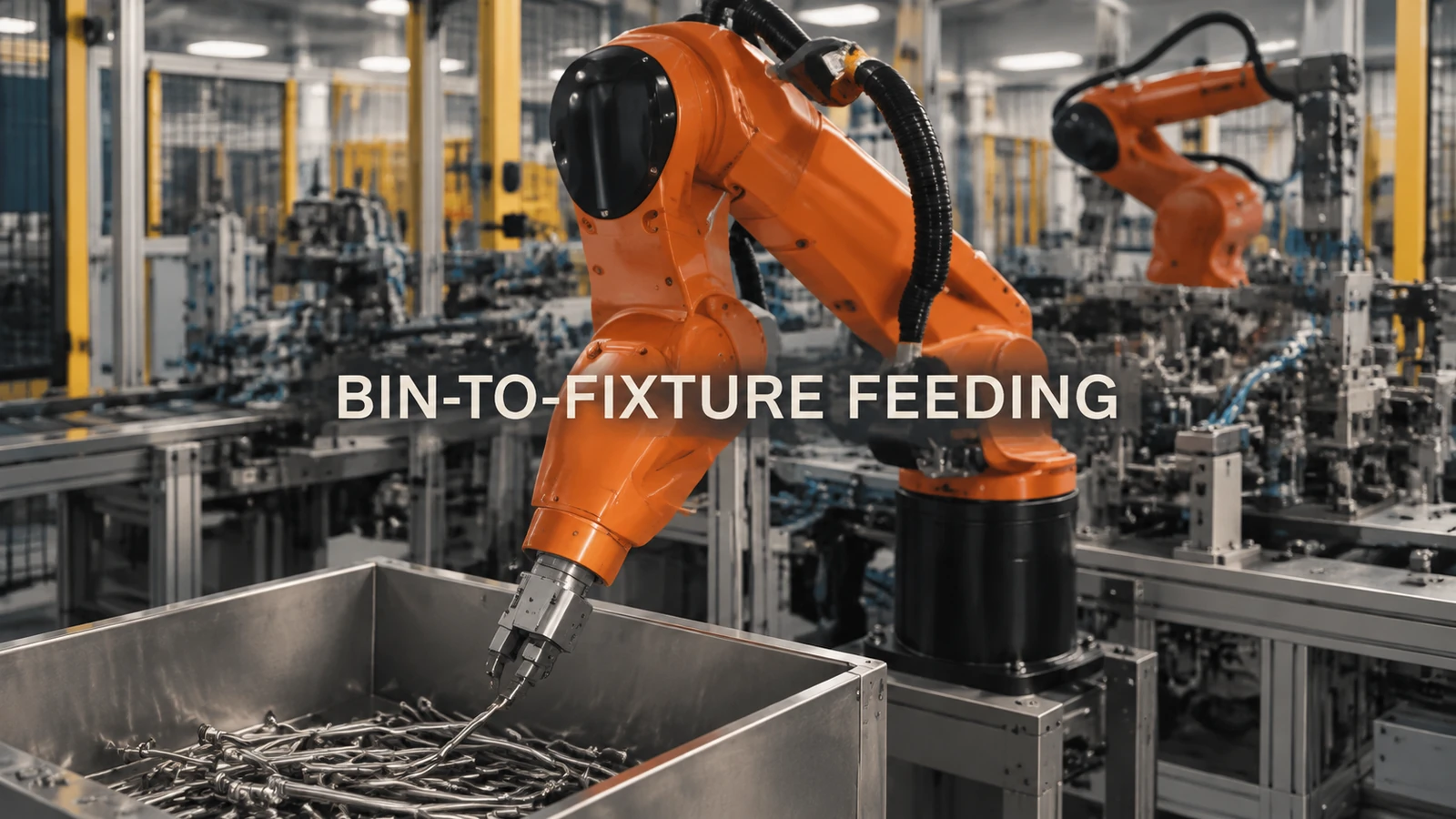
The filmed example shows a robot transferring pipe-shaped parts between a bin and a fixture on the right, in a brake-pipe assembly application. It provides a concrete bin-to-workstation route for defining the feeding task.
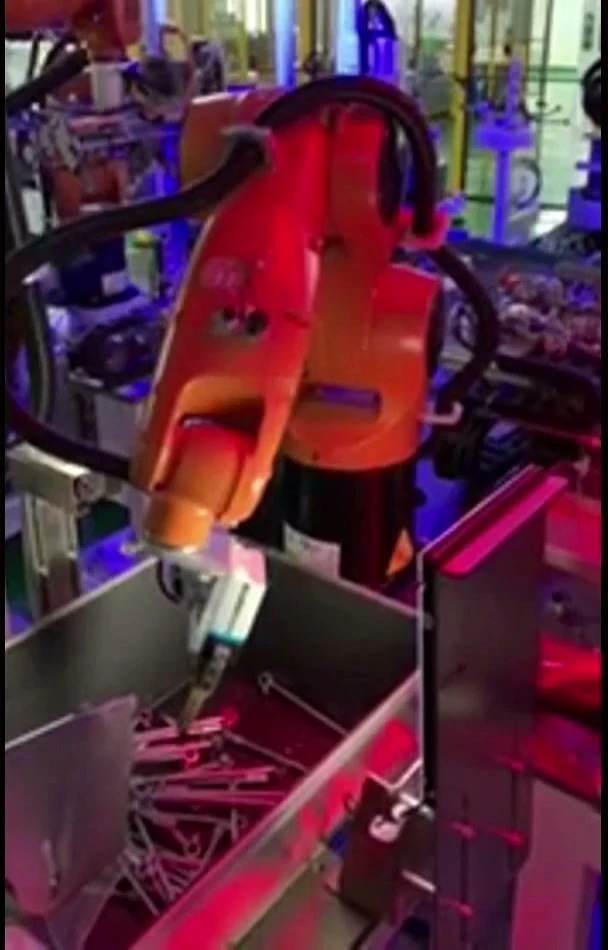
Robot end tooling reaches into the bin of tubular parts.
Where may the tool hold the pipe?
Mark the allowed gripping regions and the areas the tool must leave clear. Compare those regions with the orientations found in the container. A permitted region can be visible yet inaccessible to the complete gripper because a wall or another part blocks its approach. Conversely, an easy place to grasp may be unsuitable for delivering the pipe to the fixture.
For each proposed grip, trial approach, engagement, extraction and withdrawal with the actual pipe geometry and tool. Include the pipe itself in the interference check. If the supply arrangement must be constrained to make that route possible, write that constraint into the accepted input conditions.
What pose must arrive at the assembly entrance?
Start at the receiving fixture and identify the features that locate the pipe. Specify the required presentation, available approach space and point at which the fixture supports or locates the part. Work backward to a grip that can deliver that presentation and release without obstructing the next operation.
This exposes a scope difference between removing a pipe from a bin and supplying a part ready for assembly. A proposal may need a defined orientation step or separate locating handoff. Confirm whether that step is included; do not assume a successful pick already satisfies the assembly entrance.
What should the acceptance batch contain?
Use the incoming states included in the quotation, representative pipe variants and the agreed container. Include actual near-wall, low-fill and overlapping conditions when they are part of production. Record which states complete the entire route, which require intervention and which lie outside the accepted scope.
Judge a completed event at the defined fixture handoff, rather than when the part leaves the bin. Demonstrate the agreed response when no permitted pick or usable delivery is available. This produces a reviewable application boundary instead of a promise based on one favorable pickup.
Share your bin conditions and assembly entrance with EVST. Pipe-range photos, marked gripping regions and a receiving-fixture sketch can start a discussion about trial coverage and the feeding functions to include.