
Replacing a fastening tool’s service hose or moving a support clamp creates a configuration change that the next shift needs to understand. A photograph of the finished installation does not explain what moved, which robot positions were checked or which observations remain unresolved. A short change record can make those boundaries explicit.
Use the visible services to define the question
At 00:03, the video shows a vertical fastening tool above a supported black housing. At 00:10, attached service lines are visible beside the tool. These views identify services as part of the physical arrangement; they do not show a hose replacement, a maintenance inspection or approval to resume operation.
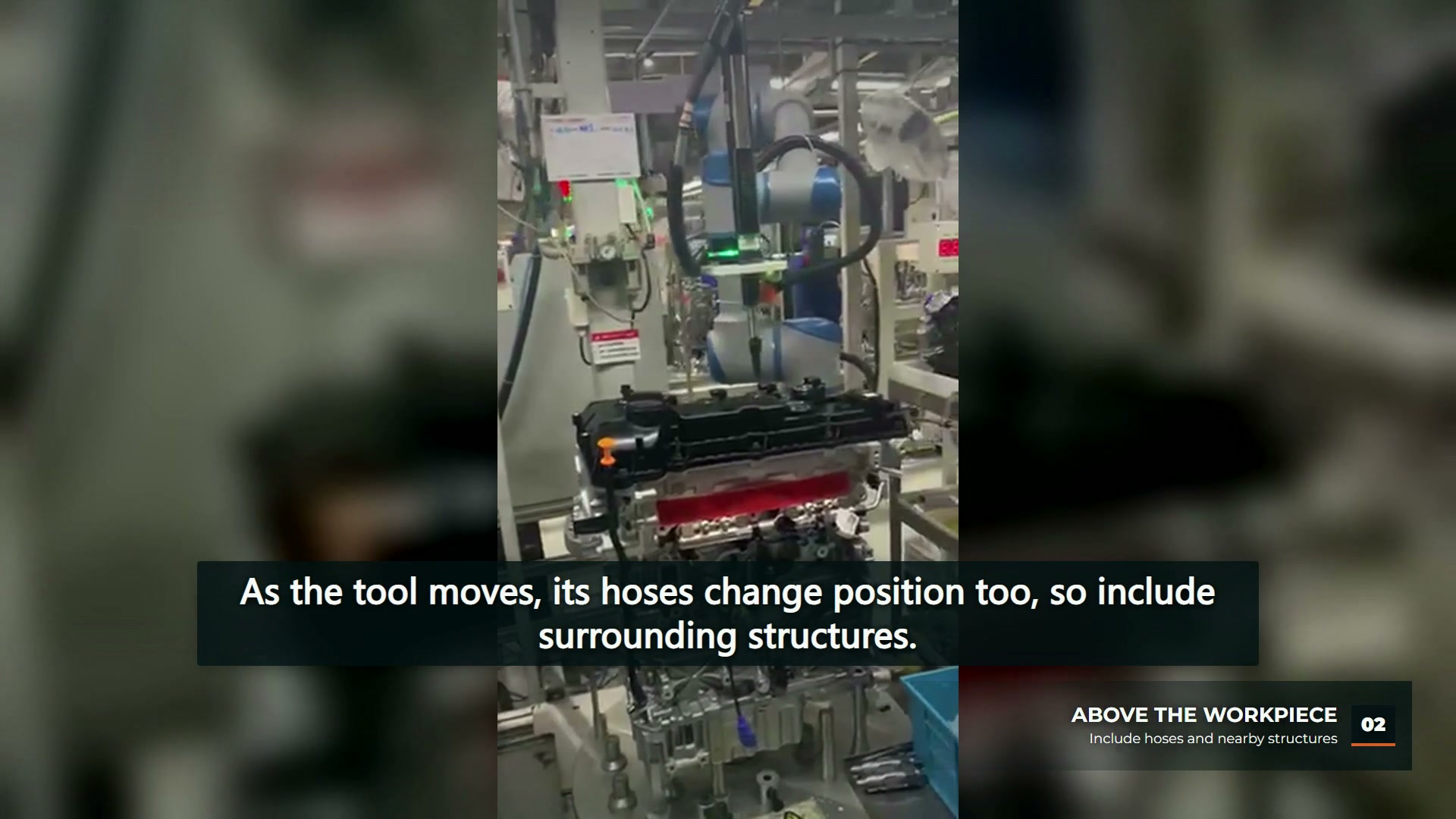
For a proposed hose change, the useful question is what the person receiving the cell will need to compare. The following record is an editorial review aid. The equipment instructions, service-component limits and the site’s approved maintenance procedure determine the actual inspection and release requirements.
Identify the changed configuration before comparing views
Record the tool, service-component identification, part variant and program revision used for the check. Mark the old and new fixing points on a drawing or labelled photographs. Include a replaced component’s length and connection arrangement where those are specified, rather than assuming that similar-looking replacements are interchangeable.
Then list the positions selected for comparison under the approved procedure. A view taken with a different housing, tool extension or arm position is not a like-for-like reference. Keep that mismatch visible in the record and obtain a comparable observation before drawing a conclusion from it.
Atlas Copco’s published assembly examples show that specialized tool arrangements can address particular access constraints. They do not provide service-hose limits for this filmed installation. That distinction matters when deciding which manufacturer’s instructions belong with the changed assembly.
Turn observations into a handoff decision
For each selected position, retain a view showing the fixing points, available slack and nearby structures. Note visible contact, pulling or an unclear section of the route without converting a photograph into a measured bend-radius or fatigue assessment. Requirements for permitted bending, loading and routing must come from the applicable component and equipment documentation.
| Observation in the change record | Handoff action |
|---|---|
| Before and after views use different configurations | Identify the difference and obtain a comparable check |
| A fixing point moved | Mark its new location and reassess the affected route under the approved procedure |
| A service line contacts a neighbouring component | Record the location and refer the finding for correction or technical assessment |
| A relevant section cannot be seen | Mark the evidence gap and assign the required inspection |
| Required checks are complete | Record results and the responsible person’s disposition against the applicable release requirements |
An empty findings column should not substitute for a release decision. Preserve who assessed unresolved observations, which configuration the disposition covers and any restrictions carried into the handoff.
Keep the maintenance decision connected to the joint record
The fastening approach and withdrawal review addresses initial movement planning. This companion addresses traceability after a service-routing change. It does not establish that the tightened connection meets its specification.
Atlas Copco’s tightening guide explains how friction and lubrication affect the relationship between tightening torque and clamping force. Keep the applicable joint-validation requirements with the work record; neither the video nor a completed hose inspection supplies those results.