Seeing a robot sweep a nozzle across a workpiece proves motion, not process acceptance. Before buying a robotic spray cell, separate three questions: can the robot reach the required poses, does the spray cover the specified area under real conditions, and does the surface meet the buyer’s process criterion afterward?
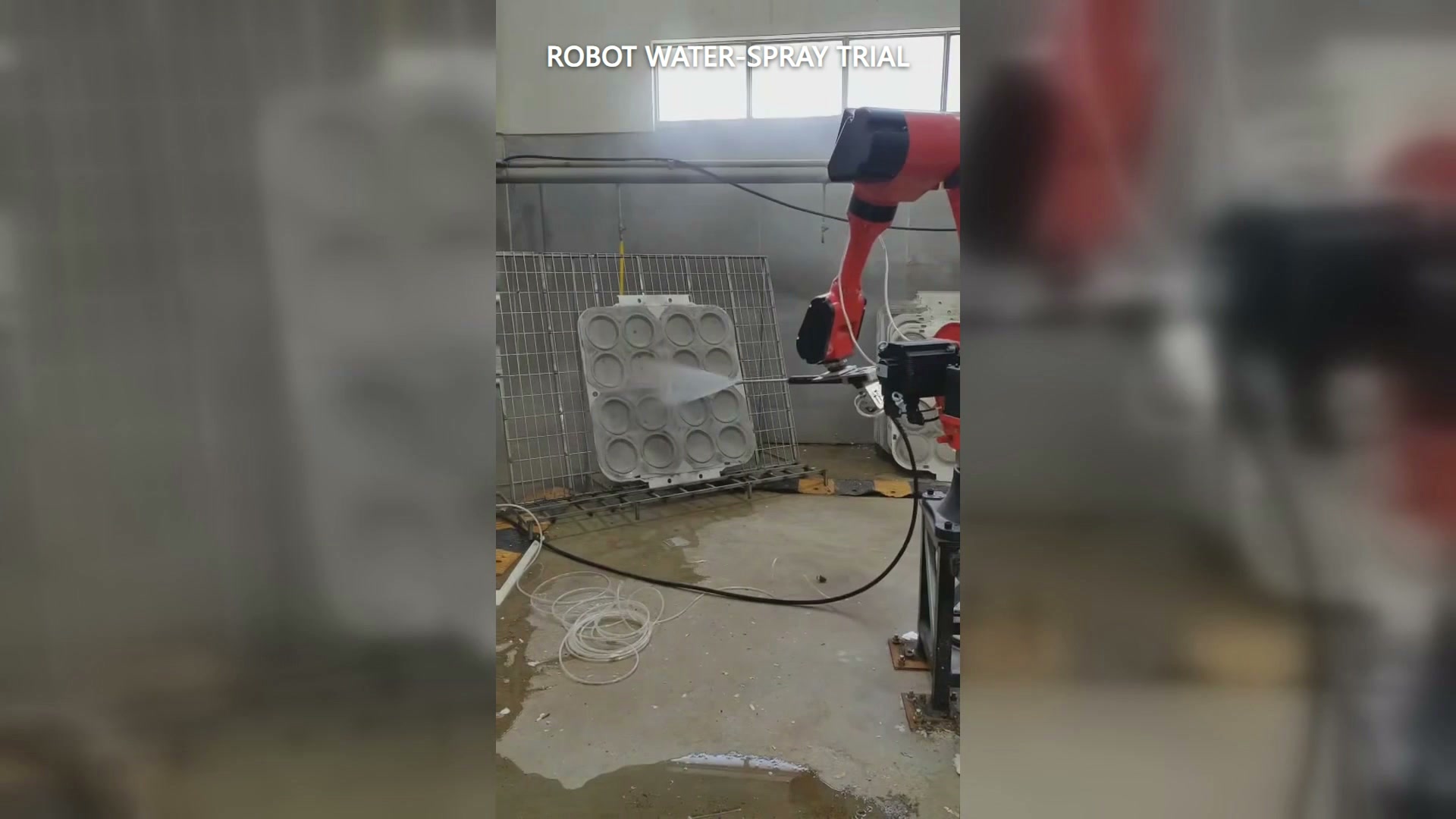
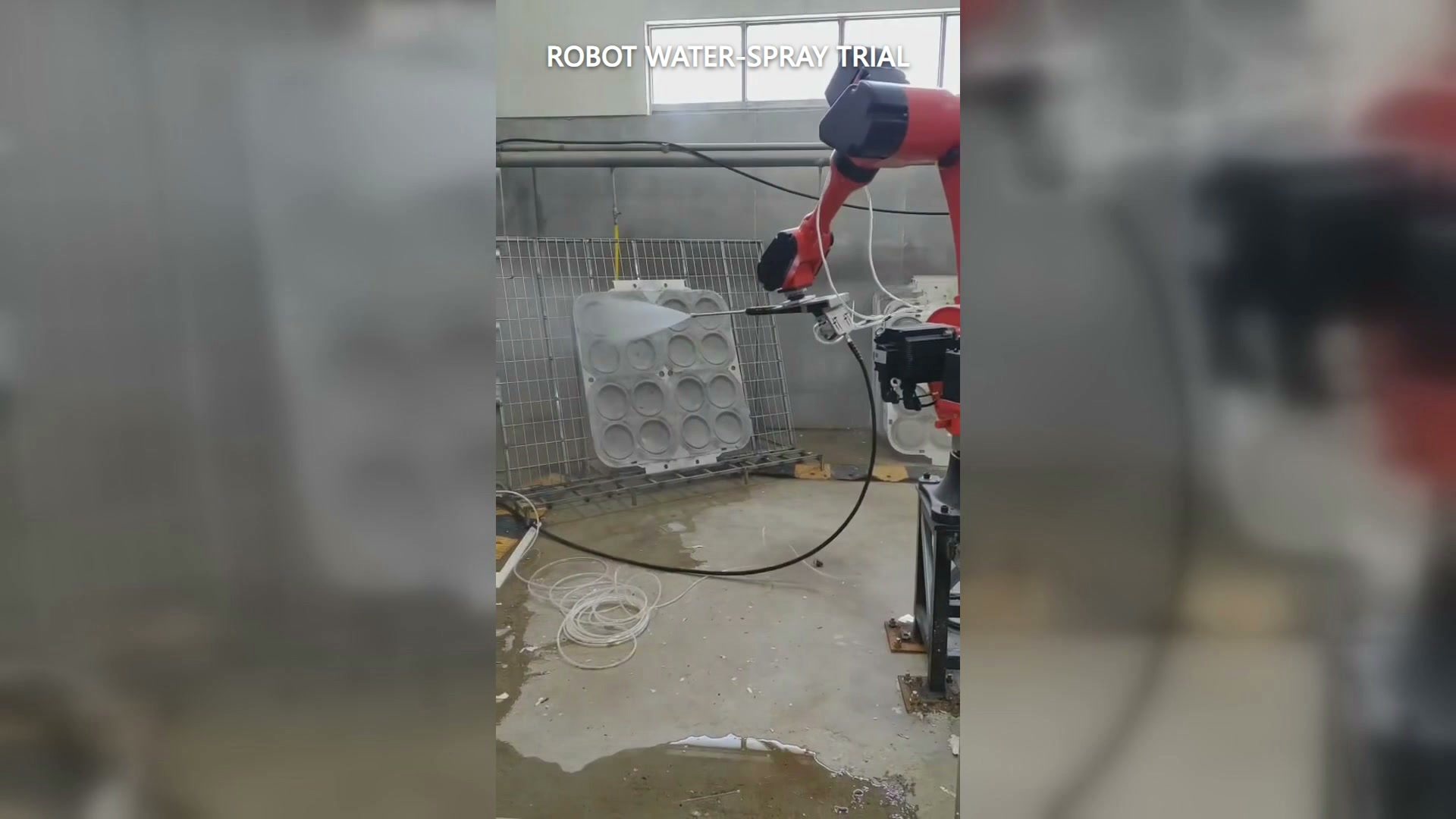
The case footage shows a red industrial robot carrying a slender nozzle and spraying water over a large, light-colored workpiece with recessed geometry. A visible fan of water follows the robot path as the nozzle changes position over the surface.
1. Which workpieces must the trial represent?
Choose samples by geometry, not convenience. Include the deepest recess, an edge that changes nozzle orientation, the farthest required pose and any variant that changes stand-off distance. A flat plate cannot answer access questions created by a cavity.
Provide the actual fixture or a representative mounting arrangement. Reach must be tested with the nozzle, service routing and workpiece all present—not with an empty robot wrist.
2. What conditions define the spray?
Document the intended fluid, nozzle, operating condition, spray distance, angle and path speed for each run. Official nozzle guidance explains that theoretical coverage changes with spray distance and spray angle, and that critical coverage should be verified for the application.
If the production process uses a different fluid condition from the demonstration, repeat the relevant test. A path that looks similar on video may not create the same pattern on the part.
3. How will coverage be checked?
Define the required region and an observation method before running the trial. Depending on the process, that might be a witness medium, mapped inspection zones or another agreed measurement. Record missed areas, excessive overlap and changes around recesses or edges.
Coverage evidence remains distinct from the final process result. A wetted surface is not automatically clean, coated, cooled or otherwise acceptable.
4. What is the process acceptance criterion?
The buyer owns the definition of success: the contaminant to remove, coating condition to achieve, thermal condition to reach, or another measurable requirement. Use representative input condition and inspect the output with the agreed method. Do not replace this with “the robot completed the path.”
5. What happens to the hose at difficult poses?
Run the farthest reach, reversals and orientation changes while observing the actual hose or service package. Look for snagging, excessive bend, contact with the workpiece, and forces that alter nozzle pose. Retracting service packages are one optional approach to interference management; the project still needs a trial with its actual services and difficult poses.
6. Which records should leave the trial?
Keep the workpiece variant, fixture revision, fluid condition, nozzle setup, distance/angle targets, path revision, coverage observation, process result and hose observations together. Note every changed variable between runs. A video can accompany that record, but it cannot replace it.
Send EVST the workpiece images or model, present process objective, fluid conditions and acceptance criteria to discuss robot work range and the process variables the trial must verify: تماس با EVST.