
In short: The product rides a pallet down a straight conveyor and stops at one station after another. A robot places a part onto the body, a press head seats it, a driver unit runs in from the side and screws it down, a robot turns the body over, clips go in, an inner pot drops into place, and at the end a robot packs the finished unit into a carton. Three decisions carry a line like this: how the pallet locates at each station, which steps genuinely need vision, and how flips and pick-and-place fit the cycle. Planning a line? Get a layout and cycle-time estimate.
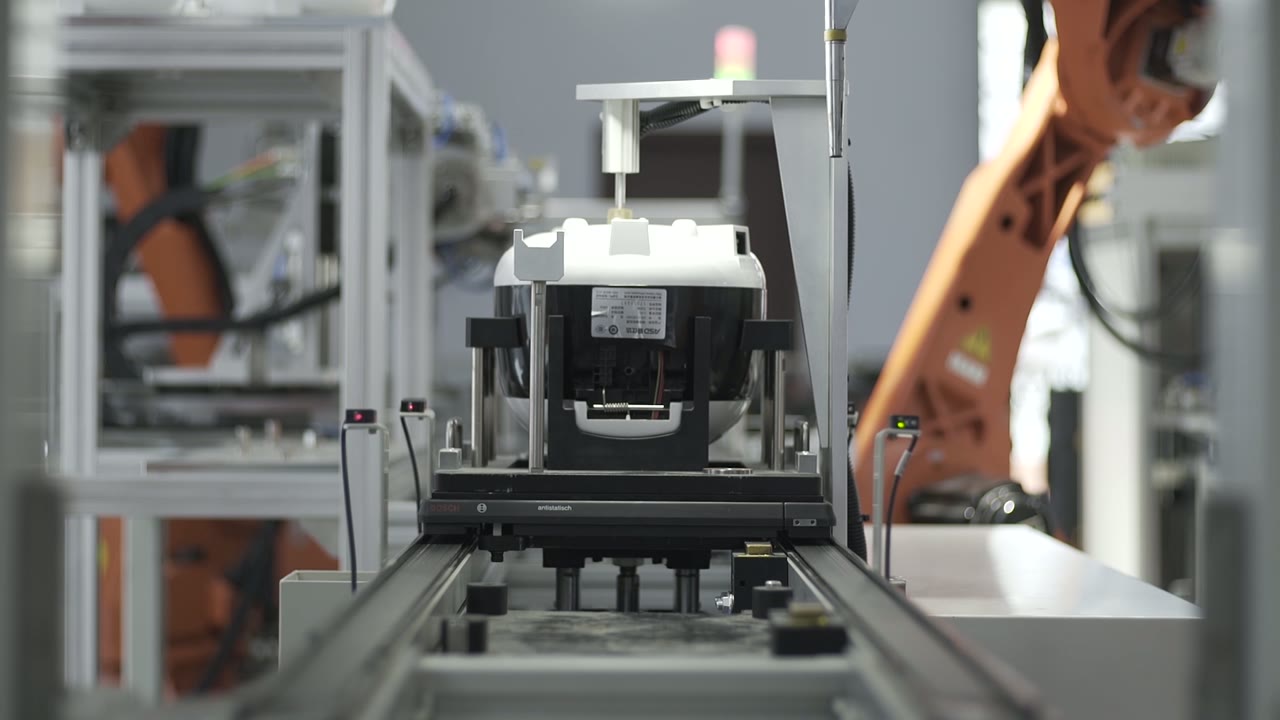
At a glance
| Product | Small household appliance — moulded body, inner pot, cover clips |
| Process | Assembly, screwdriving and packing |
| Transport | Pallets on a straight powered conveyor |
| Automation | One robot per station, plus fixed press and driver units |
| Parts supply | Line-side nests beside each station |
| Handling | Pick-and-place, press to seat, screwdriving from the side, a flip, final packing |
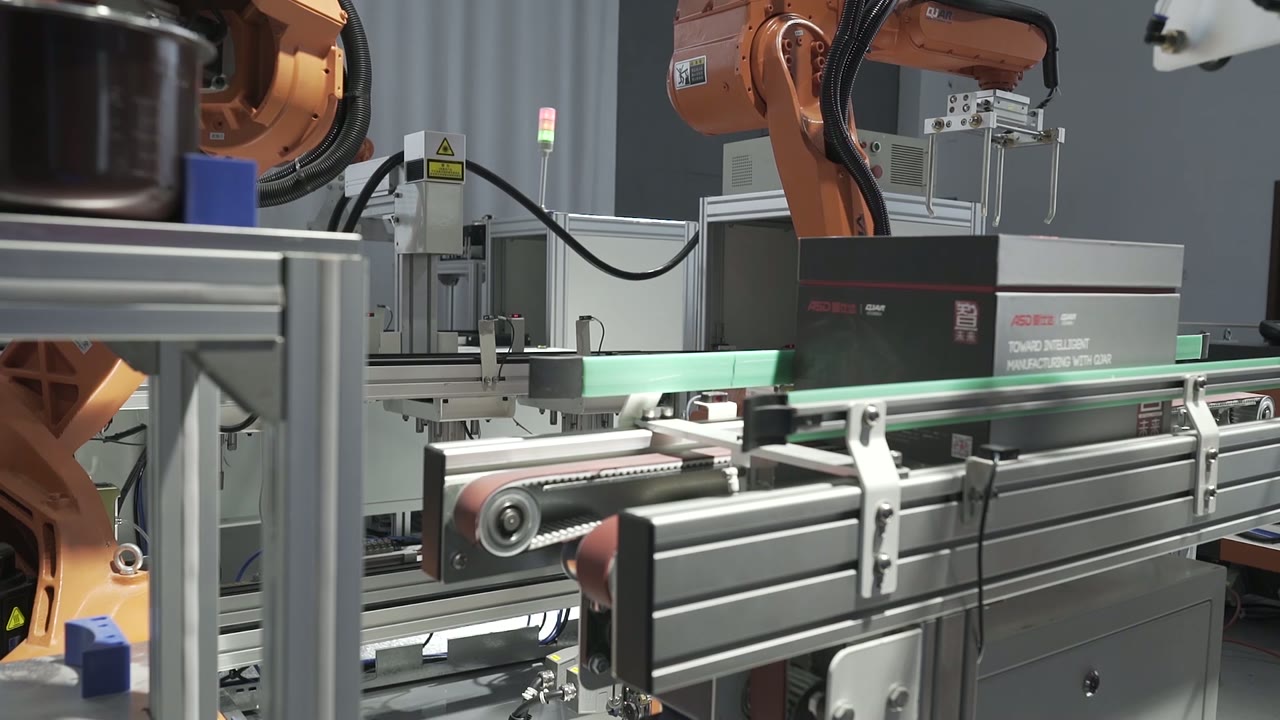
| Output | Finished units packed into cartons and conveyed off the line |
| Test station | One stop where the unit stands still and a cable is connected |
The problem this line addresses
A finished appliance is a long chain of small operations: place, seat, screw, flip, clip, insert, test, pack. Each one is easy. The difficulty is doing them identically for every unit, every shift, and rebalancing the whole chain when the product changes.
A pallet line answers that by fixing the order and the datum: the product is located once on a pallet and everything after that references the pallet. The stations become interchangeable slots, and changing the product means changing fixtures and programs rather than re-teaching people.
How the line runs
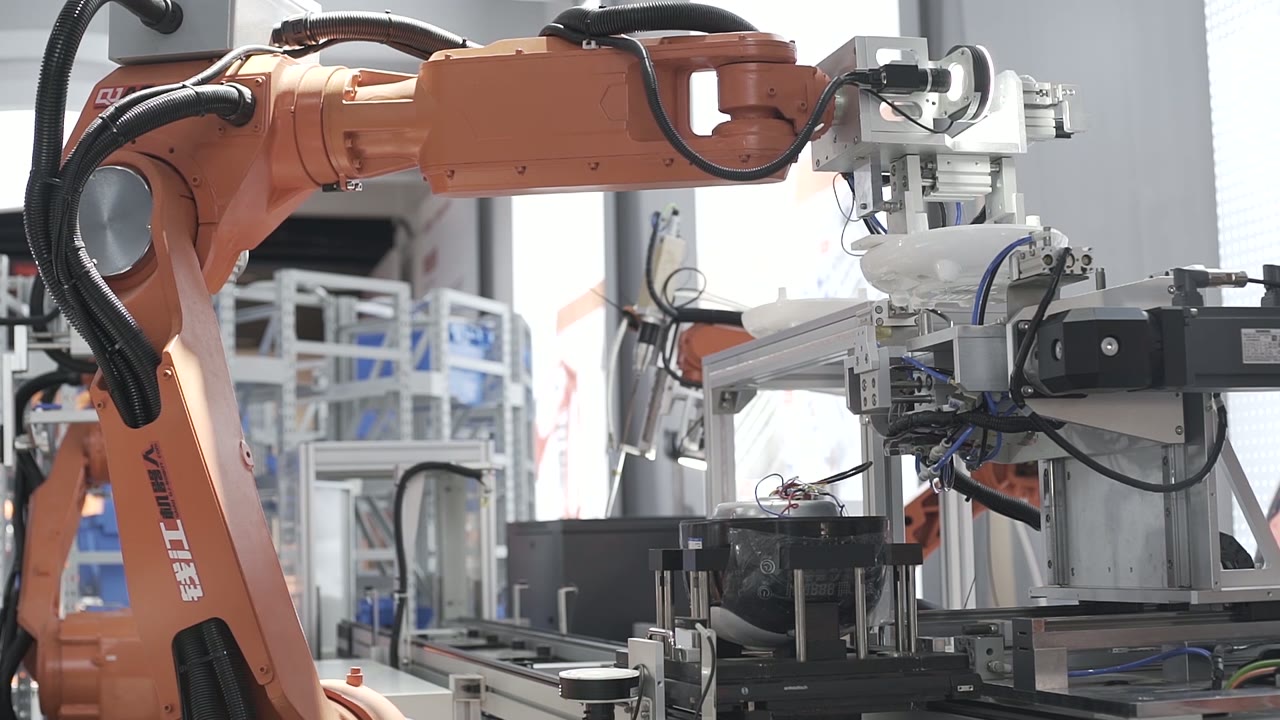
- Place. A robot takes a part from the line-side nest and sets it onto the body on the pallet.
- Seat. A press head comes down from above and seats the part.
- Screw. At the screwdriving station a powered driver runs in from the side on a rail, drives, and retracts.
- Index. The pallet carries the unit to the next station.
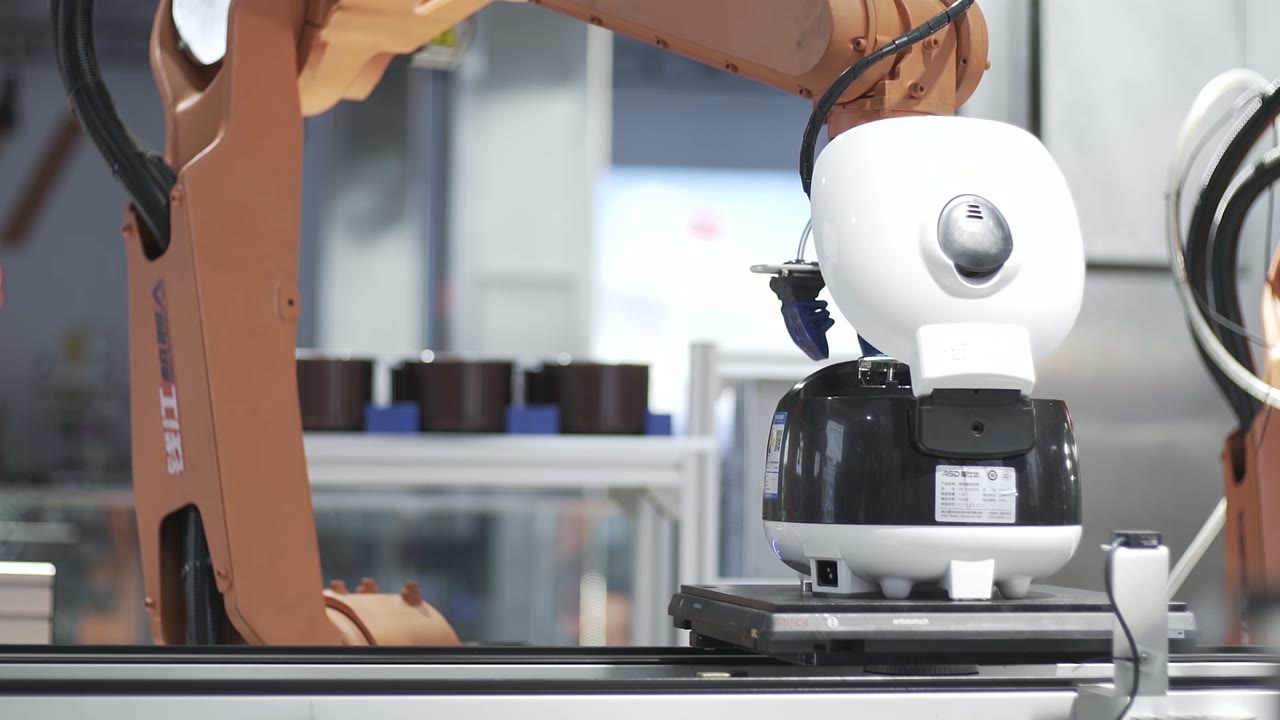
- Flip. At one stop a robot turns the body over and sets it back on the pallet so the next face is up.
- Clip. Small cover clips are taken from a nest and pushed into place.
- Insert. Further down, a robot lifts an inner pot from a row of nests and drops it into the body.
- Pack. At the end a robot lifts the finished unit into a carton, and the boxes queue up and leave the line.
Three design decisions
1. Decide what the pallet locates, and what it does not
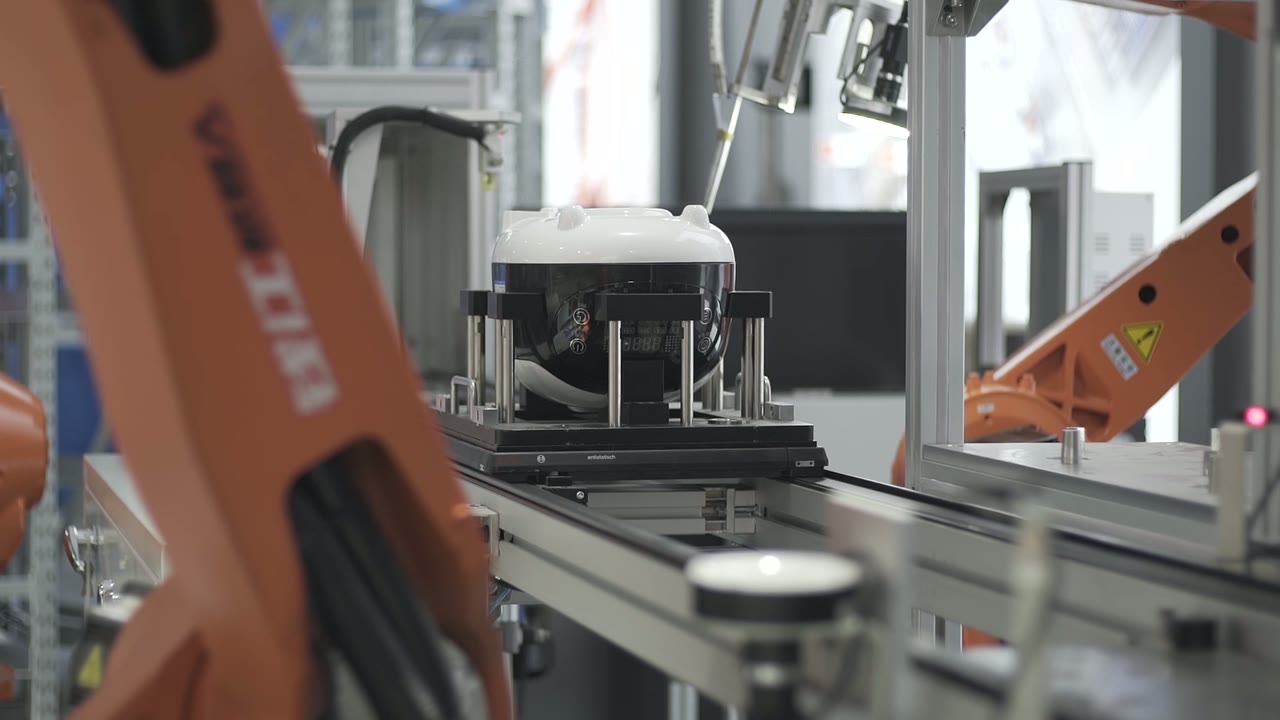
Every station after the first one trusts the pallet. That trust has to be earned in three places:
- Product to pallet. How the product is held: a nest, pins, clamps — and how much it can move once it is in.
- Pallet to station. How the pallet is stopped and lifted or pinned at each station. Stopping against a hard stop and pinning is common; the accuracy you get there is the accuracy every station inherits.
- Return and cleaning. Pallets come back around, collect debris and wear. A worn locating bush on one pallet shows up as a single station failing on one unit in twenty.
Question to settle early: which operations actually need the tight tolerance? Everything else can be given clearance, and clearance is cheap.
2. Put vision where it buys something
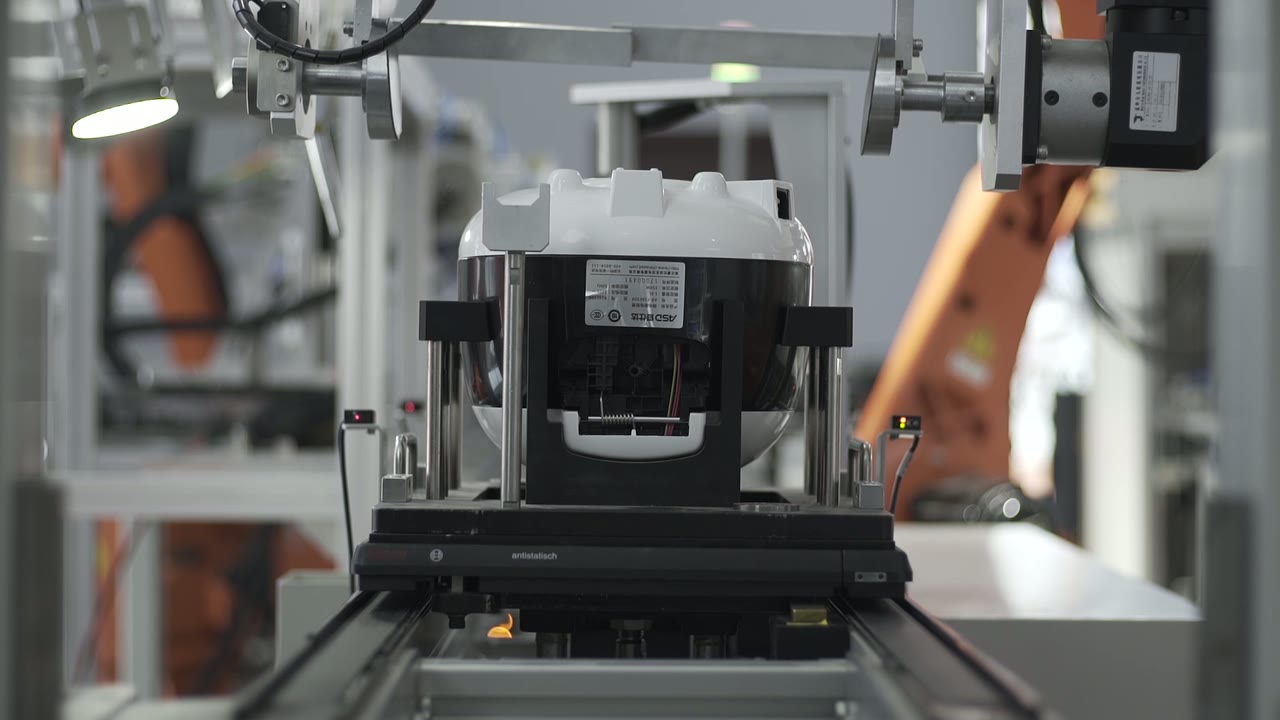
Vision on an assembly line is worth its cost in a few specific places: when a part arrives in an unknown position, when an operation has to find a feature that moves relative to the datum, and when a defect must be caught before the value of the assembly grows.
It is worth much less when a good fixture would do the job. A part presented in a nest, on a located pallet, does not need to be found — it needs to be held. The useful test: what is the failure that vision prevents, and what does that failure cost if it reaches the next station?
The same logic applies to verification. Presence and position checks after a critical step usually pay for themselves; a camera added because the station looked complicated usually does not.
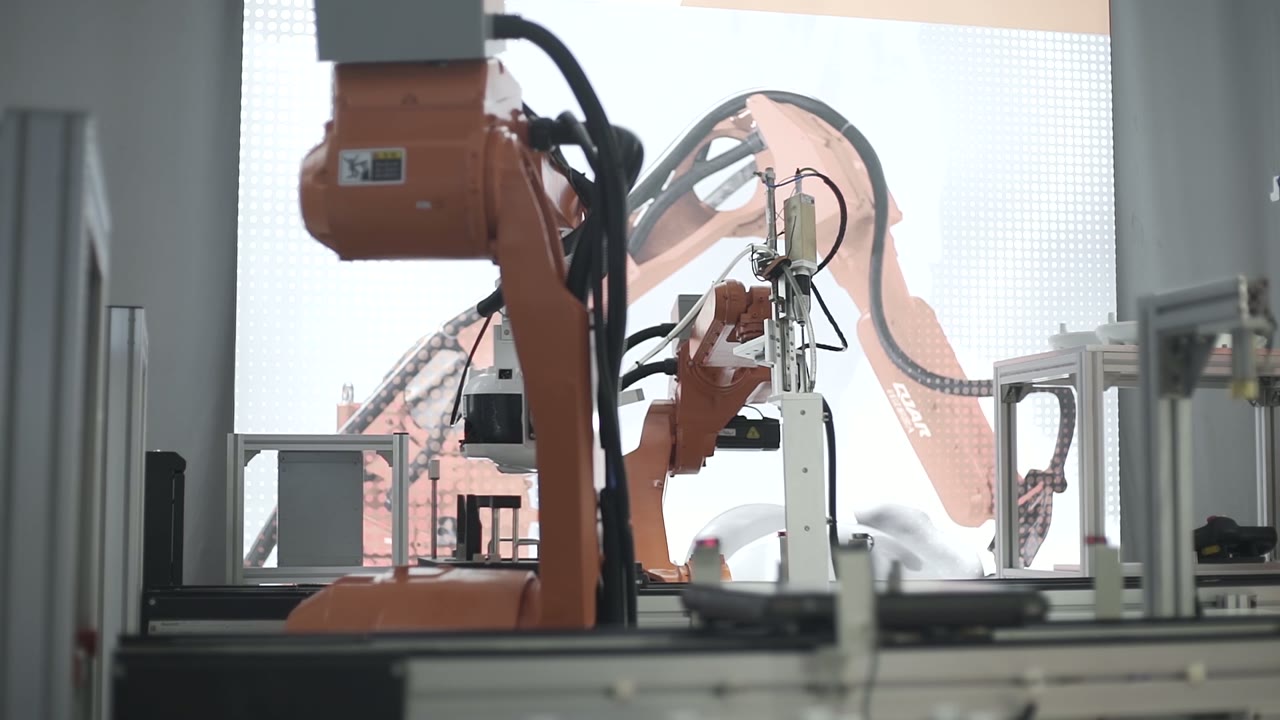
3. Balance flips and pick-and-place against the slowest station
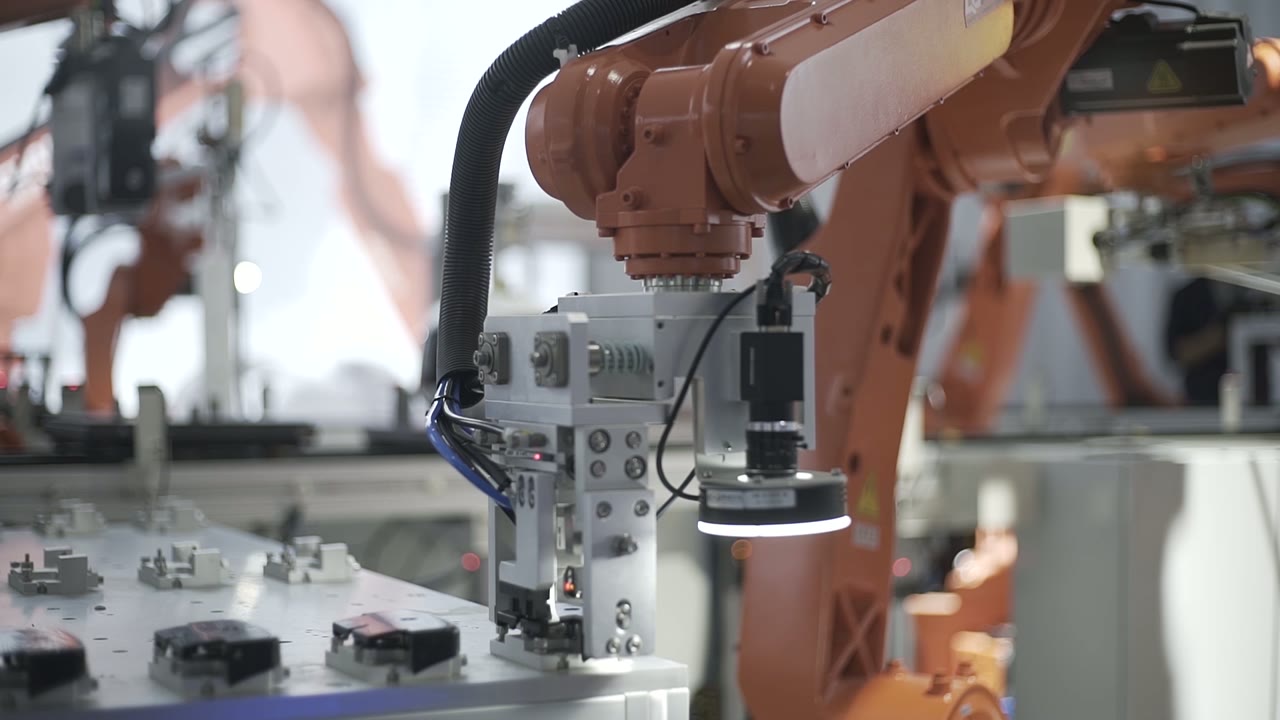
A line runs at the pace of its slowest station, and flips and long pick-and-place moves quietly become that station. Three practical points:
- Count the moves, not the operations. A “simple” flip is a pick, a rotation, a place and a return — often longer than the screwdriving it precedes.
- Merge or split. Two short operations at one station can share a robot; one long operation can be split across two stations rather than slowing the whole line.
- Design for the changeover. Nests, grippers and programs multiply by the number of variants. Quick-change tooling and a single product-selection point keep the changeover a few minutes rather than a shift.
When this layout fits — and when to look closer
- Good fit: stable product families with a defined assembly order, volumes that justify dedicated nests and fixtures, and parts that can be presented in an ordered way at the line side.
- Evaluate further: many variants with different assembly orders, parts that arrive in bulk and need singulating first, operations that still need human judgement (cosmetic checks, cable routing), and a product whose next generation changes the main datum.
FAQ
Why pallets instead of a free-flowing conveyor?
Because the product is located once and every station inherits that location. Free-flowing transport is fine for moving product between manual benches; for robots it pushes the locating problem into every station.
Where does the line usually lose time?
At the station with the longest single move — often a flip or a long pick — and at changeover. Both are layout decisions, not robot decisions.
Does every station need a robot?
No. Fixed units — press heads, driver units on rails — are cheaper and faster where the motion is always the same. Robots earn their place where the path changes with the variant, or where one arm serves several tasks.
Get a layout and cycle-time estimate
Send us:
- Assembly drawing and the assembly sequence
- Part list with how each part can be presented (nest, tray, bulk)
- Number of variants and changeover frequency
- Daily or annual volume, shifts, and the target line rate
- Floor plan with available length and the position of upstream and downstream equipment
We will reply with a line layout proposal and a cycle-time estimate.
Get a layout and cycle-time estimate → or email sales@evsrobot.com
Footage filmed at a partner’s production site. Line rate, station times and product figures from that site are not public and are not given here.