
A robotic fastening layout is incomplete until the tool can leave each bolt position and reach the next one with its full body accounted for. Reaching the fastener head resolves only a point. A useful review distinguishes axial approach, withdrawal and the change in orientation between locations, then evaluates connection quality using separate requirements and records.
The long tool is part of the layout
At 00:06, the video shows a long fastening tool above a housing on a worktable. The tool body and surrounding workpiece geometry are visible together. The image does not supply dimensions, bolt specifications or a measured clearance.
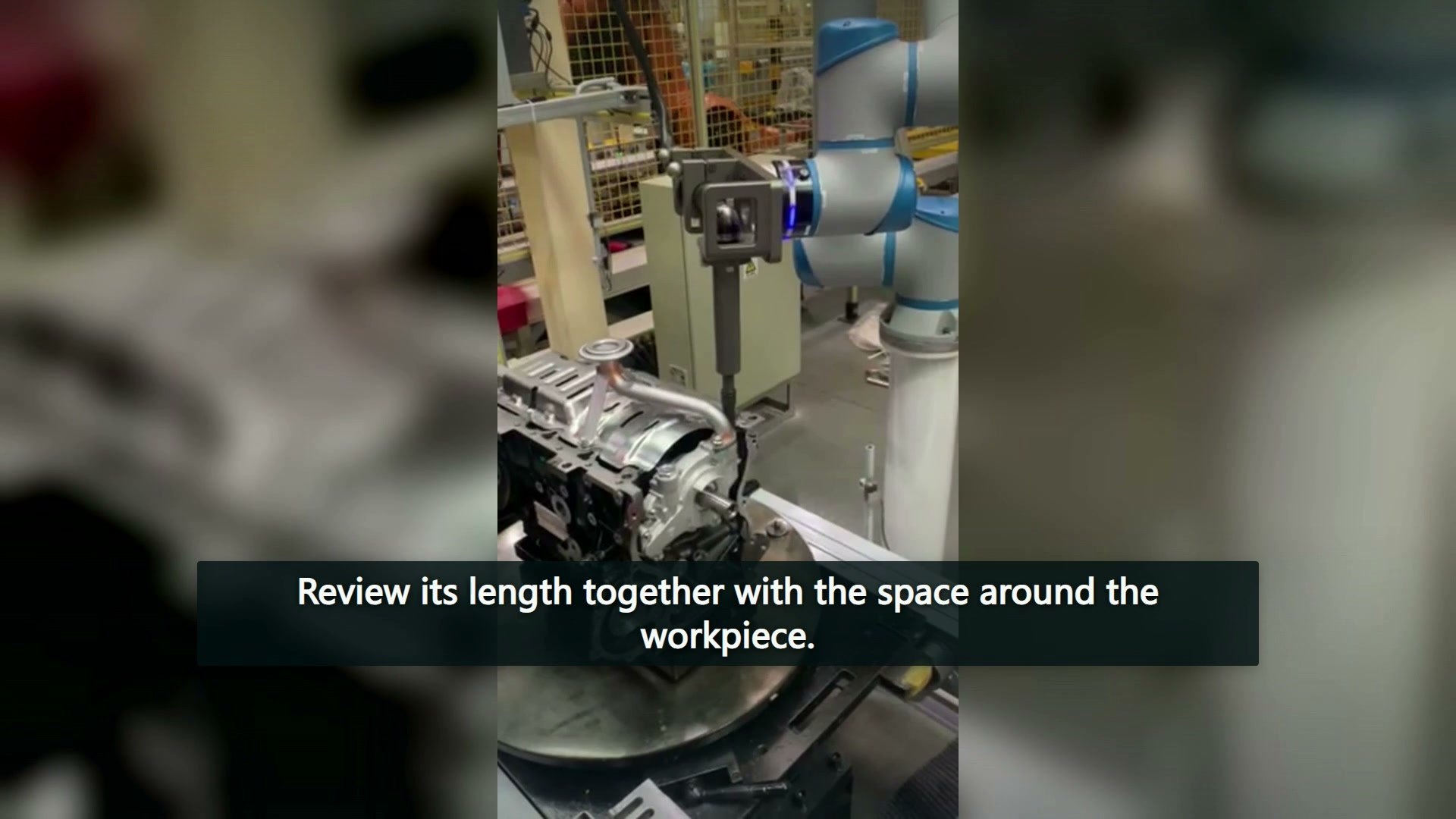
For a proposed housing, place the complete installed tool beside each relevant bolt location in the drawing. Include nearby bosses, recess walls and fixture structures. If one position is accessible, retain that conclusion only for the position and configuration actually examined; a different recess may require a different approach.
Tool shape is a constrained choice
Atlas Copco’s aerospace assembly examples describe offset and other tool arrangements for restricted access, with access and torque needs informing the choice. These are examples from a particular industry and tool range. They are not recommendations to install those products on the robot in this video.
The useful purchasing question is which complete tool configuration can serve the required connection within the available space. Length by itself does not answer it. If a proposed tool changes, its mounting and outside shape belong in the renewed path review as well as its working end.
Preserve the departure as a separate movement
During the first station’s sequence, the tool lifts before changing its working position. An application review can use that distinction to examine the withdrawal direction before considering the transition to another bolt. If a housing feature constrains a turn, record the relevant pose and the intervening geometry instead of leaving the instruction as a general request to adjust the path.
At 00:33, the view has changed to another workcell, with a robot moving around a different workpiece. It must not be joined to the opening station as a single production cycle. The second view widens the layout discussion but supplies no missing torque result for the first.
The earlier discussion of reach at multiple working points considers how a station’s named positions influence reach. Fastening adds a more local question: how the installed tool enters and leaves each connection before travelling between those positions.
Connection evidence has different inputs
Atlas Copco’s tightening technique guide explains the role of friction, including lubrication, in the relationship between tightening torque and clamp force. That relationship is a reason to retain the connection conditions with the tightening requirement. It does not provide the specification for the housings shown here.
An assessment should therefore distinguish two records. The geometric record identifies the bolt location, tool configuration and entry and exit arrangement. The connection record states the fastener and joint conditions, the required tightening outcome and its verification method. A smooth approach or a pause at the bolt cannot substitute for the latter.
Keeping these questions separate makes a tool proposal easier to examine. A reviewer can identify whether an unresolved item concerns physical access, the selected tightening equipment or evidence of the connection result, without treating robot motion as proof of all three. The footage also establishes no collaborative operating conditions; those belong to the actual integrated application assessment.