
An additional inspection viewpoint is useful when it contributes information needed to judge a target. Before retaining another robot position, identify what becomes visible there, whether the image conditions are usable, and how that view complements the others. More motion around a workpiece does not by itself establish better inspection coverage.
Ask what the next view adds
At 00:05, two arms are visible around the central workpiece. At 00:27, the selected sequence shows a different approach relationship near the upper part of the workpiece. The low-resolution recording illustrates positions and illumination, not the inspection images or the smallest detectable feature.
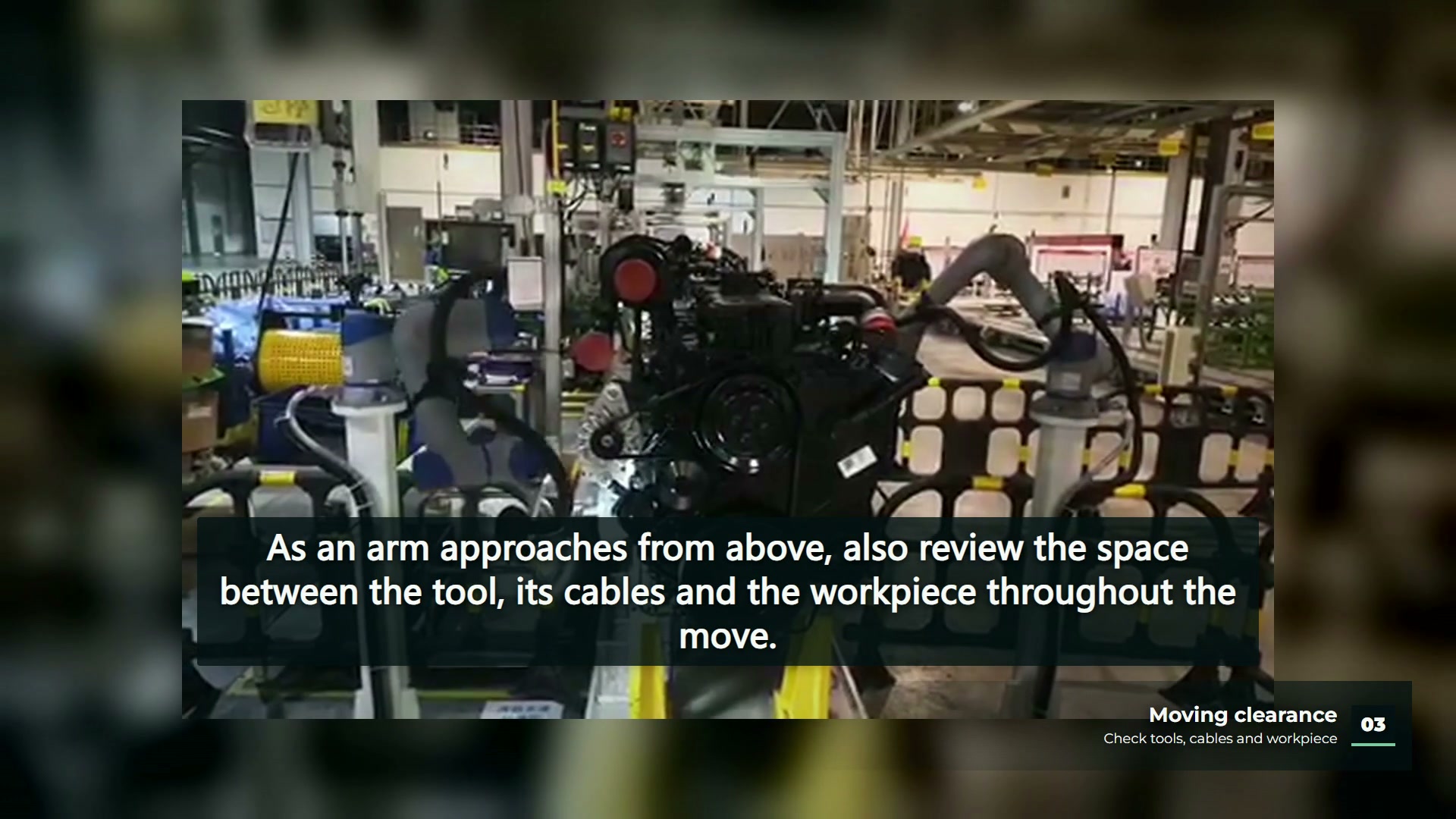
For an assessment, a view list can begin with a target region rather than a robot position number. Record what obstructs that region in the first image and what the next image is intended to resolve. If the target remains hidden, a different arm pose has added motion without supplying the missing observation. If a useful surface becomes visible, preserve the image conditions needed to reproduce that view.
Visibility and contrast answer different questions
A surface may be in the field of view yet remain difficult to interpret. The machine-vision lighting selection guide discusses lighting choice in relation to the target surface, inspection purpose, and installation conditions. This supports testing illumination with the actual target. It does not establish which lighting method the recorded station uses.
Consider these distinctions when deciding whether to keep a candidate viewpoint:
| Observation during a trial | Question raised by that view |
|---|---|
| The required region is outside the image or hidden | Does another geometry expose the region? |
| The region is visible but glare masks its detail | Can an appropriate lighting or viewing arrangement preserve useful contrast? |
| The region is clear only for one part location | Is the view valid over the agreed positioning variation? |
| The same information is already available elsewhere | Does retaining this view serve a separate requirement? |
The table is a way to organize trials, not an assertion that any of these conditions occurred in the filmed installation. The resulting view set should explain what each retained image contributes.
Test the image conditions that will actually vary
The image acquisition and collection guidance emphasizes representative training images for its learning-based tools and warns that learning does not overcome poor input images. Its training requirements belong to that method; the video does not establish that a learning-based algorithm is present.
For a project using such tools, the relevance is specific: changes in lighting, optics, or workpiece presentation need to be represented in the image evidence used for development and validation. For other inspection methods, define an appropriate validation procedure rather than borrowing the training terminology. In either case, the recorded arm movement cannot supply the missing image labels or inspection results.
The earlier vision inspection view-and-recheck guide covers the wider inspection architecture. This companion focuses on a smaller editorial question: what justifies retaining an extra view before expanding that architecture?
A view set is not an acceptance record
The material contains no defect labels, false-reject analysis, missed-defect results, or measurement traceability. Nor does the appearance of the arms establish permission for people to enter the moving area. Those conclusions require their own application evidence.
A useful next step is to pair each proposed target region with representative acceptable, unacceptable, and ambiguous samples. That gives the viewpoint discussion an observable purpose and makes missing evidence visible before detection claims are made.