
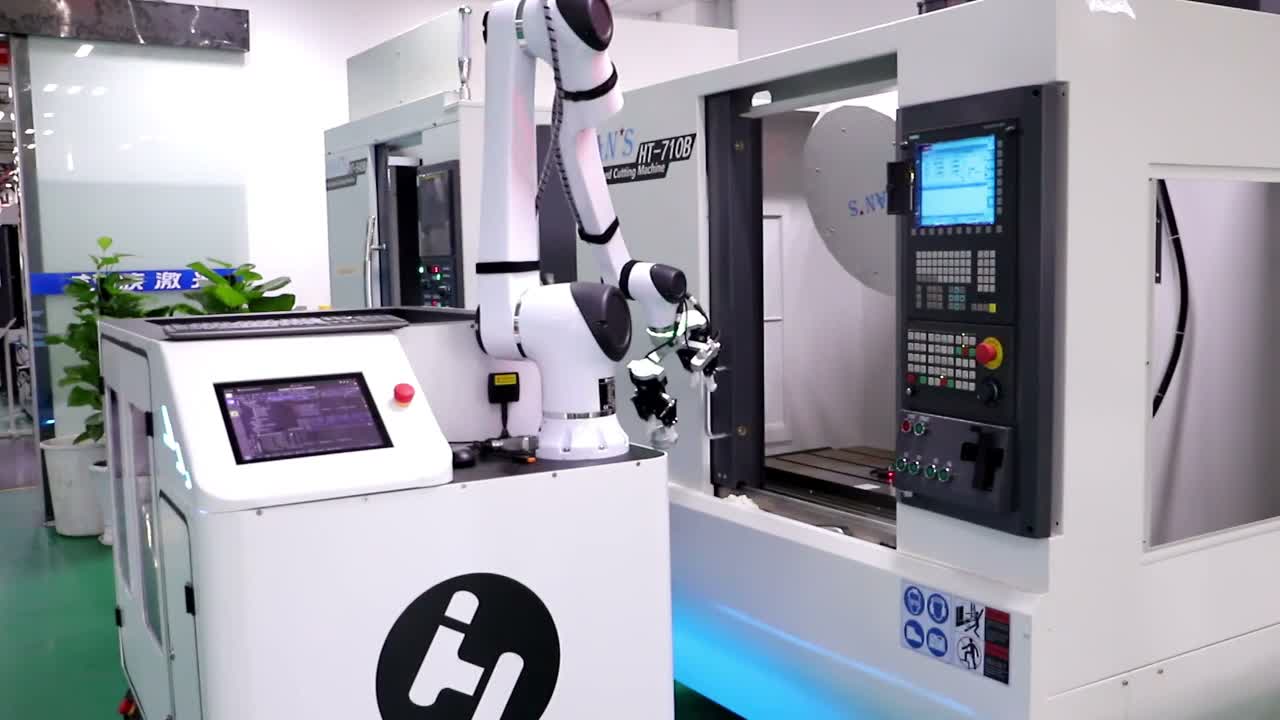
A mobile robot CNC machine-tending concept has to coordinate three interfaces: the tray, the machine opening, and the docking position that makes both reachable. In the recorded case, a collaborative arm mounted above a mobile base picks a cylindrical metal workpiece from a tray, turns toward a CNC machine, reaches into the work area, returns to the tray, and later the base drives away. The useful design question is how to make those handoffs repeatable without treating mobility and manipulation as separate projects. Заявете преглед на заявлението от EVST.
Start with the three interfaces
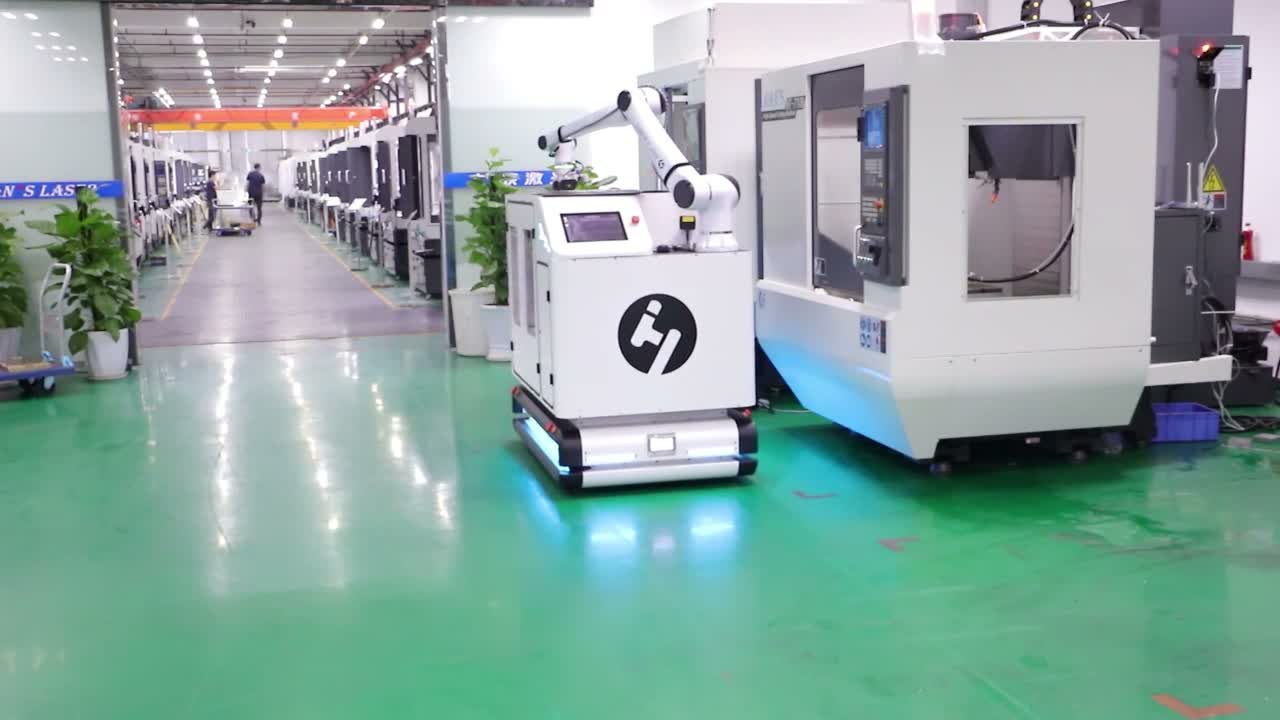
The footage makes the sequence easy to read: the base is docked beside the machine; the arm reaches to a tray carried on the base; it lifts a cylindrical workpiece and turns toward the machine; the arm enters the machine work area for a visible placement; it then returns toward the tray. Near the end, the mobile base leaves the machine and travels down the aisle.
For another cell, each of those interfaces needs a defined state. The tray must present a part within the gripper’s usable approach range. The docking location must place the robot’s entire task envelope in the intended relationship to the machine. The machine interface must provide a known permission for entry and a known condition for withdrawal. A mobile platform can serve more than one station only when those states are explicit and recoverable.
Make docking accuracy part of the reach study
Robot reach should be checked from a tolerance zone rather than from one perfect base pose. The study should combine the allowed docking variation, tray-location variation, workpiece presentation, gripper geometry, machine-door opening, fixture access, wrist posture, cables, and nearby structures.
The recorded arm approaches the tray, rotates toward the machine and reaches into the work area. That visible route supports an interface study, but it does not establish the permitted docking error or the programmed positions. During concept work, test the least favorable positions within the proposed docking zone. If a small base offset consumes the remaining wrist or tool clearance, the layout needs a stronger locating method, a larger clearance, or a different handoff geometry.
Define the handoff as states, not one motion
A robust sequence separates permissions and confirmations. Before machine entry, the system should know that the base is at the intended station, the machine is in the agreed access state, and the part state is known. After placement or retrieval, the robot should clear the machine envelope before the next machine or vehicle action is allowed.
The footage shows a dual gripper working around the tray late in the sequence and the arm moving a white tray at about 85 seconds. Those observations do not establish a changeover method. They do show why the state model should cover the gripper, workpiece, tray and machine interface independently, including what the system may do after an interrupted move.
Plan traffic, guarding and recovery together
A mobile base changes the cell boundary. The assessment should cover the travel aisle, people and other traffic, station approach, docking area, manipulator motion, machine hazards and the conditions for automatic departure. Applicable local requirements and the selected equipment documentation govern the final safeguarding design.
Recovery cases should be designed before cycle optimization: a part not confirmed in the gripper, a base that has not reached its docking state, a machine that does not grant access, or a stop while the arm is inside the machine. Each case needs a safe state, a permitted withdrawal route and a clear rule for resuming. This prevents an operator from having to infer the last valid step.
Входни данни за полезно проучване за осъществимост
Provide the machine layout and door opening, loading position, fixture details, representative workpieces, tray drawings, part presentation tolerances, available docking space, aisle constraints, required station sequence, machine signals and the intended acceptance checks. Include the production mix and operating pattern so the concept can distinguish routing time from work at the machine.
A useful output is a station-interface map, reach and clearance study across the docking tolerance zone, gripper and tray concept, signal/state sequence, safeguarding concept, recovery matrix and a trial plan. Cycle estimates should follow that work instead of being inferred from a field video.
Практически въпроси преди детайлното проектиране
Can one mobile robot tend several CNC machines?
Potentially, if every station has a validated docking interface, reachable task geometry, compatible part presentation, traffic plan and machine handshake. The number of stations depends on the real route and operating demand.
What should be checked before choosing the mobile base position?
Check tray access, machine opening, fixture reach, full arm and gripper envelope, docking tolerance, service routing, guarding and a clear withdrawal path.
How should a tray and dual gripper be prepared for handoffs?
Define the part presentation, occupied and empty states, gripping clearance, confirmation signals and the permitted sequence for each gripper side. Validate the full combination of tray and part tolerances.
What information is needed for a concept review?
Machine and fixture drawings, workpiece and tray data, docking space, aisle layout, signal list, operating mix, safety constraints and acceptance criteria are the practical starting set.
For teams evaluating a similar application, align the station-interface map, tolerance range and recovery states with the actual machine and part family. Заявка за преглед на заявлението за EVST или по електронна поща sales@evsrobot.com.
*Project acceptance follows the agreed project data, trial method and records.*