
For a fabrication buyer moving a repeat weld from hand work to a robot-assisted fixture. Teaching a torch path proves that a robot can reach one sample. Production asks a harder question: will the next real part locate the same joint in the same place, present an acceptable gap, leave the full torch and hose assembly room to move, and produce a weld that passes the buyer’s inspection? A quick demonstration should lead to a controlled first-part and repeat-part trial, not straight to a throughput promise.
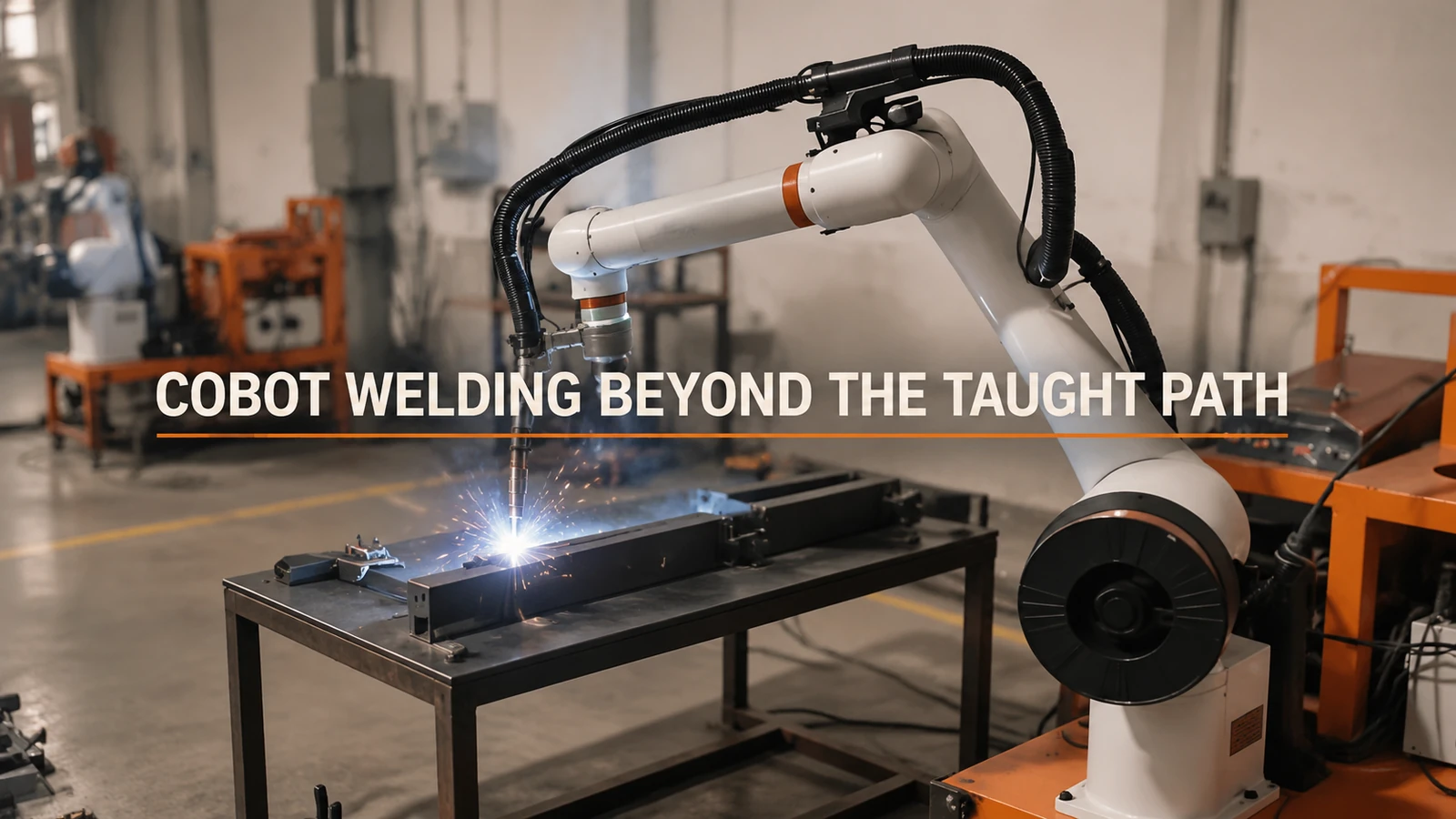
First, make the joint repeatable in the fixture
Start with the actual assembly drawing and identify the locating faces that determine the weld-joint position. Then check how the fixture loads, seats and clamps a normal part and the least favorable part within the stated incoming tolerance. The clamp should hold the intended geometry without obscuring the joint or forcing the torch into a collision. Mark the seam position and gap after clamping, not merely the robot’s programmed coordinates.
A robot repeats the taught route, while inconsistent incoming fabrication, fit-up and joint gap can move the work beneath it. If a gap varies beyond what the selected welding procedure can handle, smoother robot motion will not repair it. The engineering alternatives are to improve upstream part consistency, change locating or clamping, narrow the accepted part family, or specify and test a suitable seam-finding or compensation method. The actual parts and weld requirement decide which route is justified.
| What changes between parts? | What to record at the fixture | First change to consider if the trial fails |
|---|---|---|
| Joint shifts while nominal part dimensions look similar | Seating datum, clamp sequence, joint location after clamp | Correct datum or upstream fabrication before editing every taught point |
| Gap changes at the weld | Gap range on ordinary and worst-agreed incoming samples | Revise upstream fit-up or fixture; reassess the approved weld procedure |
| Torch reaches the first sample but not every location | Full torch/nozzle, wrist and hose clearance through approach, weld and retreat | Move clamps, change approach/torch arrangement or divide the operation |
| One part welds, later parts need frequent touch-up | Same inspection result for consecutive parts, with cause of each repair | Isolate part variation, process setting or torch/contact change before claiming repeatability |
A fixture can make the path accessible or trap the torch
For every required seam, review the torch body, nozzle, work angle, wrist and cable route, not just a point on the seam. A clamp that improves part location may block the desired approach. A path that clears with one unloaded sample may not clear after all components and clamps are present. Inspect approach, arc-on travel and retreat with the actual fixture and a representative family of parts. If access cannot be obtained without compromising the joint, change the fixture or split the task rather than teaching a risky path around the obstruction.
The application footage shows a light-colored robot welding at a long fixture table, with bright arcs visible during parts of the clip. It provides the visual context for a repeat-part welding discussion: robot, torch and fixture must work together. The video does not supply a weld procedure, joint-gap measurements or accepted-part results.
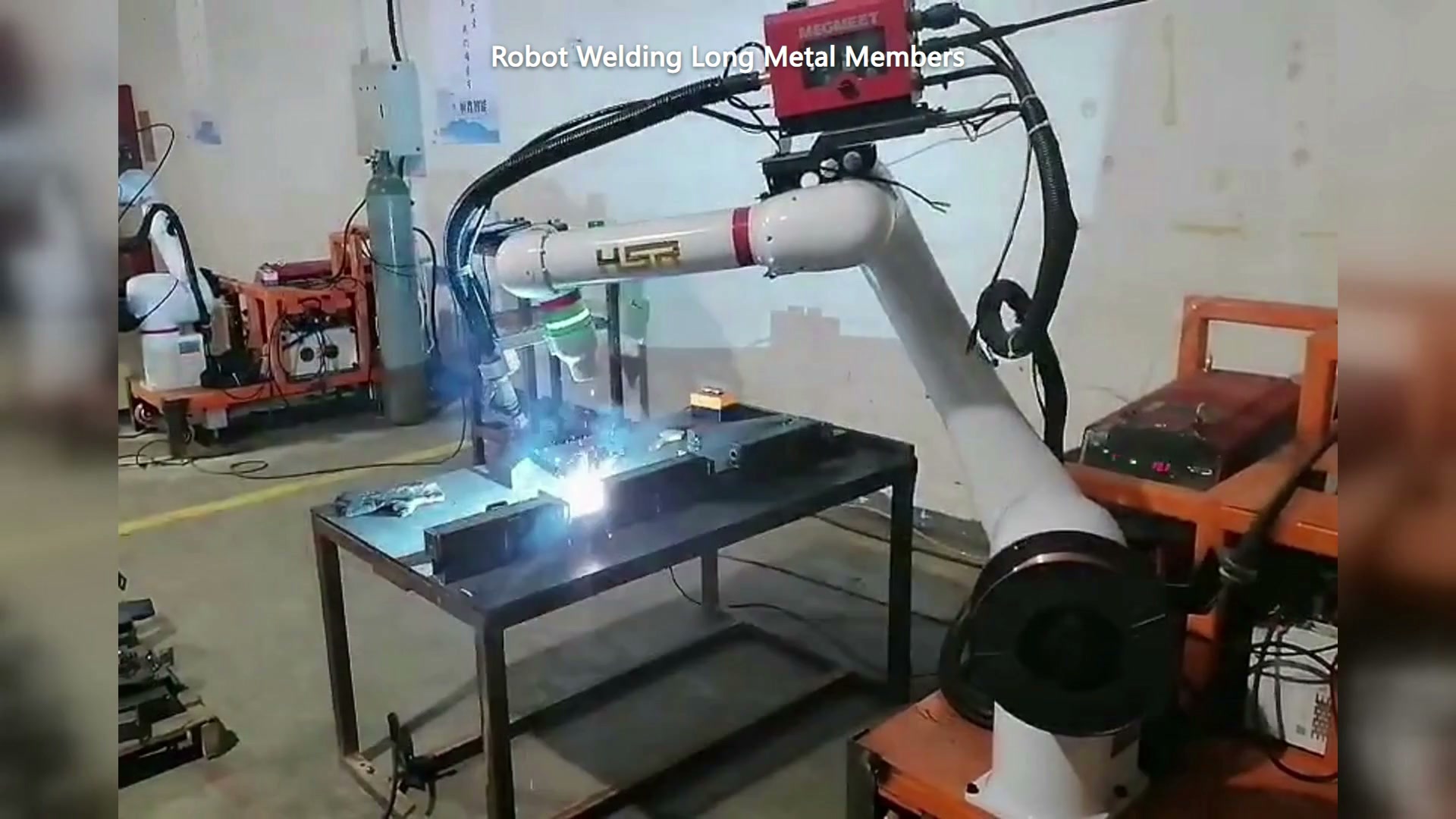
00:30 — A light-colored robot welds over a long fixture table; the welding arc is visible.
A collaborative-style arm does not make arc welding safe for unrestricted close access. The cell needs a task-specific assessment of arc exposure, hot metal, fumes and motion, followed by a defined protective arrangement. Ask which operator tasks are allowed while welding and how the cell reaches a safe state for fixture access.
Then test the weld, not only the path
Keep the welding procedure, material and acceptance criteria with the trial parts. Ask who owns the weld settings and which changes require reapproval. Run a first article with all seams accessible and inspect it by the required method. Then run representative consecutive parts and the expected part variations, noting the fixture seating, joint gap, torch access, parameter/recipe identity and inspection outcome for each. A quality result from one ideal piece cannot establish the repeatability of the next batch.
A useful acceptance record has four outcomes: accepted first pass, accepted after repair, rejected, and not safely weldable in the proposed fixture. The last category matters: a cell that needs manual refitting before each cycle may have taught a fine path but has not defined a stable production process. If a seam moves, fix location or qualify a correction method; if the gap varies, address fit-up and procedure; if a clamp blocks the nozzle, revise access; if appearance or inspection fails with stable geometry, investigate process settings and consumables. These are different faults with different owners.
Before requesting a repeat-part cobot welding concept from EVST, send the part and fixture drawings, the seam map and approved weld/inspection requirements, sample parts across the expected tolerance range, and the intended operator loading arrangement. Request a proposal showing how the joint is located, reached, welded, checked and recovered after an interruption.