
A robot is a useful next step when it can insert the permitted range of filled packs into the actual cases without people continually reshaping packs, holding flaps aside or correcting a failed insertion. Where those interventions dominate, first stabilizing the pack and case presentation may be the more useful project. Judge the completed packing task, including format changes and recovery, before deciding which manual work to automate.
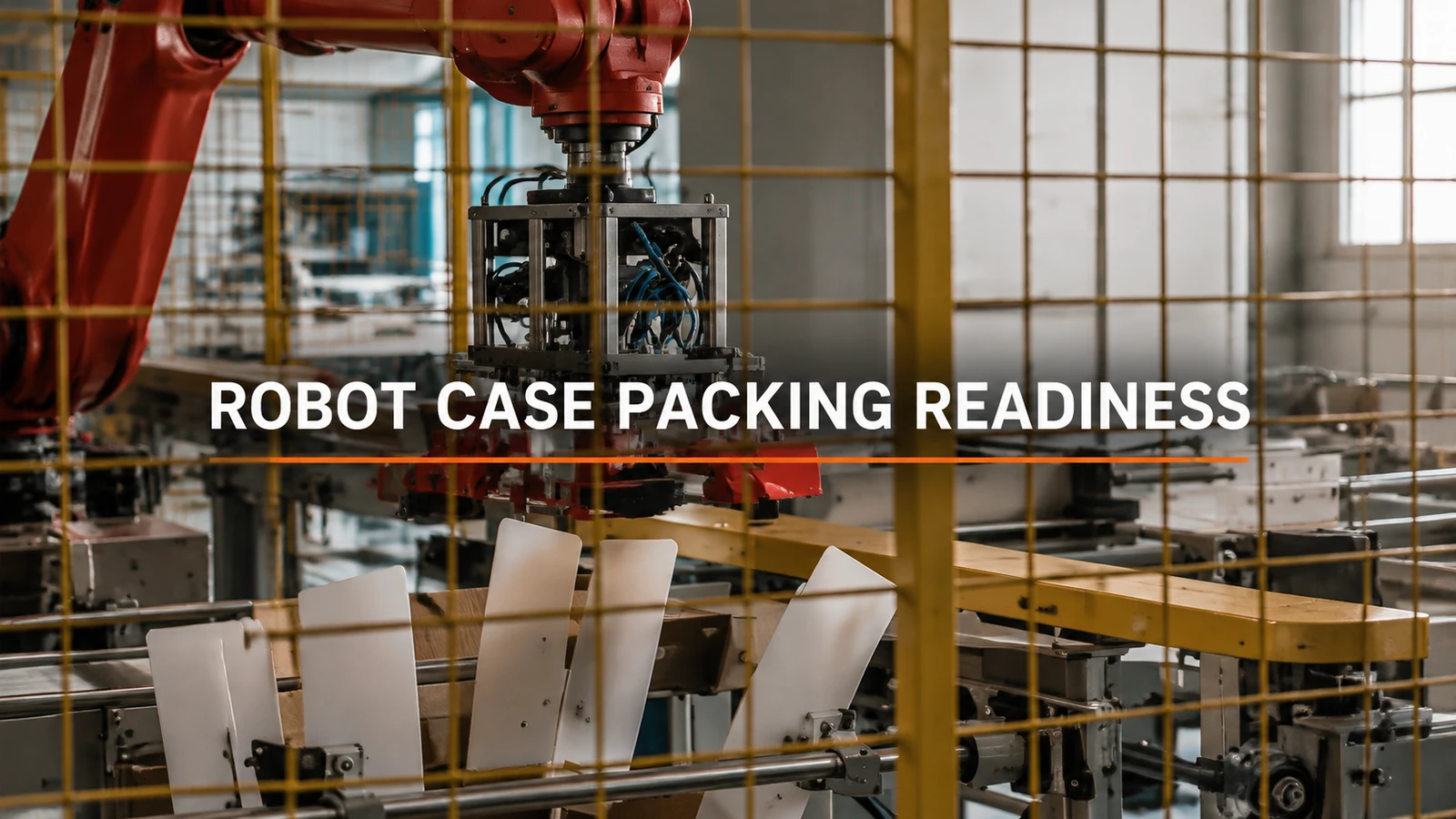
The product changes shape; the opening changes too
A filled flexible pack is not a rigid block described completely by its nominal length and width. Its contact surface can deform during gripping. The allowed filled condition therefore belongs in a handling trial, particularly when a vacuum tool is being considered. Test the actual permitted packs, rather than empty film or a rigid substitute that hides the problem.
The carton introduces another boundary. A pack that clears a nominal rectangle may catch a flap or meet an inward-bowed side at the real opening. For a proposed cell, test the permitted carton variation with the pack held in its intended orientation. Include the tool’s entry, release and withdrawal: delivering the product is not the same as being able to remove the tool cleanly.
These are conditional trial questions, not reasons to assume a robot cannot handle flexible packaging. They identify which presentation or guide changes could make the transfer repeatable.
Define the work the robot is taking over
The case application shows a red industrial robot placing packaged products into open cartons inside a guarded cell. White upright components surround the case mouth as supports or guides. They are equipment parts, rather than the packaged products.
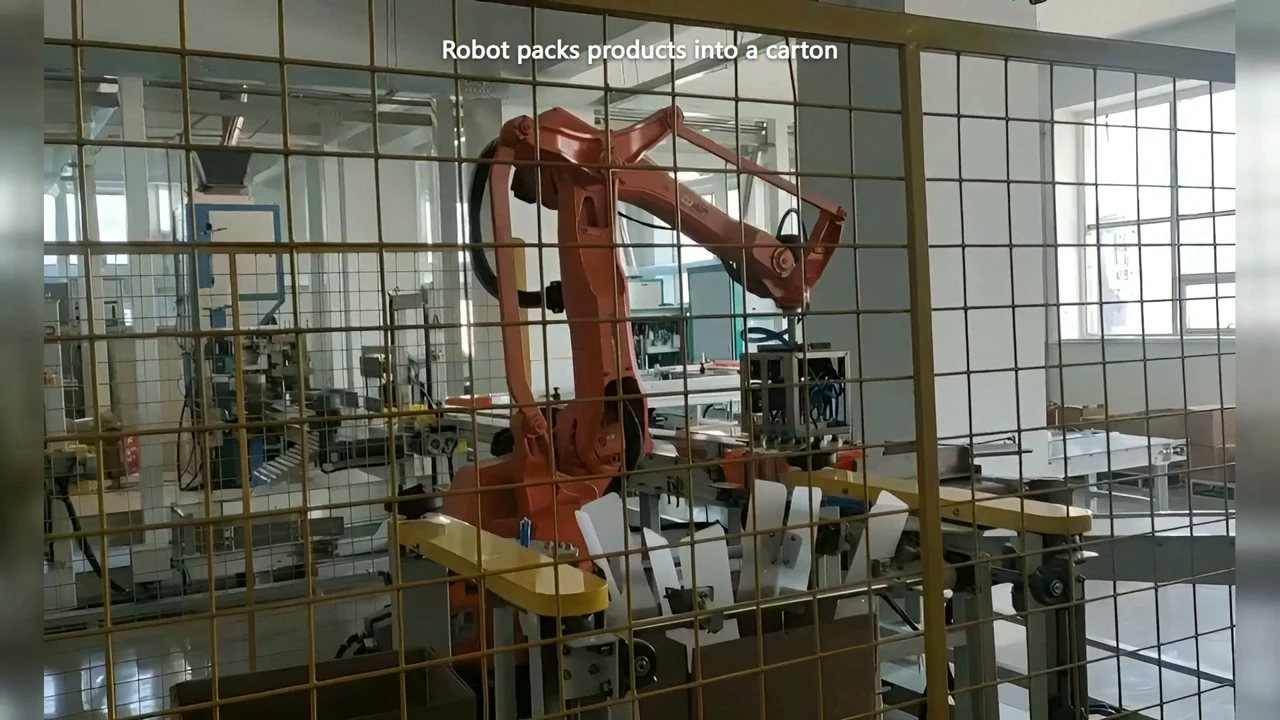
Robot tooling above an open carton with white guide plates inside the fenced packing cell. Video 00:25.
That insertion task has a narrower boundary than preparing, packing and closing every case. In a manual comparison, identify who presents the products, opens and locates the carton, checks the result and manages the next format. If those tasks remain with an operator, keep them in the proposed staffing and work allocation instead of subtracting an entire packing job from a video of insertion.
For recurring formats with stable presentation, robotic insertion can be a practical first scope. Where packs or case openings need frequent hands-on correction, improving that interface first can make a later cell more useful. Neither route has a universal production-volume threshold.
A trial must continue after the pack goes in
Agree what counts as an acceptable packed case: correct contents and orientation, acceptable package condition, clean tool withdrawal and the required closure. Where projecting film reaches the closing area, check that it does not foul the closure. A published bag-packing application, for example, controls film-tail orientation around carton hinges and glue areas; that is a particular solution to a particular pack, not a reason to specify vision or glue equipment for every cell.
Run a representative format change as well as the common format. A different pack orientation can require tool and presentation changes in some systems, not merely a recipe edit. Document the physical adjustments and who makes them. A rare format that needs extensive intervention may reasonably remain manual in a first-stage project.
Finally, include an interrupted or obstructed insertion in the agreed commissioning test. Establish a controlled way to remove affected packs, confirm the case contents and restart from a known state. Repeatedly trying the same move into a damaged opening is not a recovery plan.
Photos of the filled products and open cartons, the range of format changes and the required shift pattern are enough to begin an EVST discussion. Discuss a staged case-packing scope: which repeatable task should move first, and what package or carton conditions should the trial settle?