
Robotic spraying is worth a representative trial when cup bodies can be presented consistently and the required surface treatment can reuse a defined fixture and application route. Manual spraying may remain a reasonable choice when frequent changes in shape, protected areas or coating preparation prevent that reuse. Compare the complete batch under the same acceptance requirements, rather than compare only the time a gun is spraying.
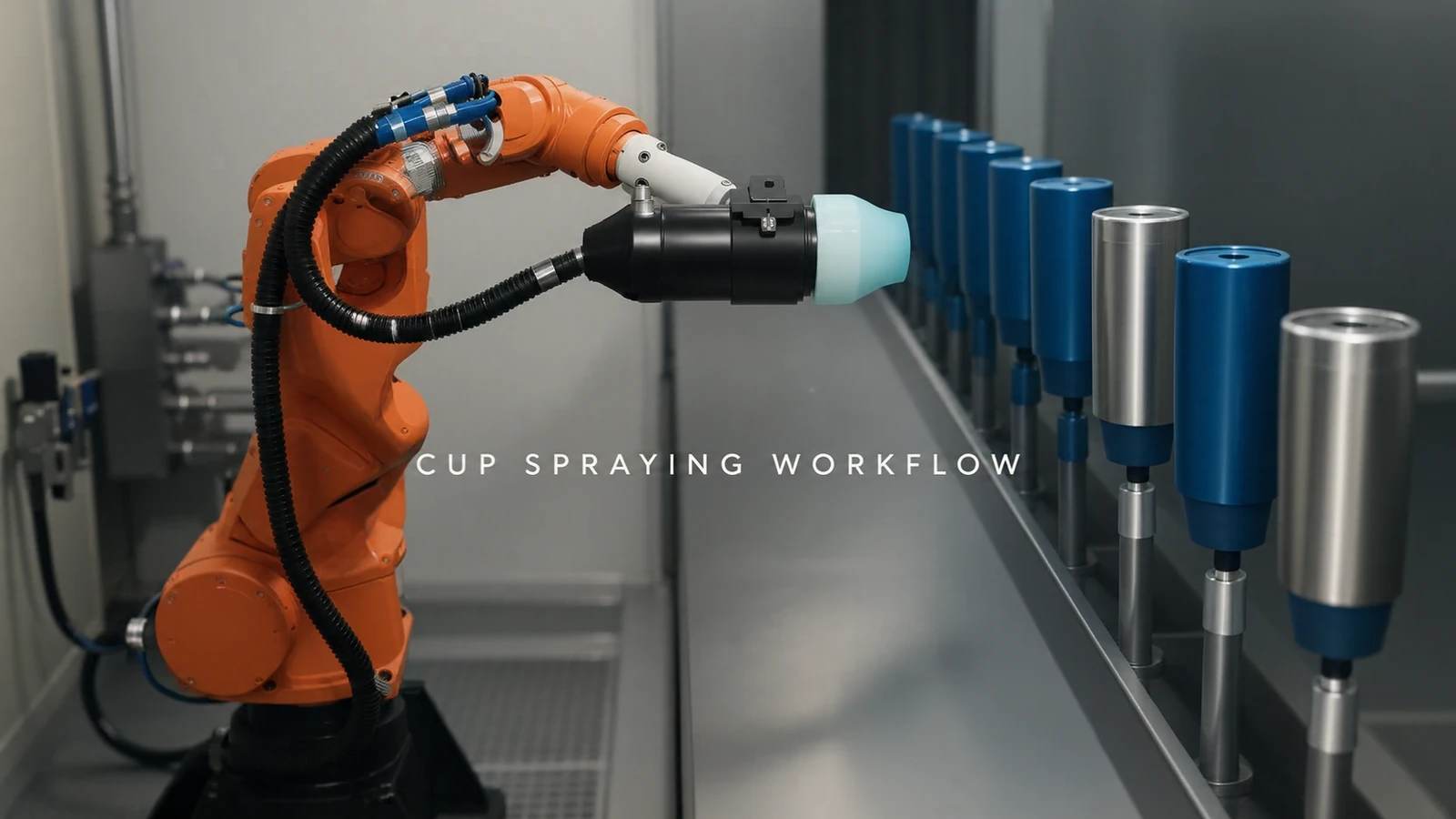
The application footage shows an orange robot moving a spray head in front of a row of upright cup-shaped or cylindrical parts. Their outside surfaces appear blue. For a production decision, the important question is which preparations would repeat across the intended family and which would need changing.
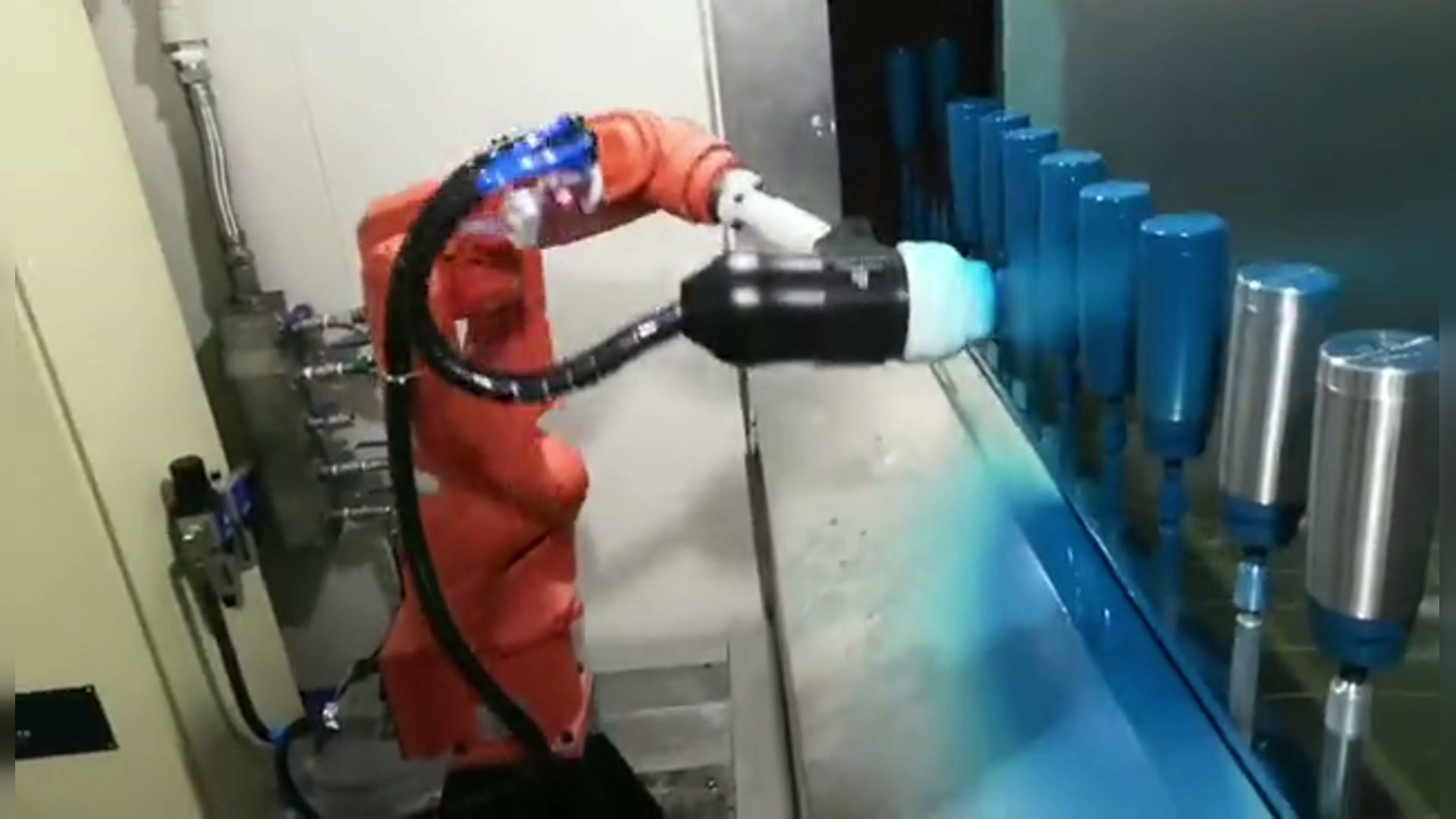
EN main film 00:14 — robot spray head in front of upright cylindrical parts.
Define the surface before dividing the work
Mark the area to be coated and any area that must remain protected. Depending on the product, a rim, base, thread or mating surface may need a different treatment from the visible outer wall. State the actual requirement instead of assuming that a similar-looking cup needs the same route.
Agree how the trial pieces will be judged: the specified coating checks, relevant appearance conditions and the protected features. Use those same requirements for manual and robotic samples. One route cannot be credited with a shorter spraying task while the other is asked to perform additional masking, touch-up or inspection.
Look for a reusable presentation, not just similar cylinders
Group parts by how they locate in the fixture, what the tool can reach and which surfaces must stay clear of the holder. Similar outside diameters do not necessarily create a reusable setup if the holding point or protected region changes.
A change in height or profile can alter the relative gun-to-surface path. Automatic applicator guidance treats that relative distance and the coordination of spraying with the workpiece as process settings. A taught robot route should therefore be trialled with the actual presentation and applicator settings, not transferred between variants merely because both parts are called cups.
If a family can share the locating method and needs only a defined recipe or fixture adjustment, it is a useful candidate for an automation trial. If every order needs a new holder, masking arrangement and route, compare that preparation burden before selecting the first family.
Count the jobs left around the robot
Write down who loads and removes parts, applies protection, prepares the coating equipment, changes materials where applicable, cleans the selected applicator and checks the finished pieces. Automatic gun operation does not remove those tasks from the plan. Their method and frequency depend on the chosen coating and equipment.
For manual spraying, include the corresponding setup, handling and finishing work too. Compare the same batch size, variant mix and starting condition. Separate a one-off commissioning task from the preparation repeated for every order, so the trial does not hide recurring changeovers inside an optimistic motion demonstration.
This division also clarifies the aim of automation. A project may move repeated gun motion to a robot while retaining manual loading and inspection. State that scope directly rather than assume that installing a robot makes the whole station unattended.
Select the trial that can change the decision
Choose representative cup bodies that challenge the proposed common setup: variations in height or contour, a difficult protected zone, or a different holding contact. Observe the required surfaces and features after processing, then run the planned changeover and record what must be altered or cleaned.
If the accepted surface can be reproduced with a reusable presentation and manageable changeovers, the robotic route has a clearer production basis. If preparation changes dominate the batch or the proposed holder cannot preserve the required surfaces, revise the grouping or retain the suitable manual work while investigating another first application.
An EVST discussion can start with photographs of the cup variants, marked coating and protected areas, current holding arrangements and the usual batch/changeover pattern. Those details help define a useful trial without inventing savings, a cycle time or a coating result from the footage.