

FAIRINO Collaborative Robots: Models and Selection Guide
Compare FAIRINO collaborative robots for handling, assembly, machine tending, welding and other flexible automation tasks. Start with nominal payload and reach, then verify any higher temporary limit, protection, tooling and safety requirements.
How to select a FAIRINO collaborative robot
Shortlist by the continuous application load and required reach, not by a temporary or maximum figure alone. Repeatability, protection, tool interfaces and the intended speed or collaborative mode can change the suitable model.
Compare FAIRINO collaborative robot models
Filter the FR series by model, payload and reach. Where nominal and temporary or maximum values differ, keep those operating limits separate and confirm the intended duty cycle before selection.
| Product image | Model | Robot family | Axes | Payload | Reach | Repeatability | Robot mass | Protection | Mounting | Axis range / maximum speed | TCP speed / noise | Tool I/O | Footprint / environment | Typical power | Next action |
|---|---|---|---|---|---|---|---|---|---|---|---|---|---|---|---|
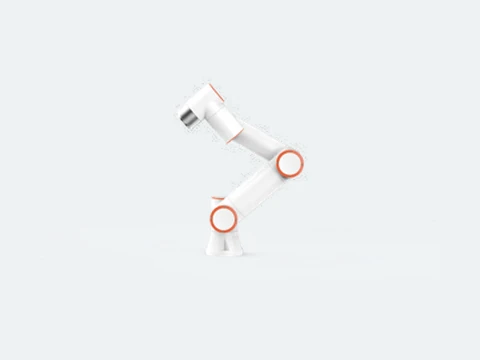 | FR3 | FR3 series | 6 | 3 kg(max. 5 kg) | 622 mm | ±0.02 mm | ≈15 kg | IP54(IP65 optional) | Any orientation | J1 ±175° @ ±180°/s;J2 +85°/-265° @ ±180°/s;J3 ±150° @ ±180°/s;J4 +85°/-265° @ ±180°/s;J5 ±175° @ ±180°/s;J6 ±175° @ ±180°/s | TCP 1m/s;Noise <65dB | Tool: 2 DI, 2 DO, 1 AI, 1 AO;Power 24V/1.5A | Footprint 128 mm;0–45°C;≤90% RH(non-condensing) | Average 220W;Peak 280W | Request this model |
 | FR3-C | FR3 series | 6 | 3 kg(transient 5 kg) | 622 mm | ±0.05 mm | ≈12 kg | IP54 | Any orientation | J1 ±175° @ ±150°/s;J2 +85°/-265° @ ±150°/s;J3 ±150° @ ±150°/s;J4 +85°/-265° @ ±180°/s;J5 0° to 355° @ ±180°/s;J6 ±175° @ ±180°/s | TCP 1m/s;Noise <65dB | Tool: 2 DI, 2 DO, 1 AI, 1 AO;Power 24V/1.5A | Footprint 125 mm;0–45°C;≤90% RH(non-condensing) | Average 200W;Peak 230W | Request this model |
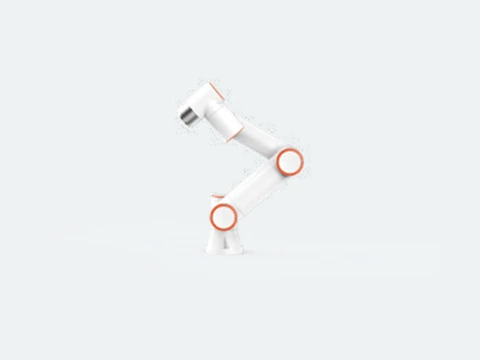 | FR3-WMS | FR3 series | 6 | 3 kg | 622 mm | ±0.02 mm | ≈10.5 kg | IP54(IP65 optional) | Any orientation | J1 ±175° @ ±150°/s;J2 +85°/-265° @ ±150°/s;J3 ±150° @ ±150°/s;J4 +85°/-265° @ ±180°/s;J5 ±175° @ ±180°/s;J6 ±360° @ ±180°/s | TCP 1m/s;Noise <65dB | Tool: 2 DI, 2 DO, 1 AI, 1 AO;Power 24V/1.5A | Footprint 128 mm;0–45°C;≤90% RH(non-condensing) | Average 90W;Peak 130W | Request this model |
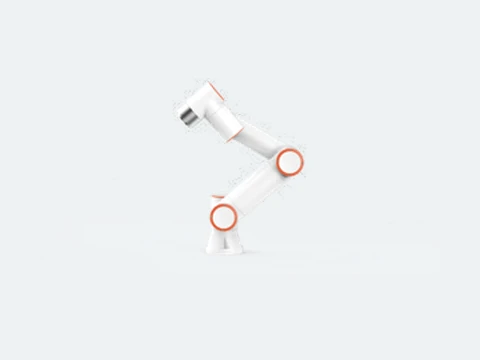 | FR3-WML | FR3 series | 6 | 3 kg | 922 mm | ±0.05 mm | ≈11.25 kg | IP54(IP65 optional) | Any orientation | J1 ±175° @ ±150°/s;J2 +85°/-265° @ ±150°/s;J3 ±150° @ ±150°/s;J4 +85°/-265° @ ±180°/s;J5 ±175° @ ±180°/s;J6 ±360° @ ±180°/s | TCP 1m/s;Noise <65dB | Tool: 2 DI, 2 DO, 1 AI, 1 AO;Power 24V/1.5A | Footprint 128 mm;0–45°C;≤90% RH(non-condensing) | Average 140W;Peak 240W | Request this model |
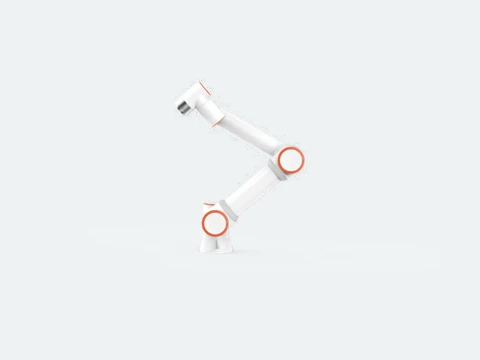 | FR5 | FR5 series | 6 | 5 kg(max. 7 kg) | 922 mm | ±0.02 mm | ≈22 kg | IP54(IP65 optional) | Any orientation | J1 ±175° @ ±180°/s;J2 +85°/-265° @ ±180°/s;J3 ±160° @ ±180°/s;J4 +85°/-265° @ ±180°/s;J5 ±175° @ ±180°/s;J6 ±175° @ ±180°/s | TCP 1m/s;Noise <65dB | Tool: 2 DI, 2 DO, 1 AI, 1 AO;Power 24V/1.5A | Footprint 149 mm;0–45°C;≤90% RH(non-condensing) | Average 260W;Peak 310W | Request this model |
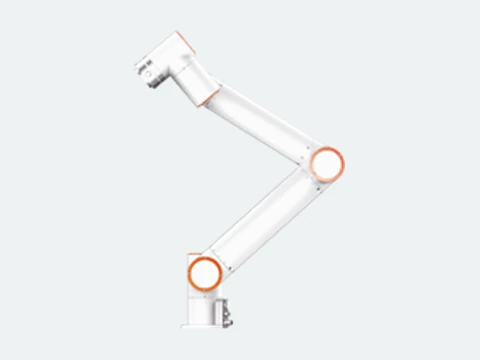 | FR5-C | FR5 series | 6 | 4 kg(max. 5 kg) | 922 mm | ±0.05 mm | ≈11.8 kg | IP54 | Any orientation | J1 ±175° @ ±150°/s;J2 +85°/-265° @ ±150°/s;J3 ±160° @ ±150°/s;J4 +85°/-265° @ ±180°/s;J5 ±175° @ ±180°/s;J6 ±360° @ ±180°/s | TCP 1m/s;Noise <65dB | Tool: 2 DI, 2 DO, 1 AI, 1 AO;Power 24V/1.5A | Footprint 125 mm;0–45°C;≤90% RH(non-condensing) | Average 190W;Peak 340W | Request this model |
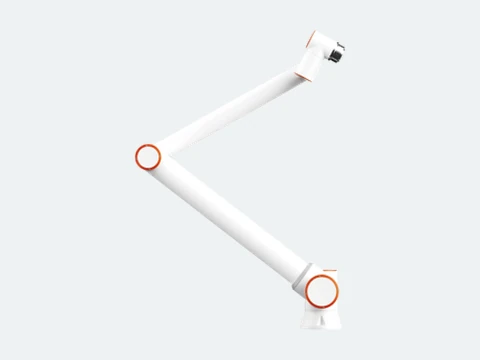 | FR5-WML | FR5 series | 6 | 5 kg | 1,900 mm | ±0.1 mm | ≤45 kg | IP54(IP65 optional) | Any orientation | J1 ±175° @ ±120°/s;J2 +85°/-265° @ ±120°/s;J3 ±170° @ ±180°/s;J4 +85°/-265° @ ±180°/s;J5 ±175° @ ±180°/s;J6 ±360° @ ±180°/s | TCP 2m/s;Noise <65dB | Tool: 2 DI, 2 DO, 1 AI, 1 AO;Power 24V/1.5A | Footprint 190 mm;20–45°C;≤95% RH(non-condensing) | Average 270W;Peak 620W | Request this model |
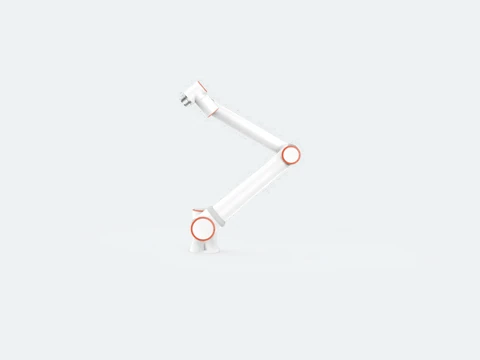 | FR10 | FR high-payload series | 6 | 10 kg(max. 14 kg) | 1,400 mm | ±0.05 mm | ≈40 kg | IP54(IP65 optional) | Any orientation | J1 ±175° @ ±120°/s;J2 +85°/-265° @ ±120°/s;J3 ±160° @ ±180°/s;J4 +85°/-265° @ ±180°/s;J5 ±175° @ ±180°/s;J6 ±175° @ ±180°/s | TCP 1.5m/s;Noise <65dB | Tool: 2 DI, 2 DO, 1 AI, 1 AO;Power 24V/1.5A | Footprint 190 mm;0–45°C;≤90% RH(non-condensing) | Average 300W;Peak 500W | Request this model |
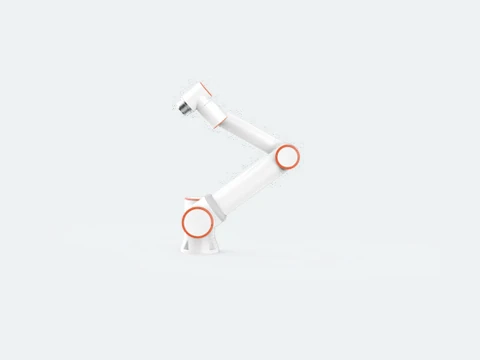 | FR16 | FR high-payload series | 6 | 16 kg(max. 20 kg) | 1,034 mm | ±0.03 mm | ≈40 kg | IP54(IP65 optional) | Any orientation | J1 ±175° @ ±120°/s;J2 +85°/-265° @ ±120°/s;J3 ±160° @ ±180°/s;J4 +85°/-265° @ ±180°/s;J5 ±175° @ ±180°/s;J6 ±175° @ ±180°/s | TCP 1m/s;Noise <65dB | Tool: 2 DI, 2 DO, 1 AI, 1 AO;Power 24V/1.5A | Footprint 190 mm;0–45°C;≤90% RH(non-condensing) | Average 310W;Peak 410W | Request this model |
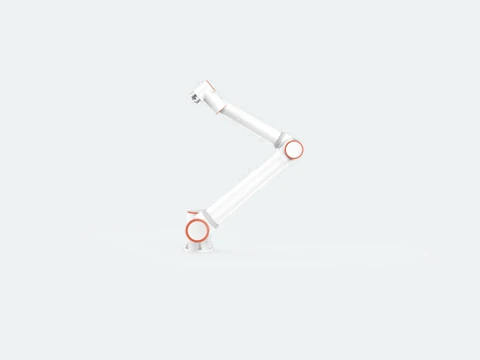 | FR20 | FR high-payload series | 6 | 20 kg(max. 25 kg) | 1,854 mm | ±0.1 mm | ≈85 kg | IP54(IP65 optional) | Any orientation | J1 ±175° @ ±120°/s;J2 +85°/-265° @ ±120°/s;J3 ±160° @ ±120°/s;J4 +85°/-265° @ ±180°/s;J5 ±175° @ ±180°/s;J6 ±175° @ ±180°/s | TCP 2m/s;Noise <70dB | Tool: 2 DI, 2 DO, 1 AI, 1 AO;Power 24V/1.5A | Footprint 24 mm;45–0°C;≤90% RH(non-condensing) | Average 620W;Peak 810W | Request this model |
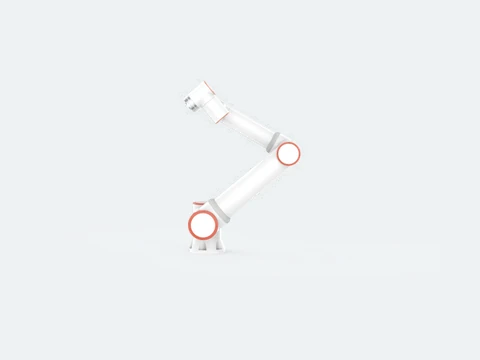 | FR30 | FR high-payload series | 6 | 30 kg(max. 35 kg) | 1,403 mm | ±0.1 mm | ≈85 kg | IP54(IP65 optional) | Any orientation | J1 ±175° @ ±120°/s;J2 +85°/-265° @ ±120°/s;J3 ±160° @ ±120°/s;J4 +85°/-265° @ ±180°/s;J5 ±175° @ ±180°/s;J6 ±175° @ ±180°/s | TCP 2m/s;Noise <70dB | Tool: 2 DI, 2 DO, 1 AI, 1 AO;Power 24V/1.5A | Footprint 240 mm;0–45°C;≤90% RH(non-condensing) | Average 600W;Peak 910W | Request this model |
No matching model was found. Clear a filter or send the required payload, reach and application for review.
FAIRINO robots and automation solutions FAQ
Which FAIRINO FR robot should be considered for welding, palletizing or machine tending?
Start with the application and compare the FR rows by payload, reach, repeatability, protection, joint performance and available workspace. Welding, palletizing and machine tending also require different tooling, interfaces, mounting and cycle validation before a model is selected.
What is the difference between nominal and transient FAIRINO payload?
Nominal payload is the primary continuous operating value. A transient or maximum value can apply only under stated conditions, so the tool, workpiece, center of gravity, inertia, pose and duty cycle must be checked before using the higher figure.
Can EVST configure a FAIRINO robot workstation around the selected model?
Yes. The scope can include tooling, welding or handling equipment, fixtures, controller interfaces, PLC and networks, vision, safety, commissioning and service responsibilities.
What information is needed for a FAIRINO robot price and lead-time request?
Provide the exact FR model or application, total payload, reach and poses, mounting, environment, tooling and interface needs, quantity, destination and requested timing. Price and lead time are confirmed after the applicable configuration is defined.
Author: EVST Editorial Team
The EVST Editorial Team maintains this page to support robot selection and project planning. Product availability, configuration, safety validation and integration scope must be confirmed for the actual application.
Editorial policy · Corrections policy · Terms of use
Last updated: