
A press-tending robot succeeds when it presents every metal part to the worktable in a known pose and stays outside the press working zone whenever machine motion is permitted. The recorded case follows an orange industrial robot between stacked trays and a press worktable. That simple route exposes the three interfaces that deserve most of the engineering attention: picking from a changing tray level, presenting the part at the worktable, and confirming that the robot has withdrawn before the next machine action.
For en prosjektgjennomgang, send the part drawing, tray layout, press layout, and daily output so the handling sequence and expected cycle can be assessed together.
The tray is the first source of variation
The robot works with rectangular metal parts presented on stacked trays. In a production tray system, the active level may change as parts are removed. A robust design therefore needs a repeatable tray location, a reliable way to identify the commanded layer, and a response for an empty or incorrectly positioned pocket. The pickup should be tested with the part at the allowed edges of its position range, not only with a perfectly loaded tray.
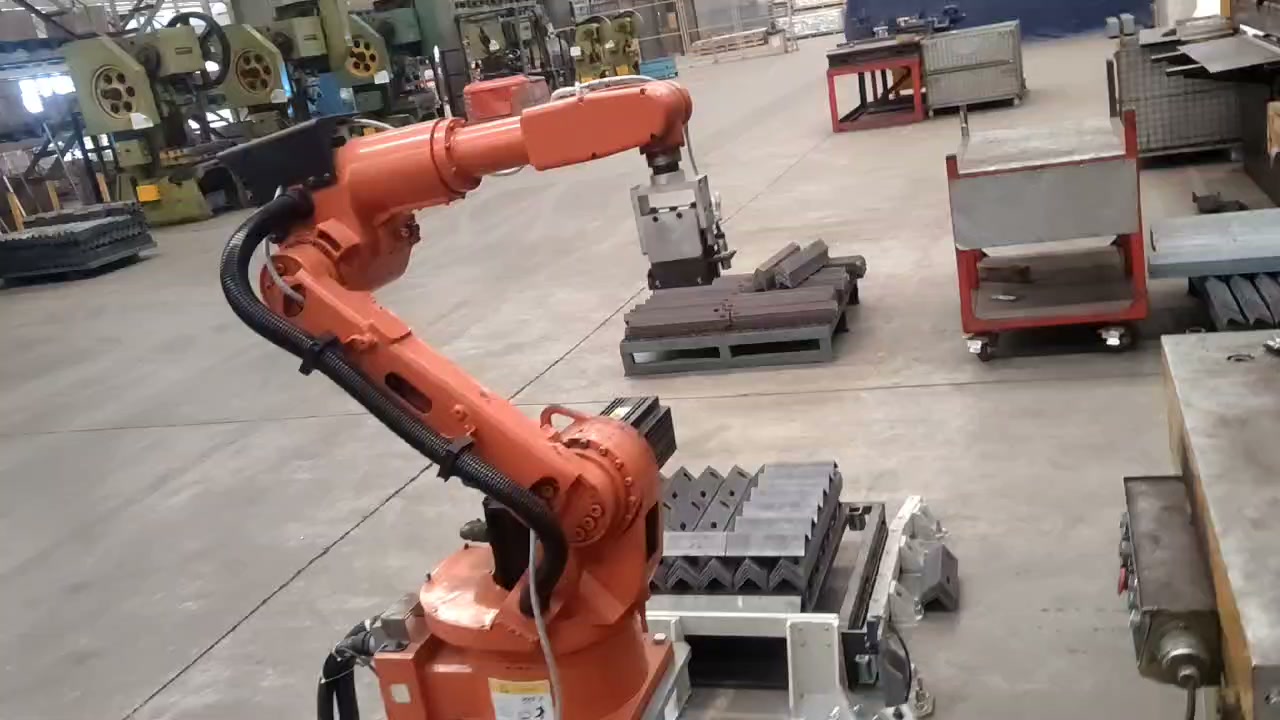
The part also needs a controlled pose during travel. The rectangular metal part travels between the tray and the press worktable. Its support faces and allowed gripping surfaces determine the tool layout: the jaws need a stable pickup without covering the surfaces used to locate the part at the worktable.
The press interface must be defined as a permission, not a delay
A robot entering a press work zone and a press beginning its own motion are mutually dependent events. The robot needs permission to enter. The press needs positive confirmation that the robot, tool, cables, and carried part have cleared the protected space before machine motion is allowed. A fixed wait cannot explain what should happen after a missed pickup, an incomplete placement, or an interrupted cycle.
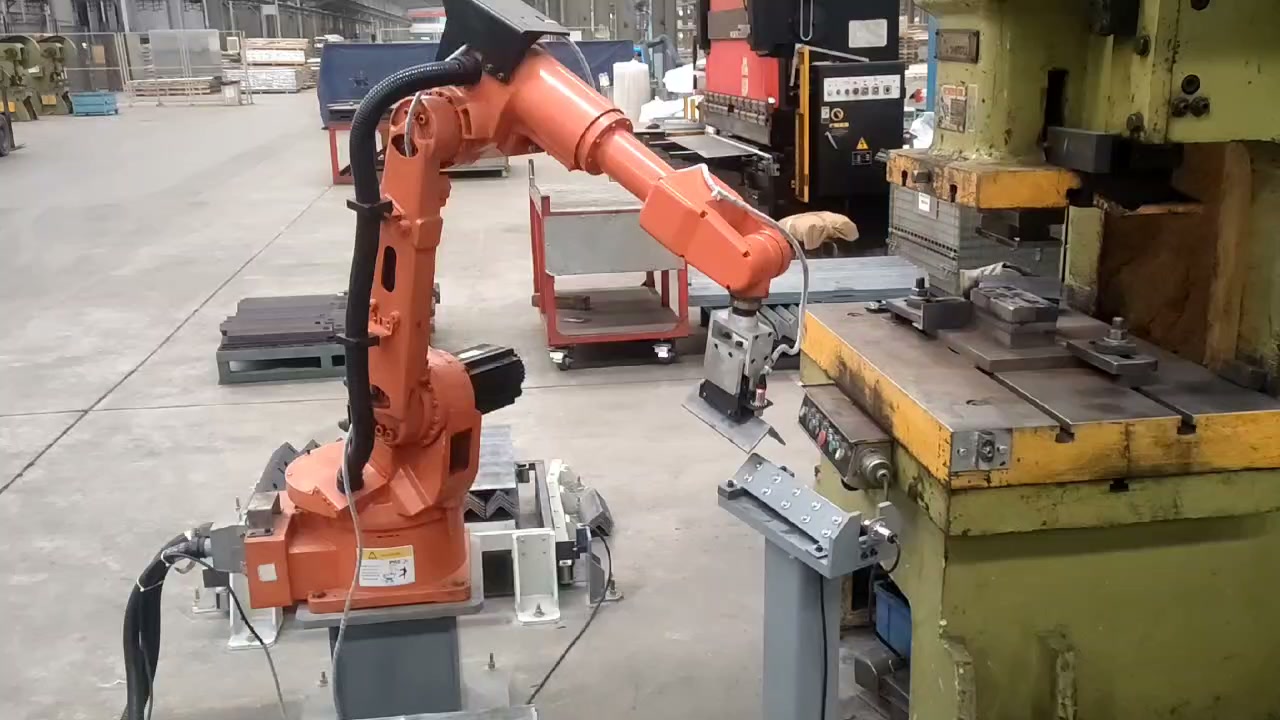
The useful signal sequence normally distinguishes worktable ready, robot entering, part presented, robot withdrawing, robot clear, and machine cycle available. The exact signal names vary, but each state needs one owner and one unambiguous transition. Recovery should begin from the last confirmed physical state rather than from the last command that was sent.
Machine safeguarding must be based on the complete task. Automatic production, teaching, clearing a misplaced part, inspecting the tooling, and maintenance create different access needs. The presence of a robot does not replace the press-specific guarding, control reliability, and task risk assessment required for the actual installation.
Presentation at the worktable is a mechanical problem
The robot can bring a part to the worktable, but the fixture or die interface must finish the location. The project team should define which surfaces establish position, how the part is supported before release, and how incorrect seating is detected. If the robot tool is used to force alignment, variation may be transferred into the tool, robot, or worktable instead of being removed.
A practical test uses representative parts and deliberate boundary conditions: part shifted in the tray, tray not fully located, worktable not ready, part not accepted, and cycle interruption during approach or withdrawal. The expected signals and permitted motion should be written for each case. This turns commissioning from trial and error into a repeatable acceptance exercise.
Leave clearance for the carried part and tool
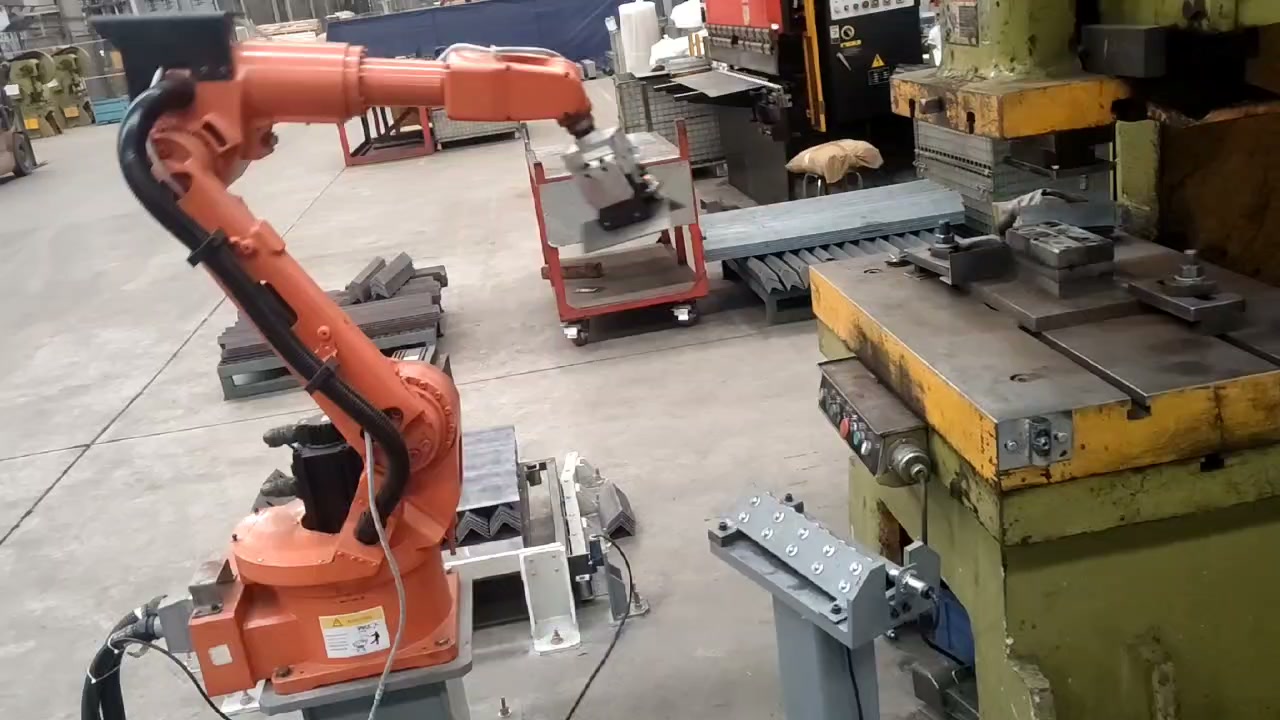
The moving part, gripper, wrist and service bundle all pass through the corridor between the tray and press. The withdrawal posture should lift the part clear of tray edges before lateral travel, then align it with the worktable approach. The actual layout and slow-speed path checks establish the final clearance.
Når denne ordningen passer
Tray-to-press tending fits best when parts arrive in controlled positions, the worktable offers a repeatable locating interface, and the press controls can exchange clear permission and completion states with the robot. It becomes harder when trays deform, parts overlap, operators frequently enter the route, or the worktable provides no dependable acceptance signal.
The engineering decision should compare the full cycle: tray indexing, pickup confirmation, travel, presentation, withdrawal, machine time, and recovery. Adding robot speed will not repair an uncertain pickup or an ambiguous press permission. Stabilize the interfaces first, then tune the motion.
Inputs for an engineering review
Provide the part drawing and allowed variation, tray dimensions and pocket arrangement, press and worktable layout, required part orientation, tool concept, available machine signals, operator tasks, guarding concept, and daily output. These inputs allow the route, handoff logic, recovery cases, and expected cycle to be reviewed as one system.
Kontakt EVST or email sales@evsrobot.com with the part drawing, tray and press layouts, and daily output.
This case describes visible handling between trays and a press worktable; it does not establish the press operation, forming parameters, part quality, throughput, or validated safety performance.