
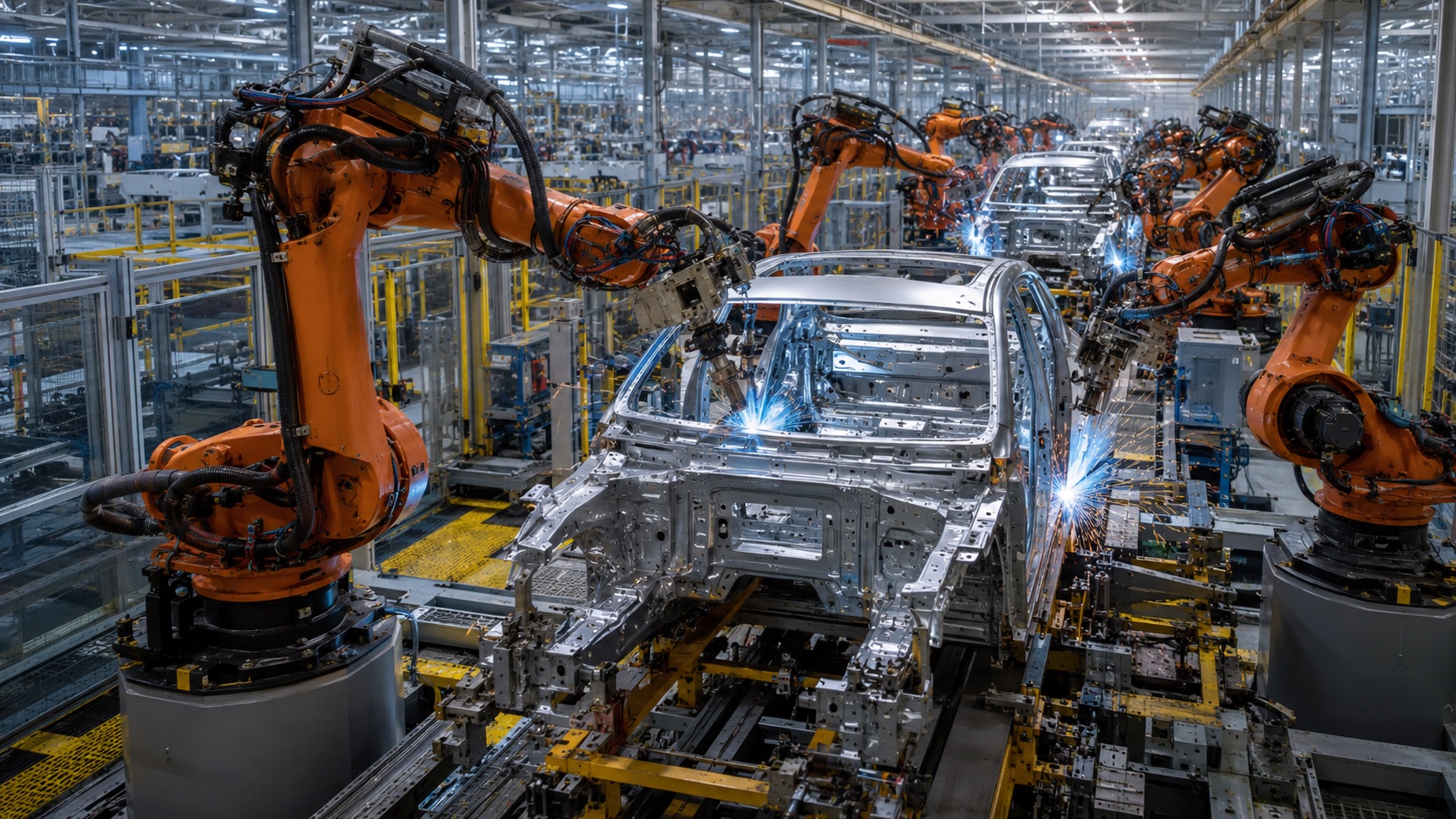
Among Chinese industrial robot manufacturers, Estun and Inovance lead the home-grown field in 2026, followed by Siasun, Efort and STEP. This ranking reflects overall industry standing, combining technology depth, product range, market presence and export reach, rather than a single quantitative metric. Where hard shipment data exists, we cite it: according to MIR Databank, Estun and Inovance both ranked inside China’s overall top three suppliers in 2024, and domestic brands together passed 51.6 percent of the national market for the first time.
For a custom EVST quote on the robot classes discussed below: email
sales@evsrobot.com or
WhatsApp / WeChat +86 193 8162 6253.
China’s leading industrial robot manufacturers at a glance
According to the International Federation of Robotics, China installs over half of the world’s new industrial robots each year, which makes it the single most important market in the industry. For a long time foreign brands dominated those installations, and the so-called Big Four of ABB, FANUC, Yaskawa and KUKA set the terms. That is changing fast, and the ten home-grown names below are the reason. They have moved from copying foreign designs to making their own controllers, servo drives and reducers, the three components that used to force Chinese assemblers to buy from abroad and accept thin margins. Localizing those parts is what turned a price advantage into a genuine engineering one. The table ranks the leaders by overall industry standing; the sections that follow explain what each one is known for and where its real strength lies.
| Rank | Manufacturer | Base | Known for |
|---|---|---|---|
| 1 | Estun | Nanjing | Full-stack: core parts, body, software, solutions |
| 2 | Inovance | Shenzhen | Industrial-control native; SCARA and high-cadence |
| 3 | Siasun | Shenyang | Industrialization pioneer; exports and blue-chip clients |
| 4 | Efort | Wuhu | Process chain: spray, weld, handle, integrate |
| 5 | STEP (Xinshida) | Shanghai | Motion-control native; multi-joint and SCARA |
| 6 | Qianjiang (QJAR) | Wenling | Welding, spraying and palletizing |
| 7 | HSR (Huashu) | Foshan | All-rounder; whole-line solutions |
| 8 | GSK (Guangzhou CNC) | Guangzhou | CNC, servo and robot under one roof |
| 9 | Kaierda | Hangzhou | Welding-robot specialist |
| 10 | Rokae | Beijing | Fast riser; cobot-led, with an industrial line |
How we ranked them, and what to read carefully
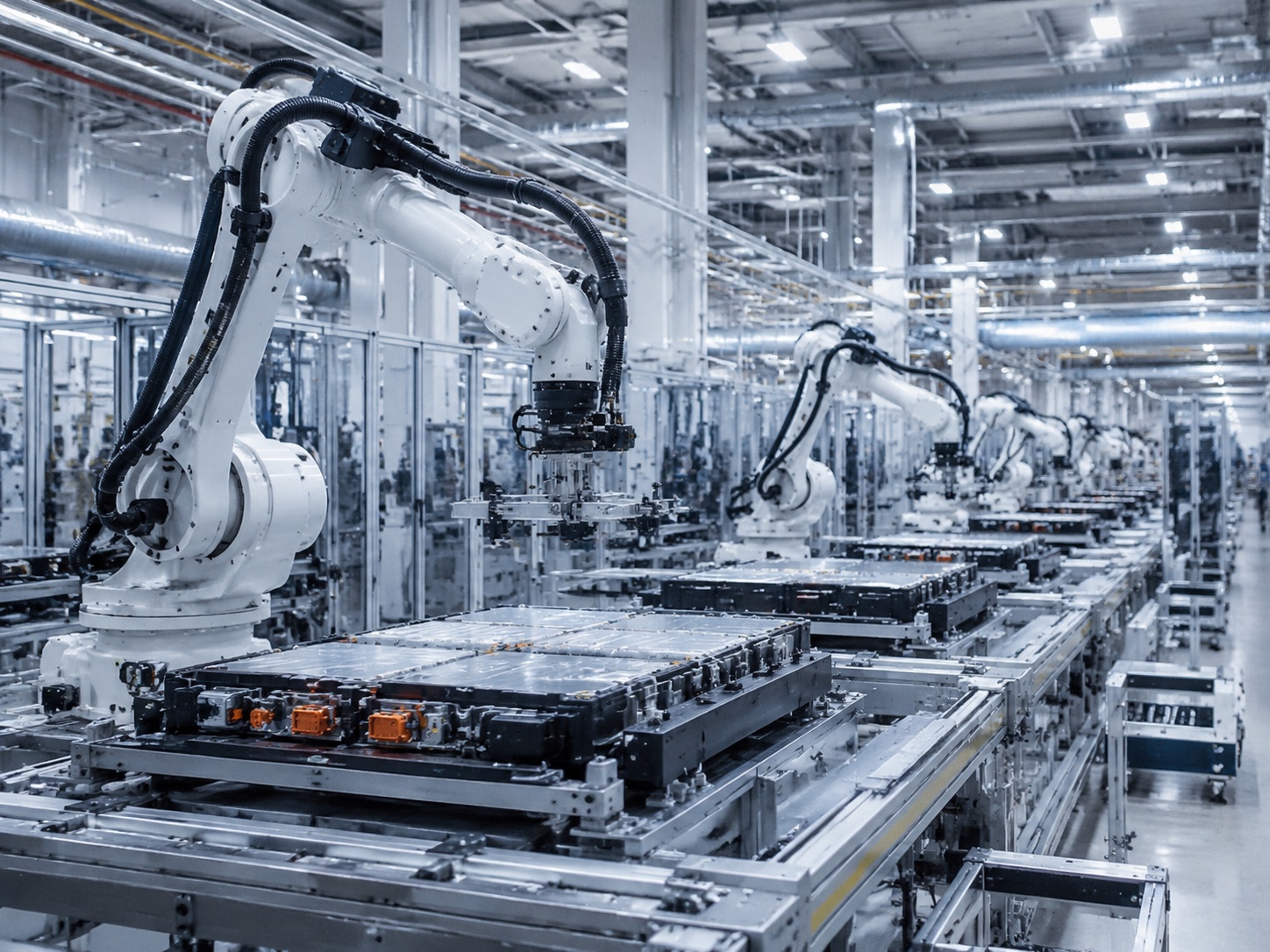
This is an industry-standing ranking, not a pure shipment league table, and the difference matters. By raw 2024 shipments, the order would favor the brands that appear in MIR Databank’s overall national top ten: Estun, Inovance, Efort and STEP all placed there among domestic makers. Names such as Siasun rank higher here than a shipment-only view would put them, because brand weight, export track record and systems capability carry real value for buyers even when unit volume has plateaued. We flag this openly rather than presenting subjective weighting as hard data.
Two further rules keep the list honest. First, it counts industrial robots only and excludes collaborative arms, which is why a brand celebrated for cobots is judged here only on its caged-robot business. Second, where a company is a national distributor or systems integrator for another brand rather than the original maker, we still treat the products on their own engineering merits. The aim is a ranking a procurement engineer could act on, not a popularity contest. For the collaborative side, see our collaborative robot brand ranking; for the worldwide picture, our global industrial robot manufacturers ranking.
1 to 3: Estun, Inovance and Siasun
1. Estun (Nanjing)
Estun is the closest thing China’s industrial robot sector has to a flagship. Its strength is vertical integration: core components, robot bodies, software and turnkey solutions mostly sit inside its own system, which lets it control cost and supply in a way few domestic rivals match. It has rolled out across automotive, lithium battery, solar and metalworking, the four sectors driving Chinese factory automation. According to MIR Databank, Estun ranked second among all suppliers in China’s 2024 market, foreign brands included, which is the strongest domestic showing on the list and the basis for its top placement here.
2. Inovance (Shenzhen)
An industrial-control native, Inovance turned robotics into its fastest-growing arm by building on its existing servo and drive business. It is especially strong in SCARA and high-cadence work, and shows up increasingly in 3C electronics, lithium battery and solar lines, the high-volume segments where speed and repeatability decide throughput. According to MIR Databank, Inovance ranked third overall in China’s 2024 market. Its control heritage gives it a cost and tuning advantage in exactly the high-speed applications where Chinese manufacturing is growing fastest.
3. Siasun (Shenyang)
Siasun is the veteran face of China’s robotics industrialization and, for many people, the first domestic name that comes to mind. Its coverage is broad across industrial robots, automation systems and industry solutions, and it carries real export and blue-chip-client history along with a strong national-brand profile. On pure shipment volume it ranks below the top names, which is why we are explicit that its position here reflects brand and systems weight rather than a unit-count lead. In whole-line projects and government-linked work, that standing still counts.
4 to 6: Efort, STEP and Qianjiang
4. Efort (Wuhu)
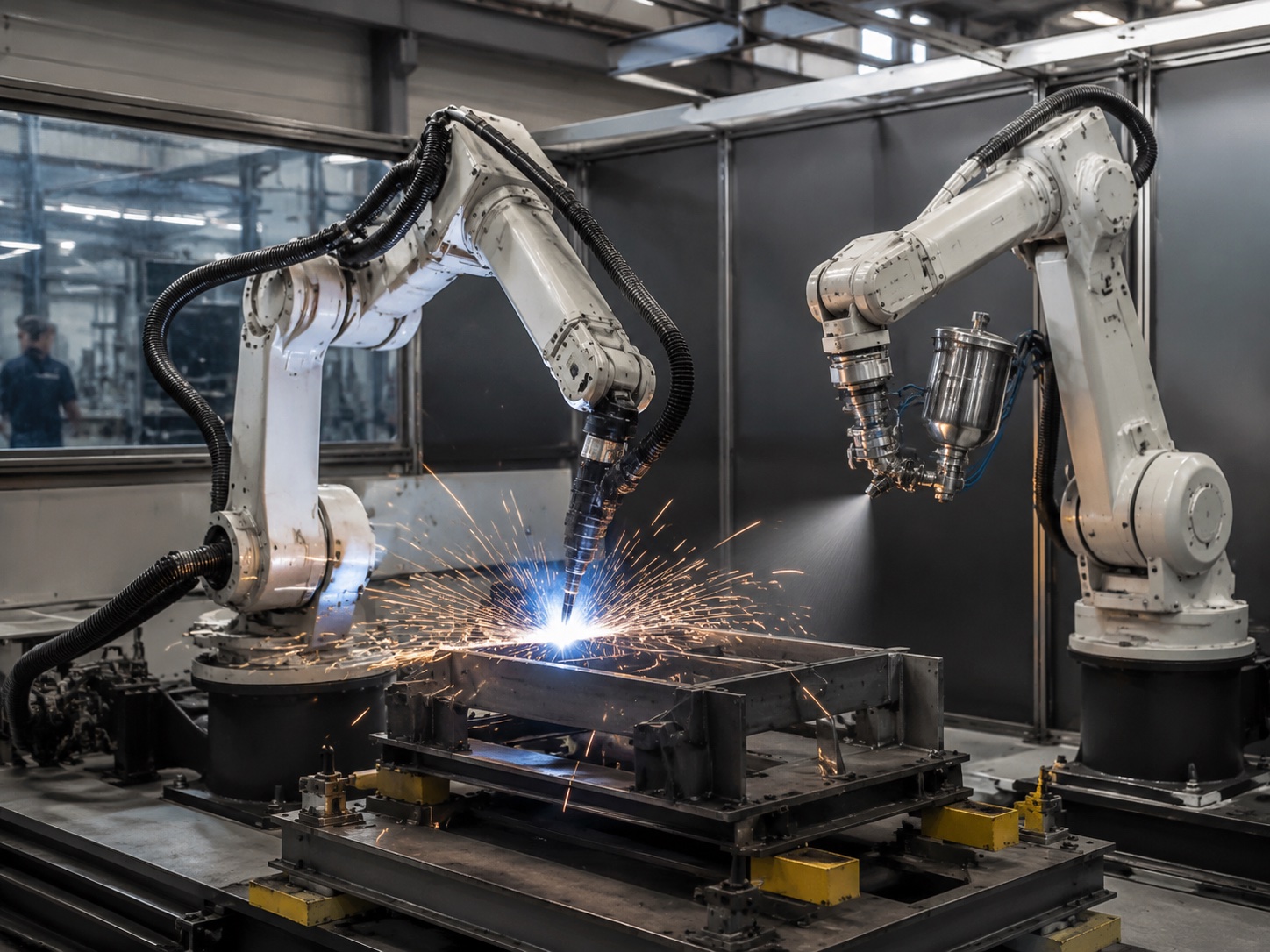
Efort is one of the few Chinese brands that strings spraying, welding, handling, palletizing and system integration into a single chain, which makes it a natural fit for automotive manufacturing and high-end equipment. According to MIR Databank, Efort placed inside China’s overall national top ten by 2024 shipments, a genuine volume result rather than a brand-only one. That combination of process breadth and real shipments makes it a dependable choice for buyers who want a domestic partner able to deliver a complete line rather than a single arm.
5. STEP, Xinshida (Shanghai)
STEP started in 1995, and its real foundation is motion control. It built control systems, servo drives and robot bodies into one integrated stack, covering multi-joint, SCARA and even semiconductor robots. According to MIR Databank, STEP also placed inside China’s overall national top ten by 2024 shipments. Because it is a genuine industrial-robot volume player with a control-engineering core, we rank it ahead of brands better known for collaborative arms, which is a deliberate correction toward the industrial-only scope of this list.
6. Qianjiang, QJAR (Wenling)
Founded in 2013 and backed by the Aishida group, Qianjiang, also known as QJAR, focuses on welding, spraying, palletizing and polishing, with deployments across kitchen appliances, motorcycles and new-energy sheet-metal lines. Its parent’s roots in appliance manufacturing give it real-world exposure to high-mix sheet-metal work, which is harder to automate than it looks and is exactly where its welding and polishing cells earn their keep. It earns this mid-table position through welding specialization paired with a working export channel via Aishida’s international distribution network, and through a process-package depth — laser seam tracking, ripple-bead, multi-axis positioner support — that few specialists at this size match. Home-province strength in Zhejiang, China’s most concentrated equipment-manufacturing cluster, gives it a reliable customer base for follow-on orders and the kind of fast service loop heavy-fab buyers value.
7 to 10: HSR, GSK, Kaierda and Rokae
7. HSR, Huashu Robotics (Foshan)
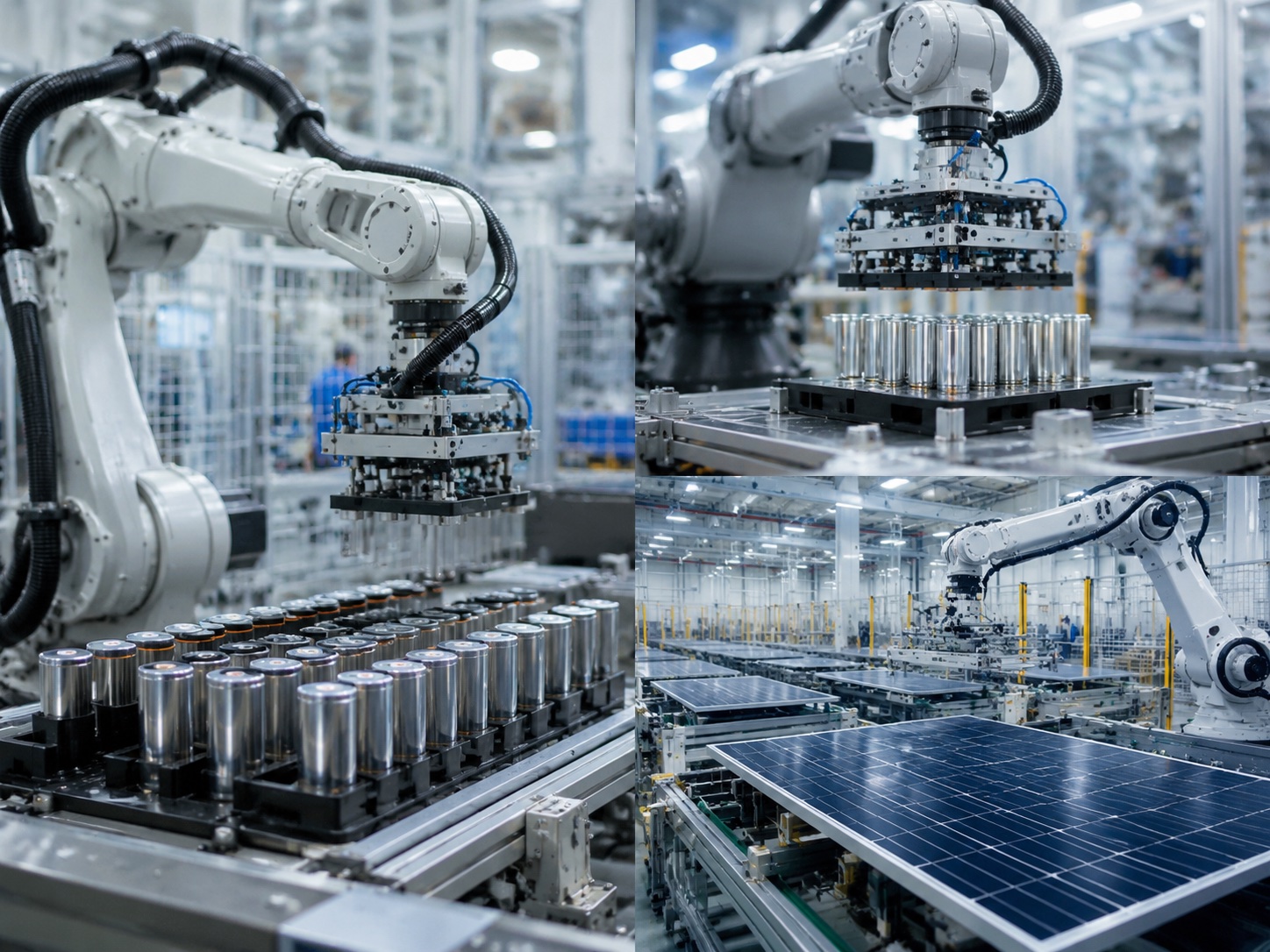
Backed by Huazhong CNC, HSR runs general multi-joint bodies plus whole-line solutions across 3C, appliances, automotive and metalworking. Its edge is not a single killer product but breadth: it can cover many industries with one supplier relationship, which appeals to mid-sized manufacturers consolidating vendors. The CNC parentage also gives it a strong base in laser cutting and machine-tending cells, where motion control and the robot need to come from the same engineering culture. That all-rounder profile, paired with the manufacturing density of the Pearl River Delta around its Foshan base, keeps it firmly in the domestic top ten and makes it a common first domestic choice for factories taking their initial step into automation.
8. GSK, Guangzhou CNC (Guangzhou)
GSK began as a veteran of home-grown CNC control systems and extended into robots from there. Its real signature is integration: CNC, servo and robot under one roof, which suits machine-tending and metalworking cells where the controller and the robot need to speak the same language. That shared control stack can simplify programming and cut integration time for shops that already run GSK machine tools. It is a steady, engineering-led name rather than a marketing-led one, and its strength is less about flashy specifications than about being a reliable, locally supported supplier for the small and medium manufacturers that make up much of southern China’s industrial base.
9. Kaierda (Hangzhou)
Kaierda is a textbook Chinese welding-robot maker, with a focused model of robot body plus welding power source plus system integration. By owning the welding power source as well as the arm, it can tune arc behavior and motion together, which is exactly what heavy-fabrication buyers want. Its turf is vehicles, ships, rail transit and construction machinery, the sectors where weld quality, penetration and arc control decide whether a part passes inspection. It is a specialist rather than a generalist, and it owns that lane well, competing on welding expertise rather than trying to cover every application.
10. Rokae (Beijing)
Rokae has risen quickly, pushing from light payloads into heavier industrial work across auto parts, 3C, new energy and metalworking, with fast product iteration as its signature. One honest caveat anchors its place at the bottom of this industrial-only list: Rokae is best known for collaborative robots, so the ranking here counts only its caged industrial line and not the cobot business that drives most of its visibility. Within that narrower scope it remains a credible and fast-moving competitor, particularly for buyers who value rapid deployment, but on industrial-only standing it sits behind the welding, integration and CNC specialists ahead of it. The takeaway is straightforward: Rokae is more accurately judged against the cobot field, where it ranks materially higher, and this entry rounds out a list that, by reaching this level, shows how deep China’s home-grown robot bench has become.
What the ranking really shows
The pattern is consistent. The leaders that combine in-house core components with real shipment volume, Estun and Inovance, sit clearly on top. A second group, Efort, STEP and Siasun, mixes genuine volume with brand and systems strength. The remaining names are specialists or all-rounders that hold real positions in their lanes. The bigger story is the one the data keeps repeating: according to MIR Databank, domestic share crossed half the market in 2024, so these are no longer challenger brands fighting for scraps. They are the new default for a growing share of Chinese factories, and increasingly for export buyers too. A decade ago a list like this would have been padded with assemblers buying foreign controllers; today the leaders own that technology themselves, which is the single clearest measure of how far the sector has moved.
The export angle is where this gets interesting. Several of these brands now earn a meaningful share of revenue abroad, selling into Southeast Asia, Europe and the Americas on a value proposition of competitive price plus rapidly improving quality. That overseas push is also why the global and domestic rankings are diverging more slowly than they used to: a brand strong enough to win at home is increasingly strong enough to compete on the world stage, even if it has not yet broken into the global revenue top ten.
In practice, buyers outside China weighing these brands focus less on the home ranking and more on two questions: which of them has a service presence in the buyer’s country, and which can deliver a complete, certified line rather than a bare arm. A robot that costs less but ships without local commissioning support can end up more expensive once downtime is counted. Those answers reorder the list quickly, which is why a global shortlist often looks different from a domestic one, and why certification and field-engineer reach matter as much as the rank itself.
Key takeaways
- Estun and Inovance lead the domestic field, and both ranked inside China’s overall top three suppliers in 2024.
- This is an industry-standing ranking, not a pure shipment table; we flag where the two diverge.
- Domestic brands passed 51.6 percent of China’s market in 2024, a structural shift, not a blip.
- Industrial scope only: brands better known for cobots are counted on their caged industrial lines only, which moves Rokae well down the industrial-only ranking despite its overall cobot prominence.
Frequently asked questions
Who is the largest Chinese industrial robot manufacturer?
By domestic standing and shipments, Estun is generally regarded as China’s leading home-grown industrial robot maker, followed by Inovance. According to MIR Databank, both ranked inside China’s overall top three suppliers in 2024, alongside foreign brands.
What share of China’s robot market is domestic?
According to MIR Databank, domestic brands passed roughly 51.6 percent of China’s industrial robot market in early 2024, up from the prior year as local makers gained ground on foreign incumbents.
Are Chinese industrial robots good quality?
The leading Chinese brands now make their own core components such as controllers and servo drives, and several hold automotive-grade certifications. Quality varies by brand and application, but the top names compete directly with foreign suppliers in welding, handling and electronics.
How do Chinese industrial robot brands compare to the global top 10?
Chinese brands do not yet appear in the global revenue top ten, which is led by Japanese, Swiss and German makers. They lead at home and are climbing the worldwide table; we cover the global ranking separately.
Sourcing a Chinese-built line with export support
The brands above set the domestic benchmark. Export buyers also weigh certification and after-sales reach as heavily as the home ranking. EVST, for instance, ships robotic systems and complete automation cells to more than 100 countries, holds IATF16949 automotive-grade certification along with CE, SGS and TÜV third-party marks, covers the full payload spectrum from collaborative to heavy-duty arms, and runs a global field-engineer dispatch network for installation and support.
For a quote tailored to your project, including 3D CAD review, weld map analysis and configuration recommendation, email sales@evsrobot.com or message us on WhatsApp / WeChat. Typical response within 24 hours.
About the data: quantitative anchors come from MIR Databank (China market, 2024) and the International Federation of Robotics; overall rank reflects industry standing, not a single metric, and figures are approximate. Provided for industry information, not investment advice.