
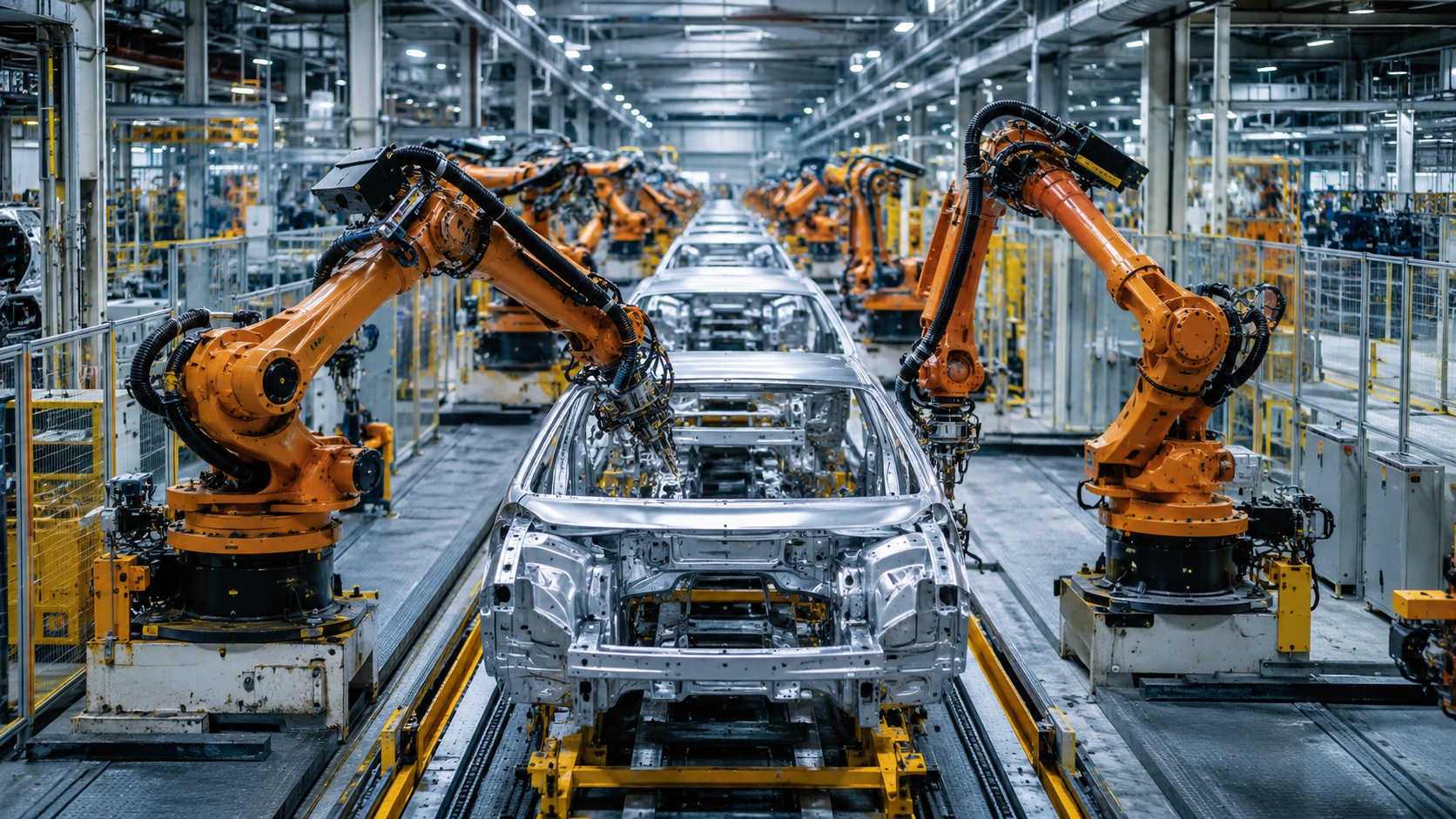
The top industrial robot manufacturers by 2026 market share are led by ABB and Epson, statistically tied near 13 percent of revenue each, followed by FANUC at about 11 percent. Together the ten companies below account for roughly 60 percent of the global market. This ranking is ordered by 2023 revenue share (Statista, Giants of Industrial Robotics). One caveat up front: by units shipped the order changes, and FANUC often ranks first, so the title of “number one” depends on the metric you choose.
For a custom EVST quote on any of the robot classes discussed below: email
sales@evsrobot.com or
WhatsApp / WeChat +86 193 8162 6253.
The top industrial robot manufacturers at a glance
According to the International Federation of Robotics, the world’s factories install more than 500,000 new industrial robots in a typical year, and demand has roughly doubled over the past decade. Most of that volume flows through a short list of suppliers. The table below ranks them by 2023 revenue share; the per-company sections that follow explain what each one is actually known for.
| Rank | Manufacturer | Country | Revenue share (2023) | Known for |
|---|---|---|---|---|
| 1 | ABB | Switzerland | ~13% | IRB six-axis line, large multi-robot lines |
| 2 | Epson | Japan | ~13% | SCARA volume leader (tied for #1) |
| 3 | FANUC | Japan | ~11% | Yellow arms; #1 by units shipped |
| 4 | Yaskawa | Japan | ~8% | Motoman, servo and motion control |
| 5 | Kawasaki | Japan | ~8% | Built Japan’s first industrial robot |
| 6 | KUKA | Germany | ~6% | Heavy payload; owned by Midea |
| 7 | Denso | Japan | ~4% | Compact automotive-electronics assembly |
| 8 | Comau | Italy | ~1% | Automotive body-in-white welding |
| 9 | Stäubli | Switzerland | <1% (specialist) | Semiconductor cleanroom precision |
| 10 | Nachi | Japan | <1% (specialist) | Heavy-payload handling |
According to Interact Analysis, the top ten vendors’ combined share slipped from 64.6 percent in 2023 to 62.3 percent in 2024, a sign that smaller and regional players are slowly taking ground. The leaders, though, remain remarkably stable.
What counts as an industrial robot here
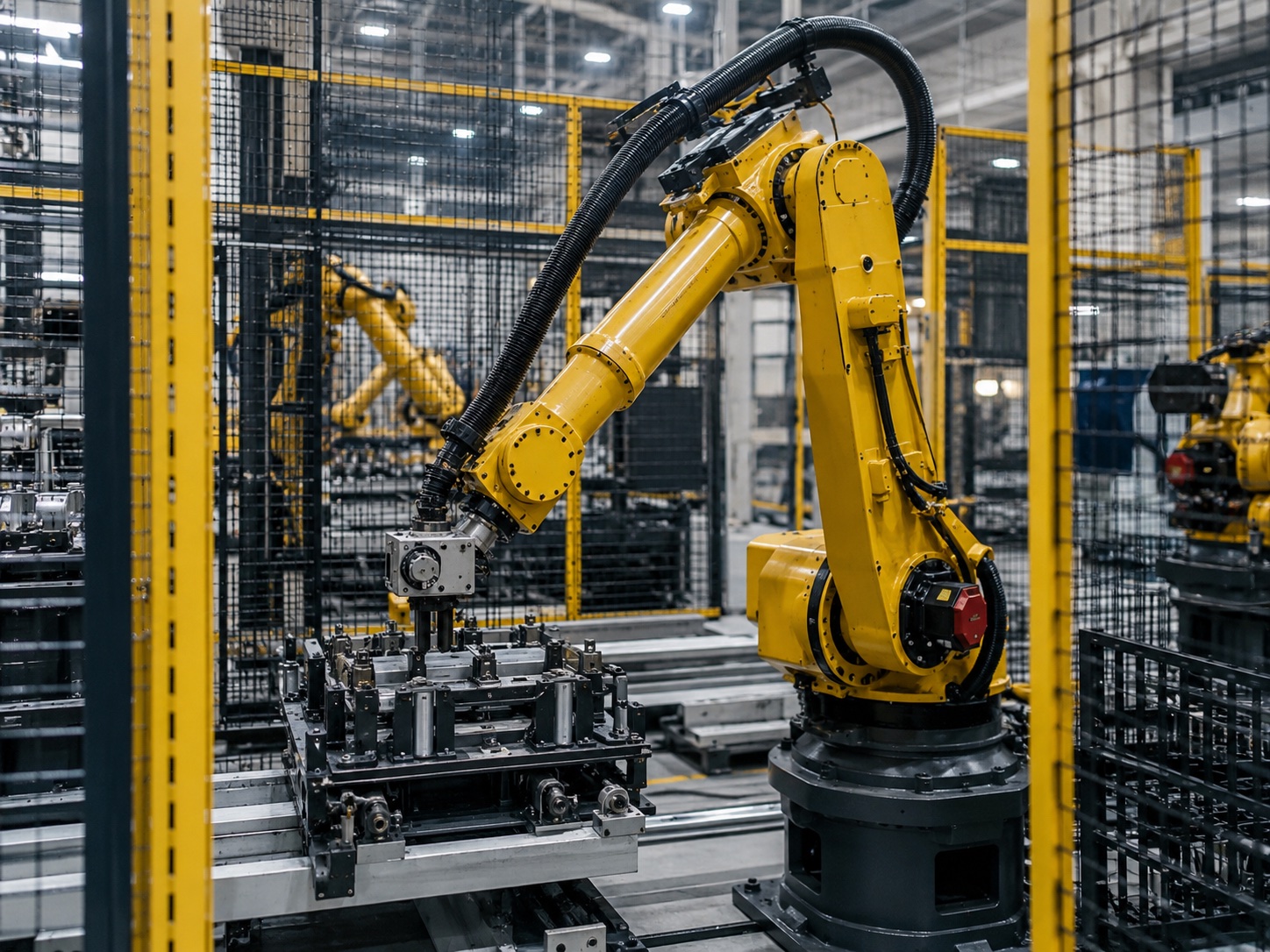
This list counts industrial robots only: the heavy, fenced, multi-axis machines that have run production lines for decades. It excludes collaborative robots (cobots) and humanoids, which follow a different safety model and a different market. The distinction matters for a ranking, because several companies here, including ABB, FANUC and KUKA, also sell cobot lines, and lumping the two together would distort the picture. For the collaborative side, see our companion ranking of the top collaborative robot brands. For the domestic Chinese picture, see China’s leading industrial robot manufacturers.
A note on method is also worth making explicit, because it is the most common source of confusion. Revenue share and unit share are different lenses. A company that sells many small, inexpensive arms can lead by volume while trailing by revenue, and a company that sells fewer large, high-value systems can do the reverse. Where the two diverge in this ranking, we say so rather than pretend a single figure settles the question.
1 to 3: ABB, Epson and FANUC at the top
1. ABB (Switzerland)
ABB carries the broadest robot and automation portfolio in the industry, spanning small assembly arms up to heavy six-axis machines for foundries and press shops. Its IRB family, TrueMove and QuickMove motion control, and mature multi-robot coordination make it a default choice for large, mixed production lines where dozens of robots must stay synchronized. The company also invests heavily in software: its RobotStudio offline-programming suite lets integrators build and test a cell virtually before any hardware arrives, which shortens commissioning. According to Statista’s Giants of Industrial Robotics, ABB held about 13 percent of 2023 revenue, narrowly edging the top spot it effectively shares with Epson. Its automotive and electronics customer base is global, and a steady acquisition history has widened its reach into logistics and process industries. For buyers, ABB’s pull is breadth and ecosystem maturity rather than any single headline specification.
2. Epson (Japan)
Yes, the printer company. Epson shipped its first SCARA robot in 1981 and then led SCARA sales for twelve straight years. SCARA arms are the workhorses of small, fast assembly: placing components on circuit boards, handling connectors, driving screws, and feeding test stations at high cycle rates. That is precisely the work behind the consumer electronics most people own, and Epson quietly dominates it. By 2023 revenue the company sits at roughly 13 percent, statistically level with ABB at the very top, which surprises buyers who only know the brand from inkjet printers. Its edge is not heavy payload or reach, but sheer volume and reliability in a category that rarely makes headlines yet underpins the entire electronics supply chain.
3. FANUC (Japan)
Spun out of Fujitsu’s numerical-control division, FANUC is the precision and reliability specialist, with repeatability often quoted at plus or minus 0.02 millimeters across more than 200 models. Its instantly recognizable yellow arms run everywhere in automotive body shops, CNC machine tending, and electronics, and the company is known for keeping spare parts and service available for decades, which matters to plants that amortize a line over fifteen years. At about 11 percent of revenue it ranks third here, yet by units shipped it frequently ranks first, which is why so many “biggest robot maker” claims point to FANUC. The gap between its revenue rank and its volume rank is the clearest single example of why metric choice changes this list.
4 to 6: Yaskawa, Kawasaki and KUKA
4. Yaskawa (Japan)
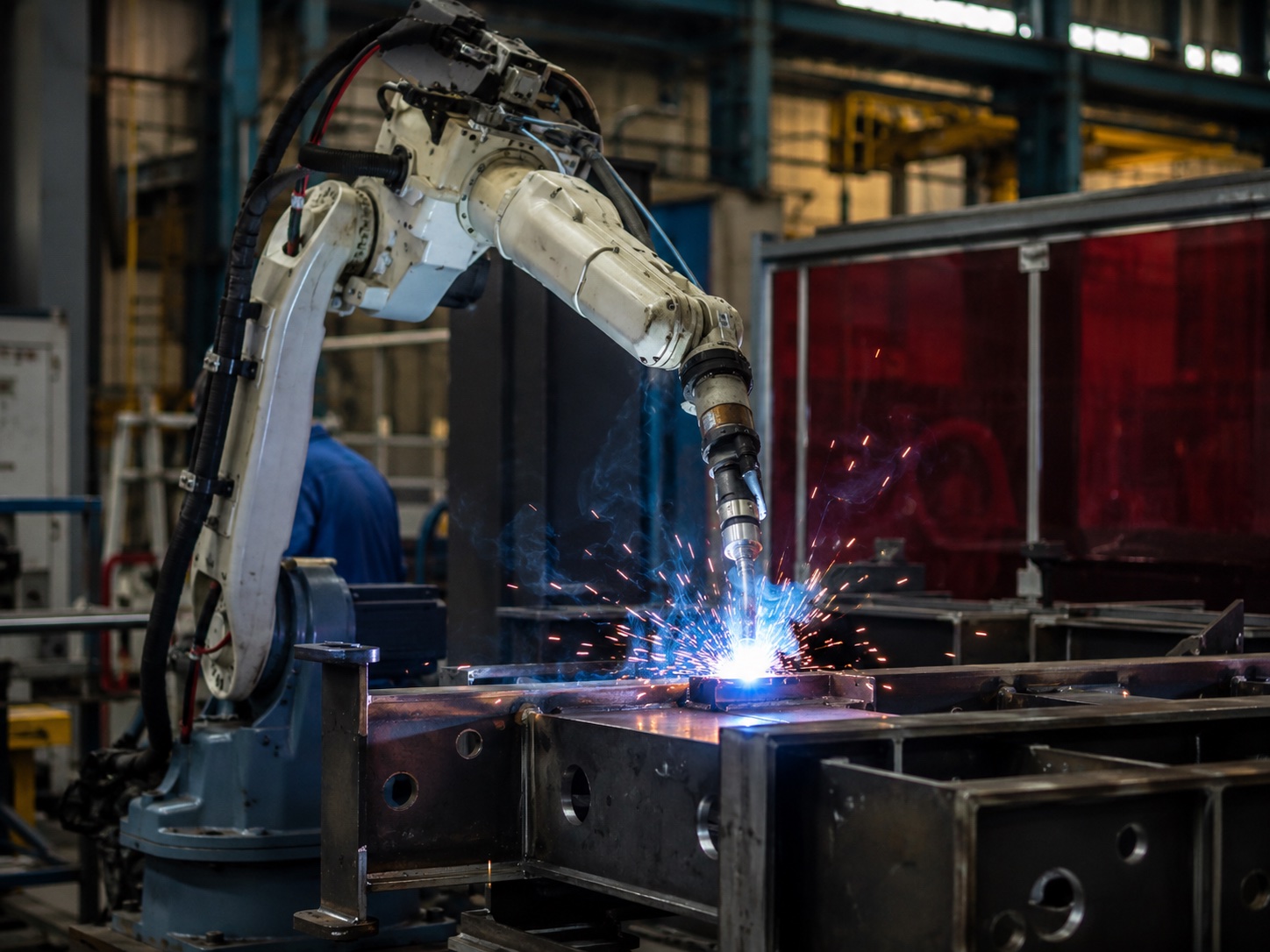
In 1977 Yaskawa launched Motoman, one of the first all-electric industrial robots, and the company’s roots in servo motors and motion control still define it. That heritage shows up as smooth, fast motion and tight path accuracy, which is why Yaskawa is a perennial favorite for arc and spot welding as well as semiconductor handling. Its smart teach pendants lower the operator skill barrier, helping plants that cannot staff a dedicated robotics programmer. At roughly 8 percent of revenue it is a core member of the Big Four, and its installed base across automotive tiers and electronics gives it the kind of service density that integrators value when uptime is the priority.
5. Kawasaki (Japan)
Kawasaki Heavy Industries built Japan’s first industrial robot in 1969, giving it one of the longest track records in the field. Its duAro dual-arm, designed to work in spaces sized for a human operator, has earned industry honors and signals the company’s interest in flexible, smaller-footprint automation. Kawasaki is generally known for balanced, cost-effective machines across handling, welding and assembly rather than a single headline specification, which makes it a pragmatic pick for plants that want dependable performance without paying a premium for a marquee name. It holds around 8 percent of the market, level with Yaskawa.
6. KUKA (Germany)
Founded in 1898 and now owned by China’s Midea, KUKA built its reputation on heavy payloads and handling feel, and some integrators describe its orange KR arms as the premium option of the category. The brand is deeply embedded in European automotive manufacturing, where its large six-axis robots handle body framing, spot welding and heavy material transfer. Ownership by Midea has given it a stronger foothold in Asia while it retains German engineering and a large European service base. It holds about 6 percent of the global market and remains a fixture on automotive lines worldwide, though that share sits below where the older “Big Four are all equal” framing would suggest.
7 to 10: Denso, Comau, Stäubli and Nachi, the specialists
7. Denso (Japan)
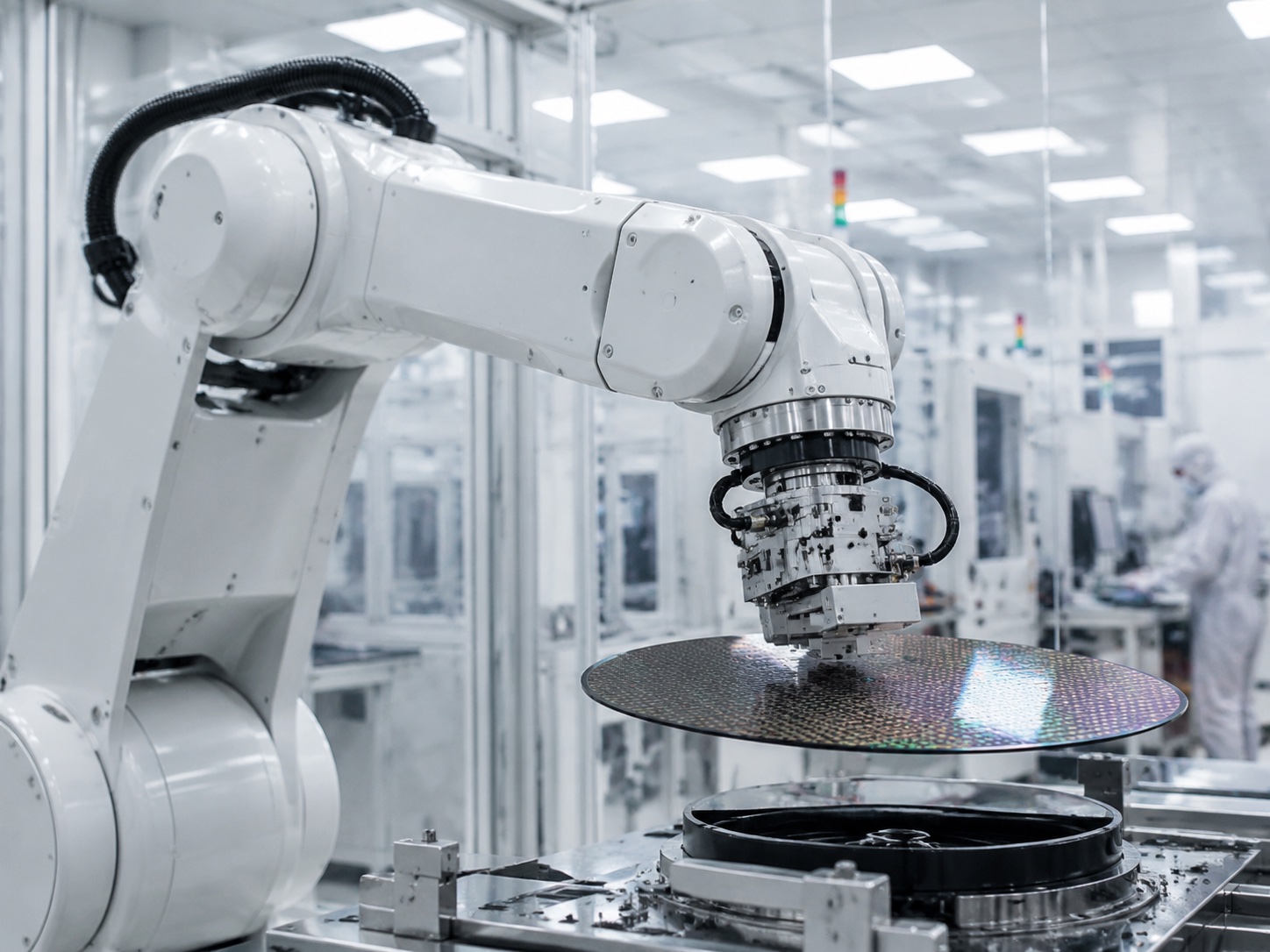
The 1949-founded parts giant at the heart of the Toyota group specializes in compact, high-speed assembly for automotive electronics, with deep in-house control and servo technology developed for its own factories before being sold outside. That origin is also its moat: Denso robots are tuned for the dense, repetitive, high-cycle work of electronic-component assembly, and the company understands that environment better than almost anyone because it lives in it daily. At about 4 percent of revenue it is smaller than the names above, but inside automotive electronics its position is hard for outsiders to challenge. Buyers who need small, fast, dependable arms for board-level work shortlist Denso for the same reason Epson appears so high overall.
8. Comau (Italy)
Born in 1973 from Fiat’s automation arm, Comau lives in the car factory: body-in-white welding lines and its high-speed Racer arms built for tight cycle times. Its overall global share sits near 1 percent, which understates how central it is to European and South American automotive manufacturing. A common mistake inflates Comau’s number by quoting its automotive-welding segment share, where it is a leader, rather than its total robot revenue. The two figures should not be confused, and the gap is a useful reminder that segment dominance and overall market share are different claims.
9. Stäubli (Switzerland)
A textile-machinery house since 1892, Stäubli acquired Unimation, the company that built the world’s first industrial robot, which gives it a direct line to the origins of the field. Today its TX2 arms hold close to a third of the semiconductor cleanroom segment by most estimates, where contamination control and absolute repeatability outweigh raw payload. Stäubli also serves pharmaceutical and life-science lines that demand washdown-rated, low-particulate machines. Its overall market share is small because it deliberately plays in high-value niches rather than chasing automotive volume, but in precision and cleanliness it sets the ceiling the rest of the field is measured against.
10. Nachi (Japan)
Founded in 1928 and a long-time supplier to Toyota lines, Nachi is a heavy-duty specialist that also makes its own bearings, hydraulics and cutting tools, so its robots are backed by deep mechanical engineering. Its strengths are high-payload handling, spot and arc welding, and clean material transfer for LCD and semiconductor plants. The brand’s global revenue share is small, and it is the least known name on this list outside Japan, but in heavy-duty handling and within the Toyota supply chain it is a serious, long-trusted supplier rather than a niche newcomer.
Big Four vs the specialists: which metric wins
The “Big Four” framing, FANUC, ABB, Yaskawa and KUKA, still holds by units shipped, where those four control roughly three-quarters of volume. By revenue, Epson’s SCARA dominance pushes it level with ABB, and the picture fragments below the top three. The honest takeaway is that there is no single number one: it depends on whether you count money or machines, and on the application segment you care about, whether that is welding, cleanroom, automotive or high-speed assembly.
In practice, integrators rarely choose on spec sheets alone. Service-network density, spare-part lead times and local engineering support often decide the deal as much as repeatability figures, especially for buyers outside the brand’s home region. A robot that is two percent more accurate on paper is worth little if the nearest service engineer is a three-day flight away when a line goes down.
The 2026 picture is also shifting. According to Interact Analysis, the global industrial robot market contracted in 2024 before an expected recovery, and the same data shows the leaders slowly ceding share to smaller players. The clearest pressure comes from China, now the largest single market for industrial robots and home to fast-growing domestic brands such as Estun and Inovance. Those names do not yet appear in the global revenue top ten, but they already lead at home and are climbing the worldwide table; we break them out in our China industrial robot ranking. The line between industrial robots and collaborative arms is blurring too, as several brands here now sell cobot lines alongside their caged machines.
For a buyer in 2026, the practical reading of this list is simple. The top three set the global benchmark for capability and ecosystem. The Big Four remain the safe default for high-volume automotive and electronics work. The specialists win where their niche demands it, whether that is cleanroom particulate limits or heavy-payload reach. And the fastest change is happening just outside the top ten, where regional suppliers compete hard on price, lead time and local support.
Key takeaways
- ABB and Epson are tied at the top, near 13 percent of 2023 revenue each; FANUC is third at about 11 percent.
- By units shipped, FANUC usually leads, so the ranking flips with the metric.
- Half of the top ten are Japanese, underlining Asia’s weight in industrial robotics.
- Specialists matter: Stäubli (cleanroom) and Comau (automotive) punch far above their overall share inside their niches.
Frequently asked questions
Who is the world’s largest industrial robot manufacturer?
By 2023 revenue share, ABB and Epson are statistically tied at about 13 percent each. By units shipped, FANUC frequently ranks first. The largest depends on whether you measure revenue or volume.
Who are the Big Four industrial robot manufacturers?
FANUC, ABB, Yaskawa and KUKA. By units shipped they account for roughly three-quarters of the global market.
Is Epson really a top industrial robot maker?
Yes. Beyond printers, Epson is the long-standing leader in SCARA robots for high-speed electronics assembly and sits at roughly 13 percent of 2023 revenue, tied for the top.
Which industrial robot brands are best for the semiconductor and cleanroom industry?
Stäubli is the precision and cleanliness leader in semiconductor cleanrooms, holding close to a third of that segment despite a small overall market share.
Are Chinese industrial robot brands in the global top 10?
Not yet by global revenue share, which is led by Japanese, European and Swiss makers. Chinese brands such as Estun and Inovance lead at home and are rising fast; we cover them in a separate China ranking.
Where a full-line integrator fits
The brands above set the global benchmark. Buyers sourcing turnkey cells, rather than bare arms, also weigh integration depth and after-sales reach. EVST, for example, ships robotic systems and complete automation cells to more than 100 countries, holds IATF16949 automotive-grade certification along with CE, SGS and TÜV third-party marks, covers the full payload spectrum from collaborative to heavy-duty arms, and runs a global field-engineer dispatch network for commissioning and support.
For a quote tailored to your project, including 3D CAD review, weld map analysis and configuration recommendation, email sales@evsrobot.com or message us on WhatsApp / WeChat. Typical response within 24 hours.
About the data: rankings reflect 2023 revenue share (Statista, “Giants of Industrial Robotics”); figures are approximate and differ by methodology, as by units shipped the order changes. Provided for industry information, not investment advice.
For a primer on the main robot types, start with the top 7 industrial robots.