
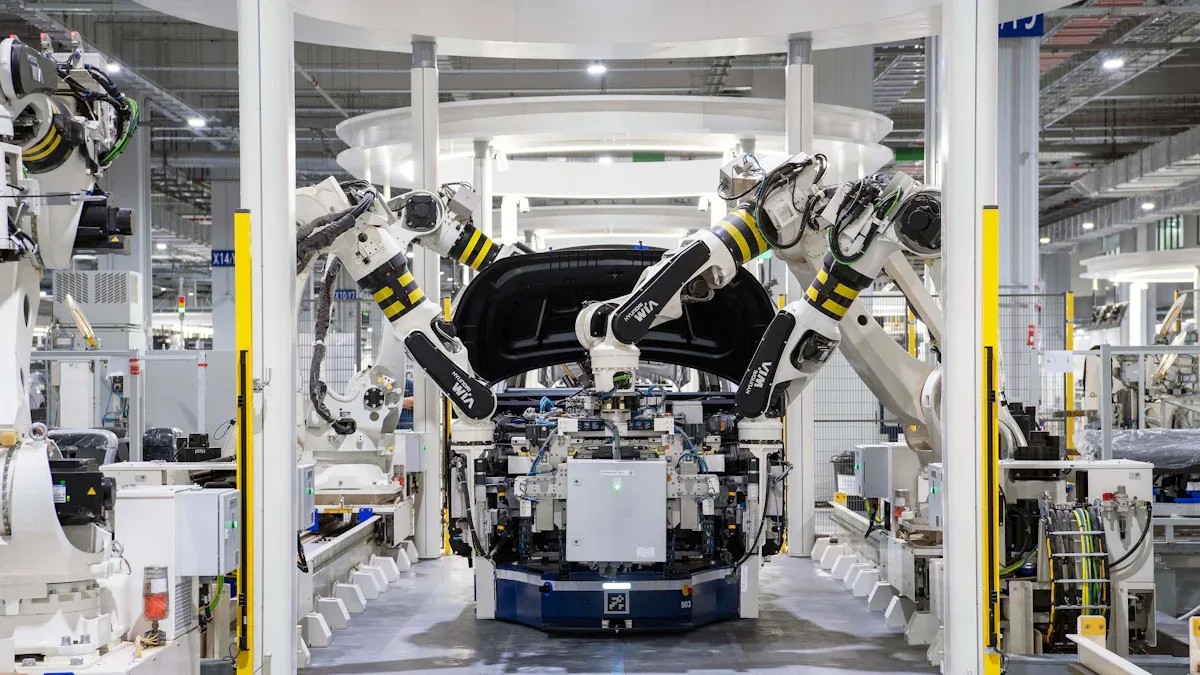
Robotic positioners help you fix hard problems in factories in 2025. The market is now worth $820 million. It is growing by 5.2%.
|
Benefit |
Description |
|---|---|
|
Flexibility |
Moves all around, fits any job |
|
Efficiency |
Works with tricky parts, makes more stuff |
You can let workers stop doing jobs by hand. Robotic tools help your factory do better work.
What Are Robotic Positioners?
Definition
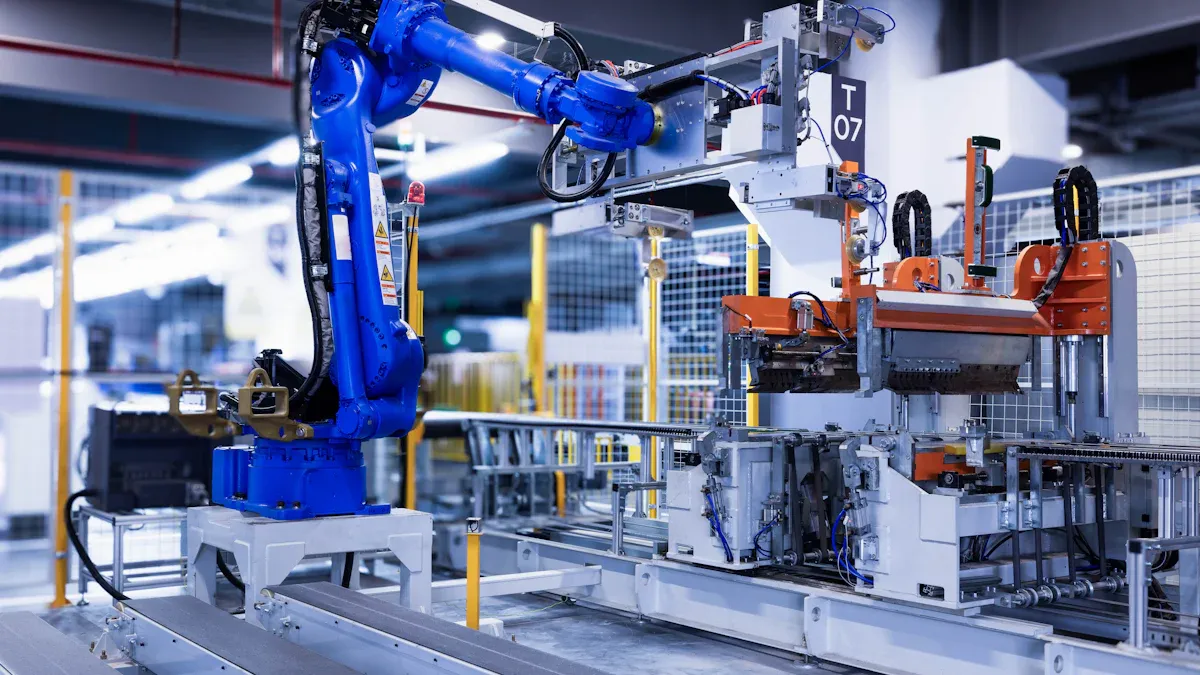
You might wonder why robotic positioners matter in factories today. A robotic positioner is a machine you can program. It has one or more axes. It works with robots to move a workpiece. This device holds and turns parts or tools very carefully. You can use it to move a platform in different directions. This helps you do hard jobs that need things lined up just right.
Core Functions
Robotic positioners do more than just hold things. They help you turn or tilt items. You can reach tricky spots and work on many sides. You do not have to move the part by hand. You can even change them to fit your needs. Here are some main things they do:
-
Turn or tilt parts so you can reach them better
-
Help robots get to hard-to-reach places
-
Let you work on many sides without stopping
-
Change to fit different shapes and sizes
|
Function/Benefit |
Description |
|---|---|
|
You get steady, exact movement for better quality and less rework. |
|
|
Reduced Production Cycle Times |
You can do more tasks at once and cut down on waiting time. |
|
Flexibility |
You handle many jobs and parts with easy changes and multi-axis movement. |
|
Enhanced Safety |
You keep workers away from dangerous tasks. |
|
Long-term Financial Benefits |
You save money over time by lowering labor costs and making machines last. |
Comparison to Other Axes
You may wonder how robotic positioners are not like other axes. Normal robot arms have axes built in for moving. Robotic positioners add more axes. This gives you more ways to move and turn parts. You can work on bigger or harder items. You get more control and better results than with robots alone.
Benefits of Robotic Positioners
Flexibility
Robotic positioners help you do many jobs. You can change tasks fast when your parts change. SCARA robots with vision systems can adjust right away. You do not need to stop work to switch parts. Modular components let you get ready for new jobs quickly.
|
Evidence Description |
Details |
|---|---|
|
R3M Architecture |
Changes to fit new products and needs. |
|
Automated Program Generation |
Needs less human help and makes robots work alone. |
|
Modular Components |
Lets you set up new jobs fast in your factory. |
|
Empirical Validation |
Used in real robotic lamination stacking. |
|
Industry 4.0 Technologies |
Helps factories grow and change easily. |
Efficiency
Robotic positioners help you work faster and better. You can keep your line running all the time. This is good when you have tight schedules. These machines save energy by moving only when needed. This cuts waste and saves money. AI and machine learning can tell you when to fix machines, so you have less downtime.
-
Robotic lines work day and night, so you finish on time.
-
You save energy because the machines move just right.
-
High accuracy means you waste less material.
-
AI helps you fix problems fast and plan repairs, so you get more done.
Precision
Robotic positioners help you make better products. They move very carefully, so your parts always line up. In welding, you can use positioners like VTMF2010 and RTF900 for great accuracy. Zero backlash means the machine does not slip or mess up.
|
Feature |
Description |
|---|---|
|
Superior Positioning Accuracy |
Used in welding for top results. |
|
Zero Backlash |
No mistakes in where the machine moves. |
-
Automatic TCP Calibration keeps welding on target.
-
Real-time feedback helps you line up every part just right.
Space Savings
Robotic positioners help you save space in your factory. Some, like the ArcWorld IV-6000 series, are slim and fit in small spots. This means you can put more machines in less space. In busy factories, you can use up to 34% more of your floor.
-
The ArcWorld IV-6000 series uses a slim positioner for better layouts.
-
Ferris wheel positioners let you do more work in small areas.
Future-Proofing
Robotic positioners help your factory get ready for the future. Many companies work with experts to make new positioners. These teams help you keep up with new technology. Open architecture control lets you add new features and connect to smart systems. Predictive maintenance helps you fix problems before they stop your work.
|
Evidence Type |
Description |
|---|---|
|
Collaborative Partnerships |
Companies and experts make new positioners together. |
|
Predictive Maintenance |
Programs use data to keep machines working longer. |
|
Open Architecture Control |
Lets you add new things and connect to smart factories. |
Applications
Welding
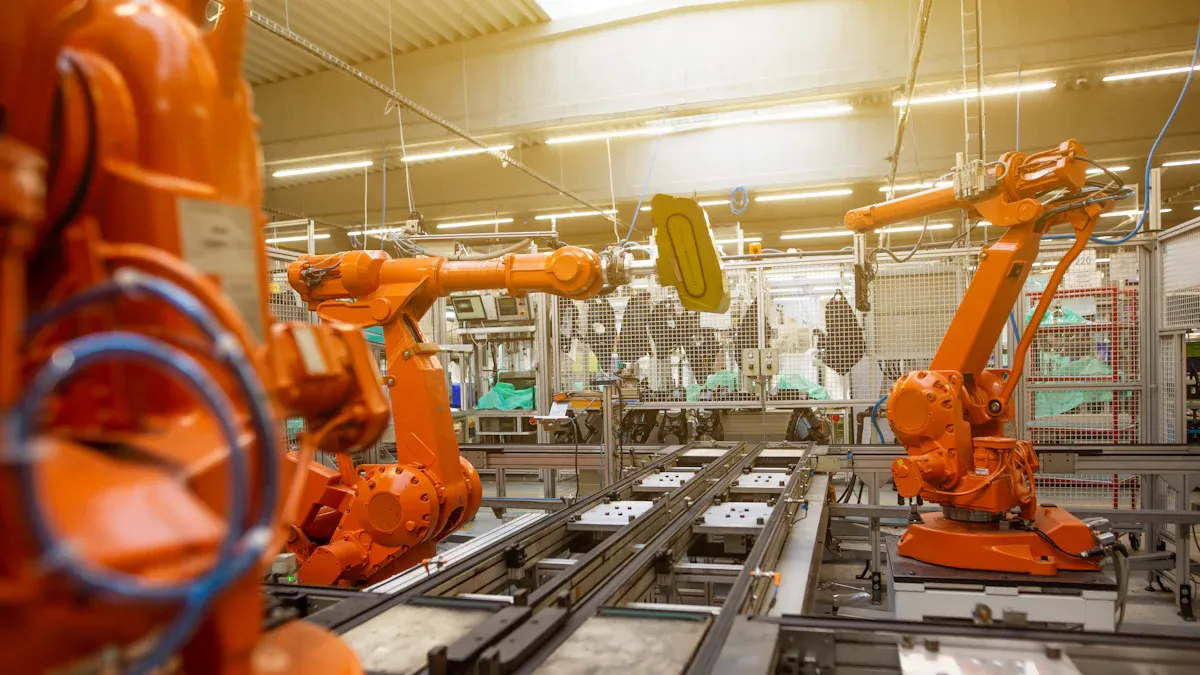
Robotic positioners are very important in welding. In 2024, almost half of new setups were for welding. These machines let you turn or tilt parts with great control. You can reach every spot and make strong welds. They help you do advanced welding steps. This means better quality and faster work in car and metal factories.
Machining
Robotic positioners are also used a lot in machining. They hold and move parts for cutting, drilling, or shaping. You can change jobs fast and keep your work correct. Here is how they help:
-
They make each step go faster and boost how much you make.
-
They help every part match your design.
-
They keep your shop safer by letting machines do risky jobs.
-
They help you spend less by making fewer mistakes and wasting less.
|
Role in Machining Applications |
Performance Improvements Observed |
|---|---|
|
Welding and Cutting |
Better product quality |
|
Assembly and Manufacturing |
Less rework |
|
Inspection and Testing |
More efficient work |
|
Material Handling |
Higher productivity |
Painting
You can use robotic positioners to paint cars, planes, and more. These systems move parts so robots can spray every surface evenly. You get smooth coats and save paint. Robotic painting keeps workers safe from fumes and cuts down on waste.
-
Robots work all the time, so you finish jobs faster.
-
Sensors look for problems and fix them right away.
-
You use less paint and help the environment.
Inspection
Robotic positioners help you check every part for quality. Cameras and sensors find tiny problems that people might miss. In car factories, robots check welds and paint. In medicine, they check vials for safety. These systems make sure your products are good.
Types of Robotic Positioners
Robotic positioners have many kinds. Each kind helps with different factory problems. You can pick the best one for your job and part.
Turntables
Turntables use a table that spins parts around. Some turntables stop at set points. Others spin smoothly or move up and down. These are good for welding, painting, and checking parts. Turntables can hold very heavy things, even up to 50,000 kg. Car factories use them a lot to turn big parts.
Single-Axis
Single-axis positioners move parts in one way, usually by turning them. You get good control, which is needed for welding or big machines. These fit well in car and airplane factories. They help you add robots to your line and keep workers safe.
-
Single-axis positioners are best for jobs that need simple turning.
Headstock & Tailstock
Headstock and tailstock positioners hold long or heavy parts between two ends. The headstock turns the part, and the tailstock keeps it still. This setup gives you good control and safety. You can weld big frames or pipes without worry. These also save space and let you set up more work areas.
|
Advantage |
Description |
|---|---|
|
Precision |
Turns parts accurately and holds them steady |
|
Safety |
Easier for workers and less chance of getting hurt |
|
Productivity |
Faster welding and better results |
Multi-Axis
Multi-axis positioners can turn and tilt parts in many ways. You can reach hard spots and work on tricky shapes. These let one robot do many jobs, which saves money and space. Multi-axis systems are great for factories that make many car parts or need to change setups fast.
-
Multi-axis positioners help you do more jobs with fewer robots.
3-Axis
3-axis positioners move parts in three ways. They are good for simple jobs like putting things together or loading machines. You can put parts on boards or in boxes. But they cannot twist or turn parts every way, so they do not work for hard jobs.
|
Task |
Limitation |
|---|---|
|
Assembly and packaging |
Can only move in a few directions |
|
Machine tending |
Cannot handle tricky shapes |
Choosing a Positioner
Space & Layout
Look at your factory space before you choose a robotic positioner. Make sure the positioner will fit in your work area. The way your line is set up should let the positioner move safely. You need enough floor space so robots can reach all parts. This also helps keep your team safe. If your space is small, pick a compact model. If you have a big area, you can use larger systems.
-
Check if the positioner fits in your space.
-
Make sure robots can move without hitting things.
-
Plan safe walkways around the machines.
Workpiece Needs
Think about the parts you want to move. The weight, shape, and size of your parts are important. The table below shows what you should check:
|
Characteristic |
Description |
|---|---|
|
Weight |
The positioner must hold the part and any tools. |
|
Tilting Moments |
It should handle the forces when tilting or turning. |
|
Unbalanced Loads |
The system must manage loads that are not even. |
|
Mass Moment of Inertia |
Pick a positioner that can handle the part’s movement. |
|
Speed of Rotation |
Faster spinning can help you get more done. |
|
Integrating Low Backlash Design |
Low backlash keeps movements steady and correct. |
Style & Payload
Pick a style that matches your job. Some positioners are best for heavy parts. Others are better for small items. Think about these things:
|
Consideration |
Description |
|---|---|
|
Space |
Will the positioner fit in your work area? |
|
Geometry |
Does it match the shape of your parts? |
|
Size |
Can it hold big or heavy items? |
|
Style |
Which type works best for your job? |
|
Payload |
Does it support the weight you need? |
The right style and payload help you stop delays and keep your line moving.
Software Tools
Modern robotic positioners use smart software. You can use tools like Yaskawa Motoman to program and watch your robots. Addcomposites helps you connect many robots in one system. 3DEXPERIENCE ROBOTICS lets you plan, test, and program your setup. FANUC gives you easy controls for quick changes. These tools make setup easy and help your system work well.
You can get more work done and have fewer breaks if you use robotic positioners. Real-life examples show robots help many businesses do better work and finish faster. First, think about what your factory needs. Next, try out your setup to see if it works well. Then, ask experts for help with robotics or setting up your system. These steps will help you get ready for what comes next.
FAQ
What is the main job of a robotic positioner?
You use a robotic positioner to move, turn, or tilt parts. This helps robots reach every side and do better work.
Can you add a robotic positioner to your old robot system?
Yes, you can add most positioners to your current robots. You may need new software or small changes to your setup.
How do robotic positioners make your factory safer?
Robotic positioners keep workers away from dangerous jobs. You let machines handle heavy or risky parts, which lowers the chance of accidents.