
Keep a robot spray path only where it still suits the new setup. Changing the nozzle can change both the tool geometry and the liquid footprint; changing the fluid can change the pattern even when the robot follows exactly the same points. Before accepting either substitution, compare the changed setup on the actual target regions under recorded conditions.
“The replacement nozzle fits. Can we keep the program?”
Check what “fits” means. A nozzle can attach to the same connection yet put its outlet at a different position or angle. That changes the relationship between the robot’s programmed tool point and the surface. Confirm the physical outlet and approach before treating the saved points as reusable.
Then check the delivered pattern. A wider pattern is not automatically a better substitute: it may reach an adjacent area that should remain dry, or distribute liquid differently across the same target. Two nozzles described as a flat spray can differ in capacity, angle and drop size. Use the proposed nozzle’s own data, rather than a pattern name as an equivalence claim.
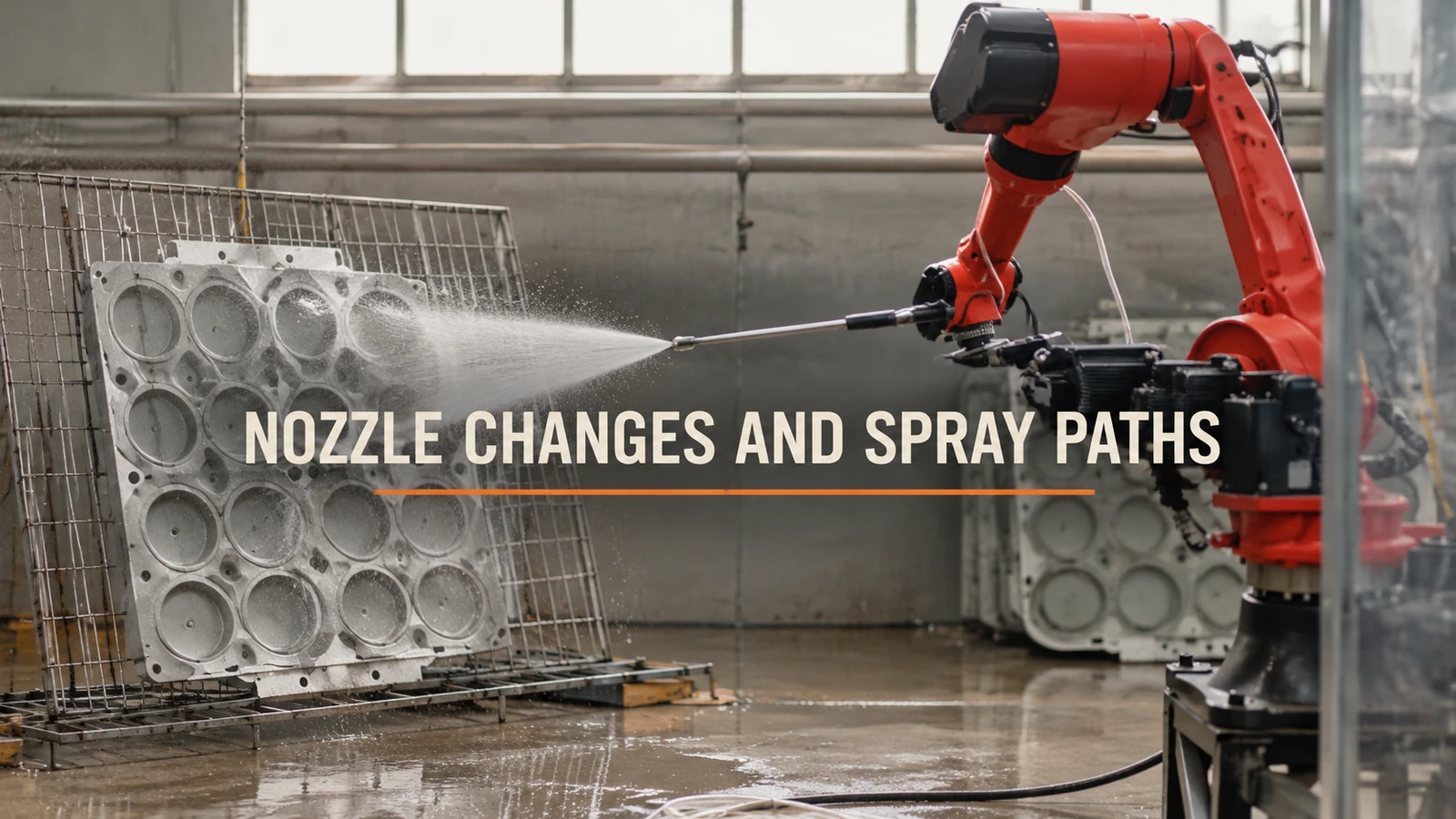
The footage offers a practical geometry for this discussion: a red robot carries a long lance, directing a visible fan of water toward a vertical workpiece with circular recesses. The lance changes height and position. For a proposed job with similar recesses, the outlet approach to the recess wall deserves a separate check from the open face.
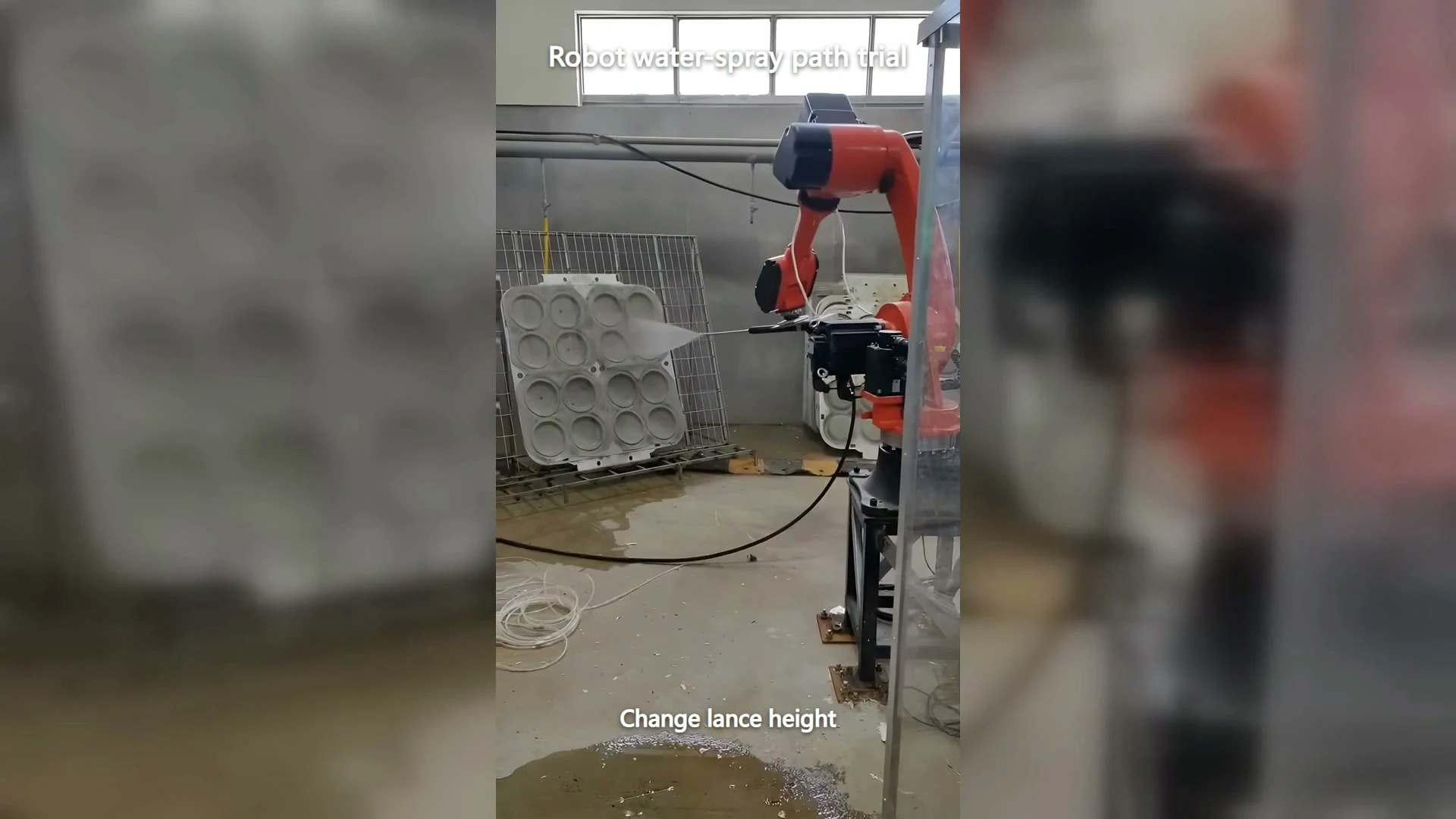
The robot directs a fan of water toward the workpiece with circular recesses. Video 00:20.
“If we replace water with the production liquid, what changes?”
The effective spray angle depends on distance, viscosity, nozzle capacity and operating pressure. Catalog angles are commonly based on water; a different liquid therefore needs an application check, especially where coverage is critical. Surface tension and viscosity also affect pattern formation. Keeping the same robot speed does not keep those liquid properties constant.
Before the comparison, record the actual liquid and its relevant operating conditions, the nozzle, supply condition and target distance. Confirm material compatibility for the nozzle and the wetted supply components. A suitable spray pattern and a suitable material combination are separate purchasing decisions.
Use an agreed sample and observation method for the intended process. If the objective is washing, inspect the relevant remaining contamination; if the objective is another liquid application, define its result accordingly. A trial with the production liquid should answer that specified result, rather than inherit acceptance from the water demonstration.
“Which test will tell us whether to change the path?”
Begin with a comparison that isolates the substitution. Keep the part, mounting and recorded operating conditions consistent where the proposed change permits it. Observe the old and new patterns at the same target region before changing several robot settings at once.
For a recessed part, mark the open face, recess wall, recess bottom and the transition between them as separate inspection regions. Check where the footprint becomes narrow, spreads beyond the target or leaves an uncovered strip. If the issue follows the recess geometry, test the relevant approach angle or distance. If the whole pattern changes after a liquid substitution, review the nozzle and supply condition before correcting every waypoint.
Adjacent passes also need a fresh check. Overlap depends on the actual distribution, not just the visible width of the spray. A fixed overlap percentage borrowed from a different nozzle can conceal either an untreated band or excessive local application. Compare the joined passes on a representative sample and revise the route from that observation.
End the trial with a decision: retain the route, adjust the affected regions, or reselect the nozzle and operating condition. Keep the compared setup and the resulting sample together so a later replacement can be checked against the same reference.
Tell EVST which nozzle, liquid or part geometry you expect to change. Share the existing path trial and the target regions to discuss a test focused on that change.