
Use robotic press brake handling for repeatable families of parts when a trial shows that the robot can turn the sheet, find a new grip when needed and clear the press after the last bend. Manual bending can remain sensible for short, varied runs when changes in tooling or handling take a large share of the job and the existing handling method meets the shop’s requirements. Compare the full job on the same parts, and include the time it takes to make the first acceptable part after a changeover.
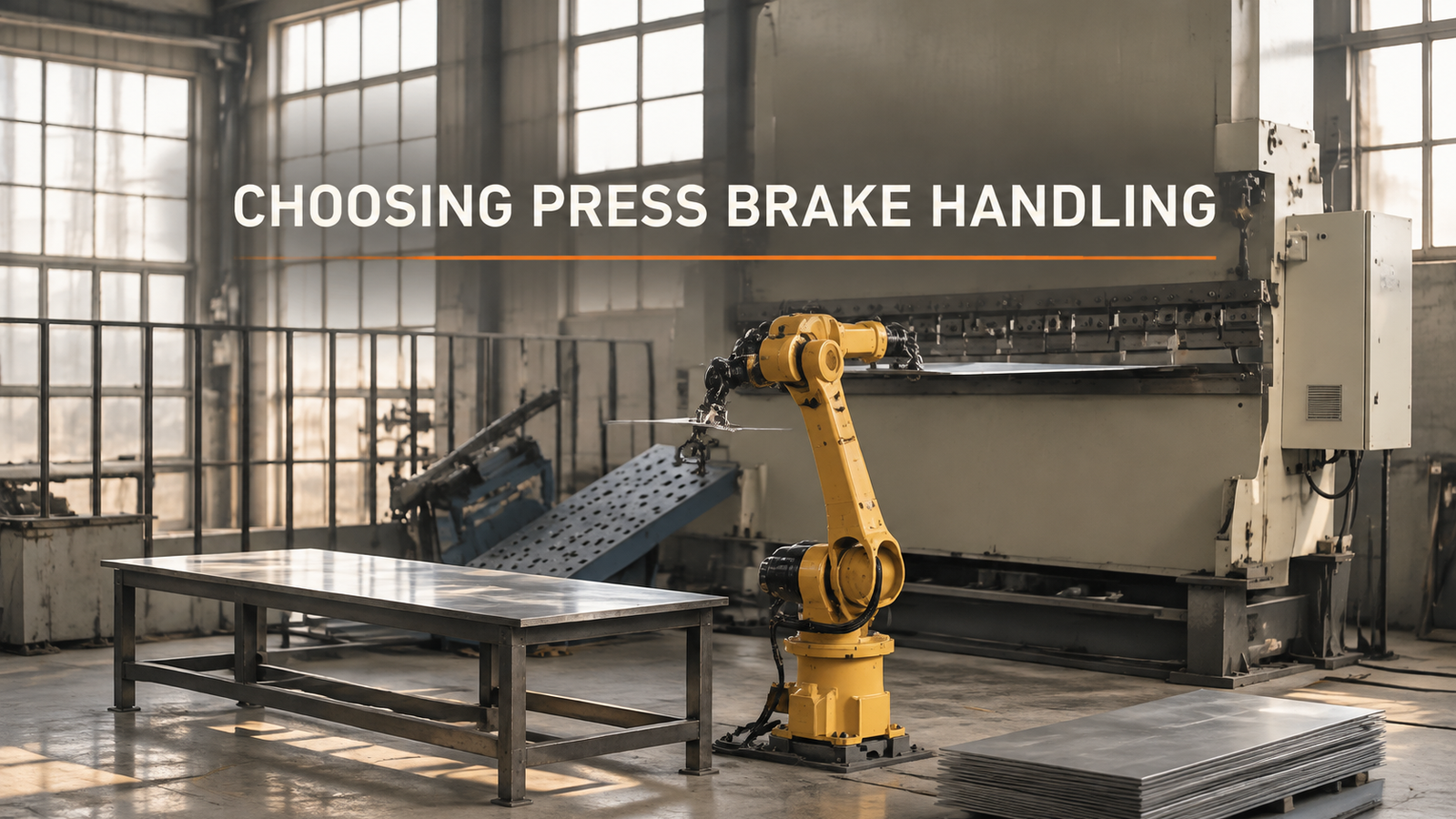
A flat sheet is the easy test
The yellow arm in the footage lifts a flat sheet from the left, presents its edge to the press opening and changes the sheet angle in front of the machine. It is worth tracking where the far corner passes as the wrist moves. During your own trial, repeat that observation after a flange has formed. The flange can occupy space that was clear when the sheet was flat, or cover the surface the gripper used for a previous bend. A different bend order, a reachable alternate grip or a regripping station may make the sequence workable.
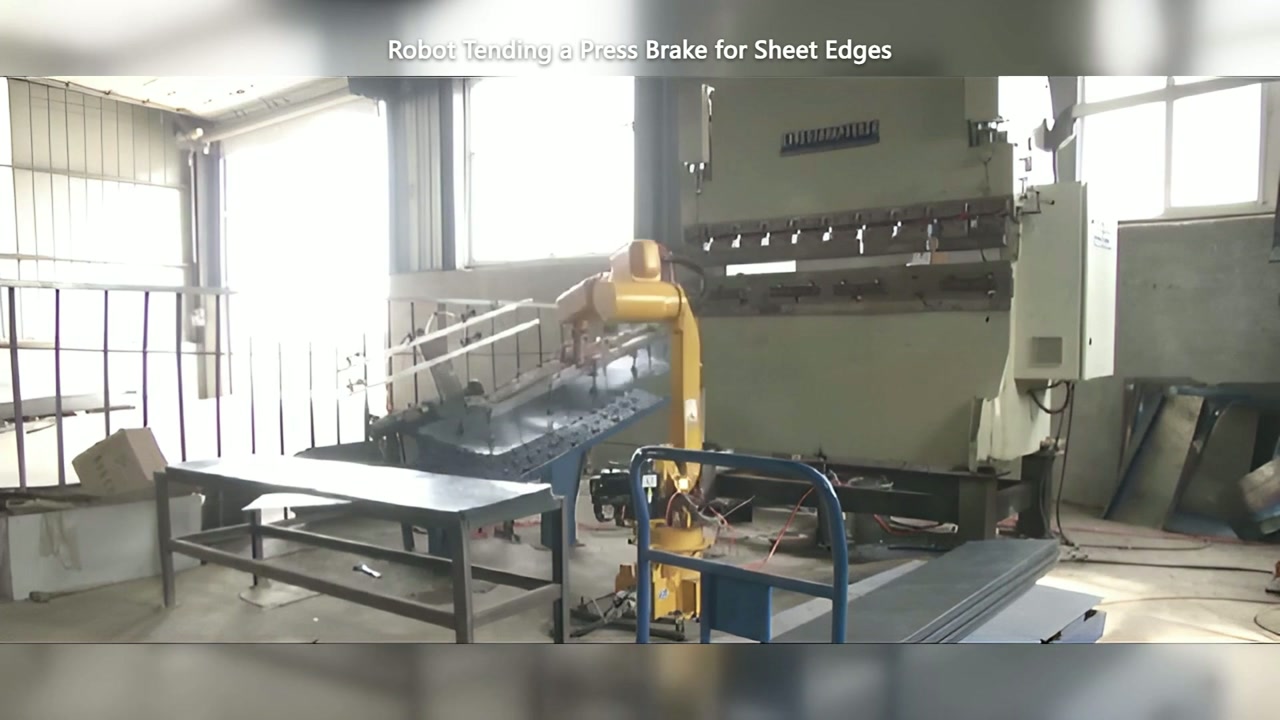
00:02 in the video. The yellow robot approaches the sheet at the left staging area.
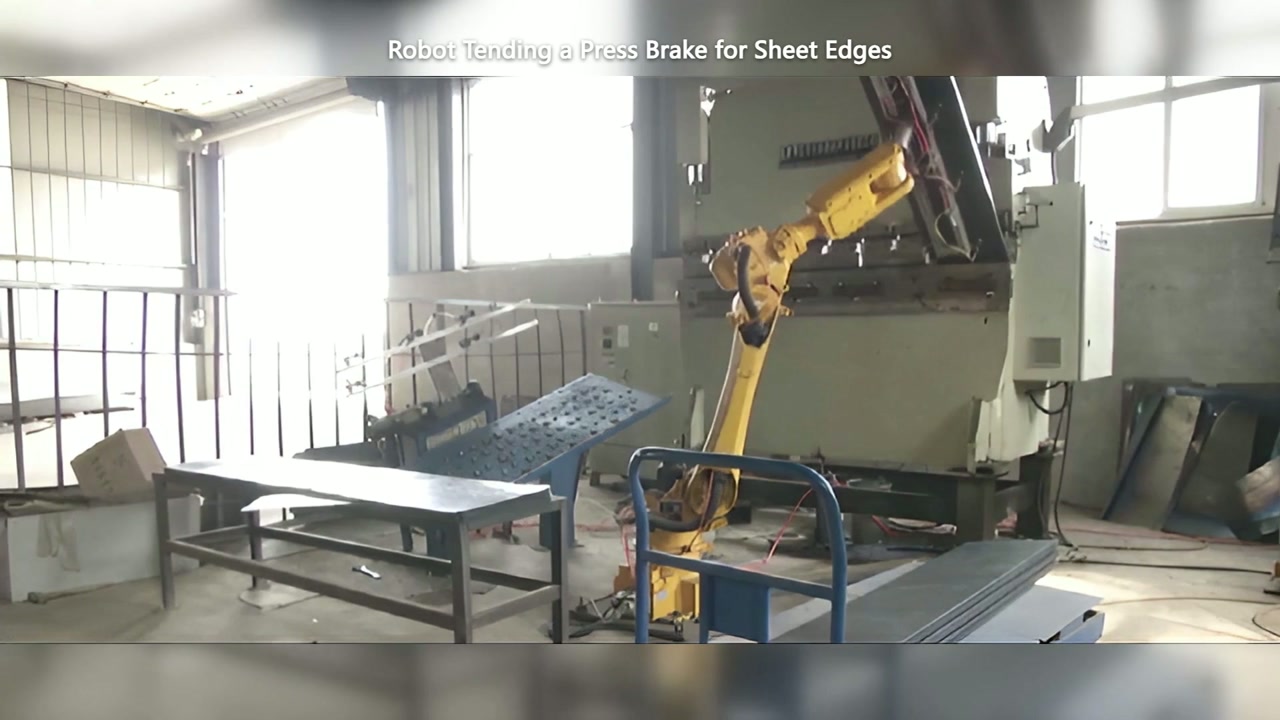
00:32 in the video. The sheet is tilted in front of the press brake opening.
Divide the order book by how the parts handle
Put each likely repeat family beside a part that routinely changes. Ask the supplier to walk both through picking, the hardest turn, any regrip, tool change and unloading. Record changeover and time to the first acceptable part separately from the later repeat cycle. Test a formed part through the tightest turn and check where the gripper would set it down to take it again. If the difficult family requires fixtures or clearance that a typical family does not, you can assess them separately rather than build both costs into every order.
When the repeat work covers most of the demand on that machine, a robot cell may free the operator from repetitive sheet moves. When the shop changes jobs frequently, compare a manual route, a robotic route for the repeat families and an arrangement that accommodates both. Share the flat and formed outlines and the usual order mix to discuss which family would make a meaningful first trial.