
By EVST အယ်ဒီတာအဖွဲ့ · ပြန်လည်သုံးသပ်သူ EVST အယ်ဒီတာအဖွဲ့ · ၂၀၂၆ ခုနှစ်၊ အောက်တိုဘာလ ၈ ရက်နေ့တွင် နောက်ဆုံးအပ်ဒိတ်လုပ်ခဲ့သည် · အယ်ဒီတာ့အာဘော် · အမှားပြင်ဆင်ခြင်းမူဝါဒ · စည်းမျဉ်းစည်းကမ်းများ
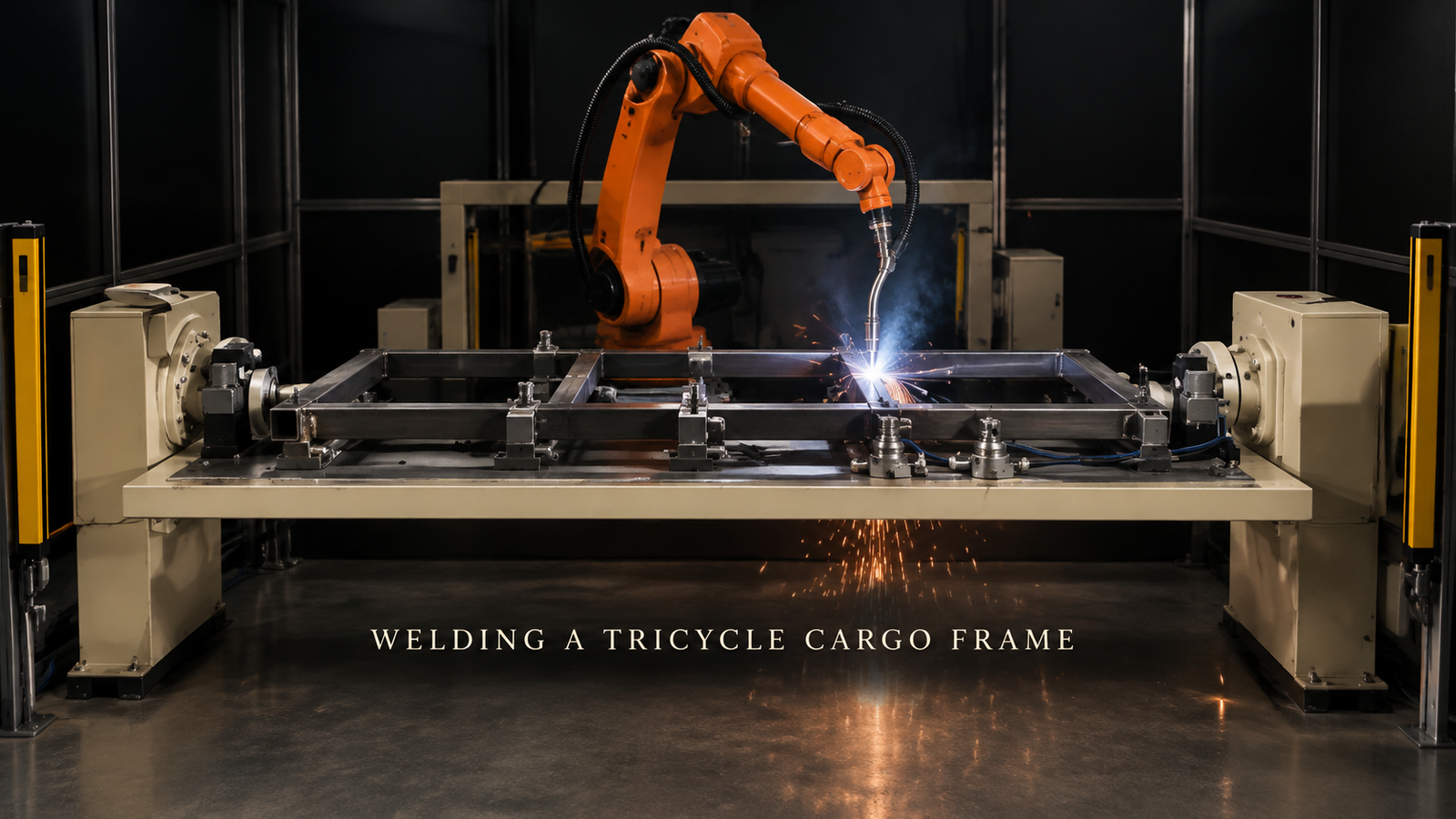
A rectangular steel tube frame, such as a tricycle cargo-box frame, can be welded by one robot in one cell when three questions are answered before anyone programs a path: how every tube is located and clamped, in what order the joints are welded, and what happens to a weld that sits on the far side of the frame. Robot reach and torch choice matter, but they follow from those answers. The cell described here has a single welding robot working along a flat frame that lies on a long fixture, joint after joint.
Planning a tube-frame welding cell? Send us the frame drawing with its joint list, the tube sizes and your daily output၊ ထို့နောက် ကျွန်ုပ်တို့သည် ဆဲလ်သဘောတရားနှင့် ዑደንበኞችခန့်မှန်းချက်ဖြင့် ပြန်လည်ဖြေကြားပါမည်။
Read the drawing as a weldability test
A frame built from steel tube has many joints. By hand, each one has to be found, struck and finished in turn, which is slow, and the heat of one weld tends to pull the whole frame out of square before the next is done. A robot cell has to remove both problems, and the drawing already says how hard that will be:
| Frame feature | What it means for the cell |
|---|---|
| Joints all reachable from one side | A flat fixture and a simple layout may be enough |
| Joints on the far side | Decide between redesign, second clamping or a positioner |
| Tube cut length varies | Tighter stops, or seam sensing |
| Several frame variants | Adjustable or swappable clamp blocks |
| Very few joints | A manual jig may remain cheaper |
The sections below follow the rows that decide most projects: locating, access, and sequence.
Every tube needs one fixed place
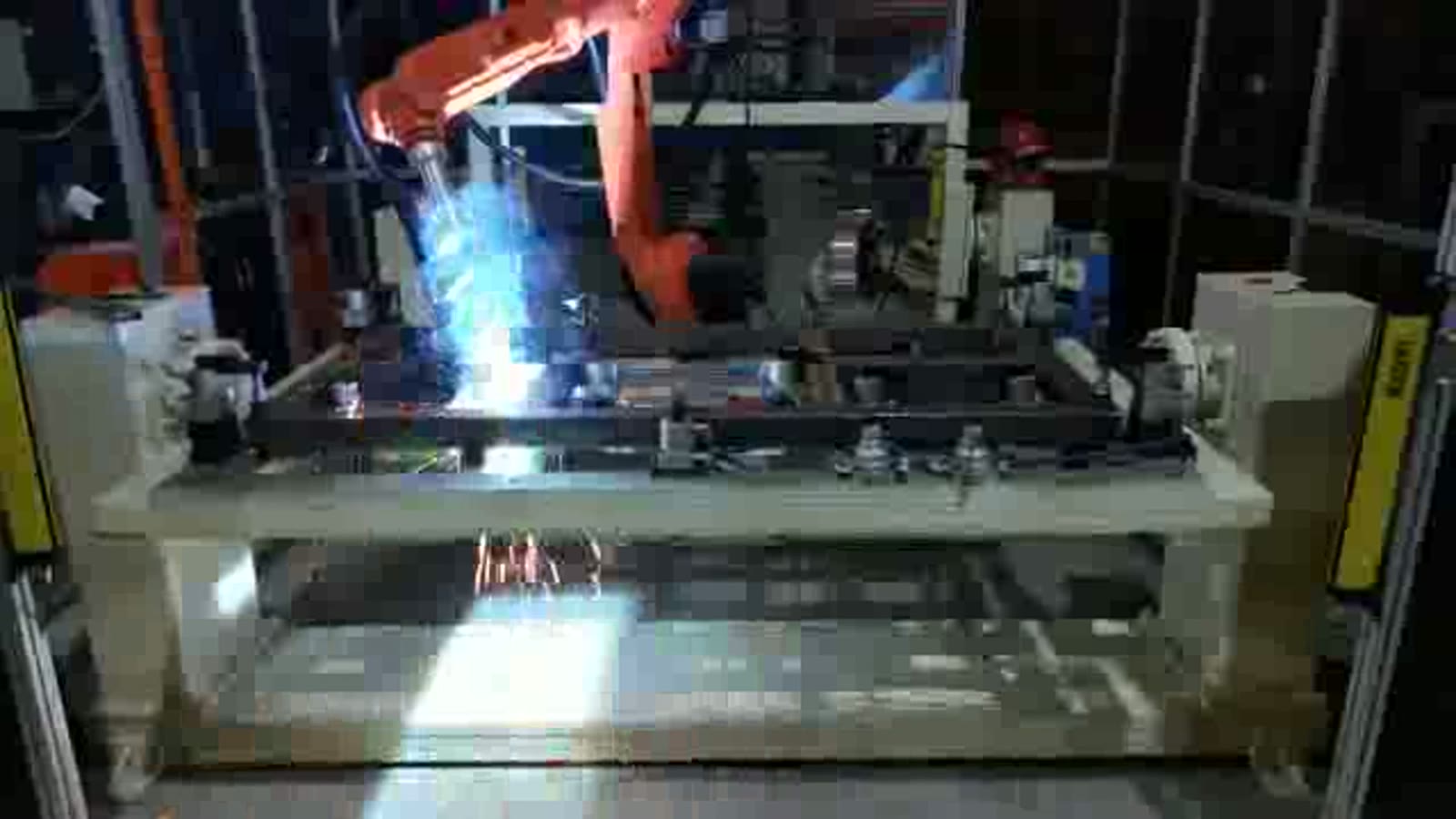
In the cell described here, a rectangular frame with several cross tubes lies flat on a long fixture. The fixture is carried between two end stands, one at each end, a row of clamp blocks presses down on the tubes, and an orange six-axis welding robot with a wire-feed torch stands behind the frame.
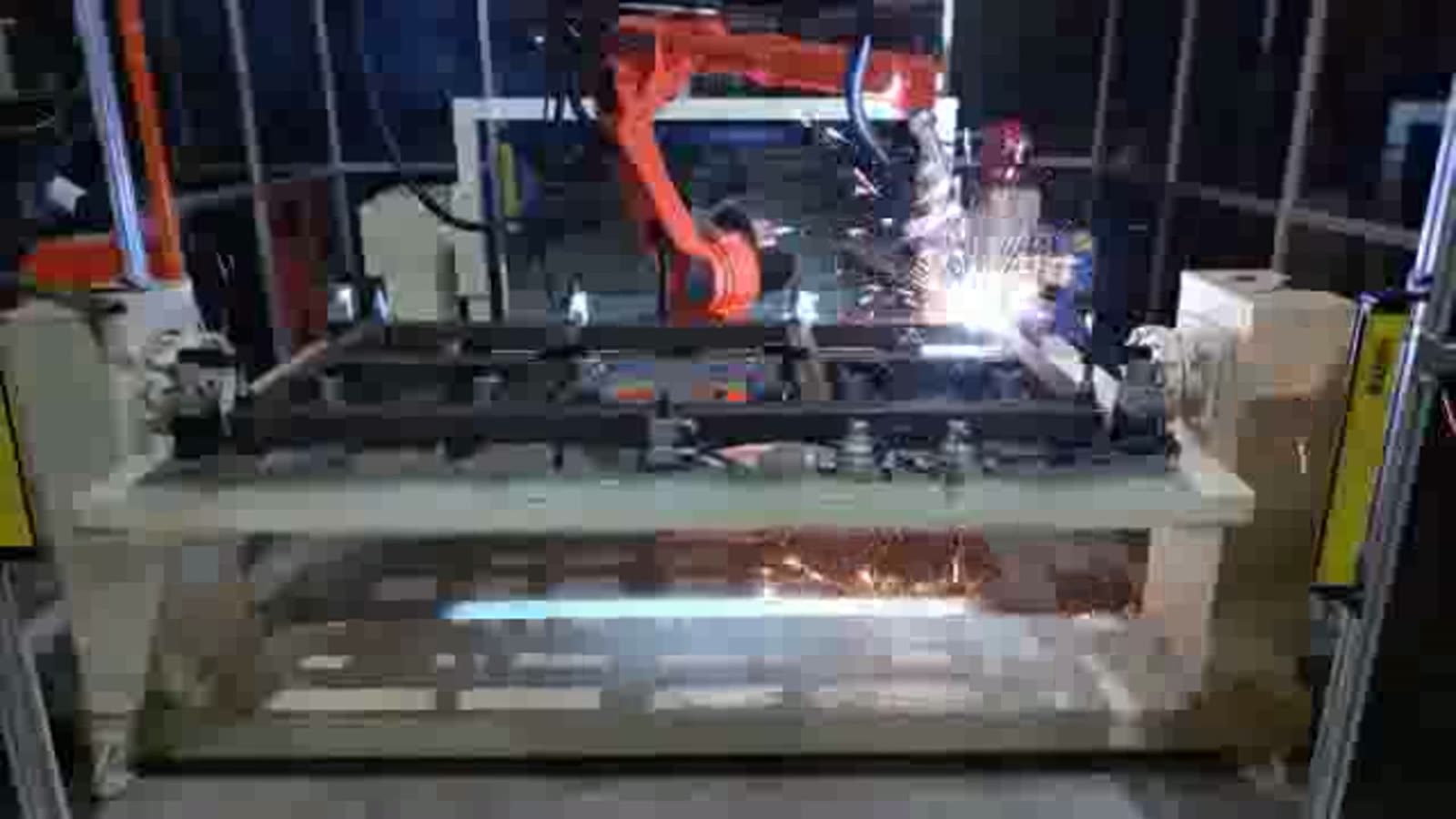
A robot torch repeats a taught path. If a tube sits slightly differently from one frame to the next, the torch arrives at a joint that is not quite where the program expects it. Tubes are cut and bent with some tolerance, so a fixture has two jobs: put every tube in the same place, and keep it there while the heat works on it. In general, three details decide whether it does:
- Every tube is referenced. A side tube that is only pressed down, with nothing stopping it from sliding along its length, will still wander. Each tube needs a stop as well as a clamp.
- The torch keeps a path. A clamp that holds a joint perfectly but sits where the torch has to go is a design error. Clamps belong beside the joint, not on its approach line.
- Fit-up is checked, not assumed. If the gap at a joint varies from frame to frame, a fixed path will not fill it evenly. Seam sensing or touch-finding is a general option for that case.
Access: one side only, or a plan for the other
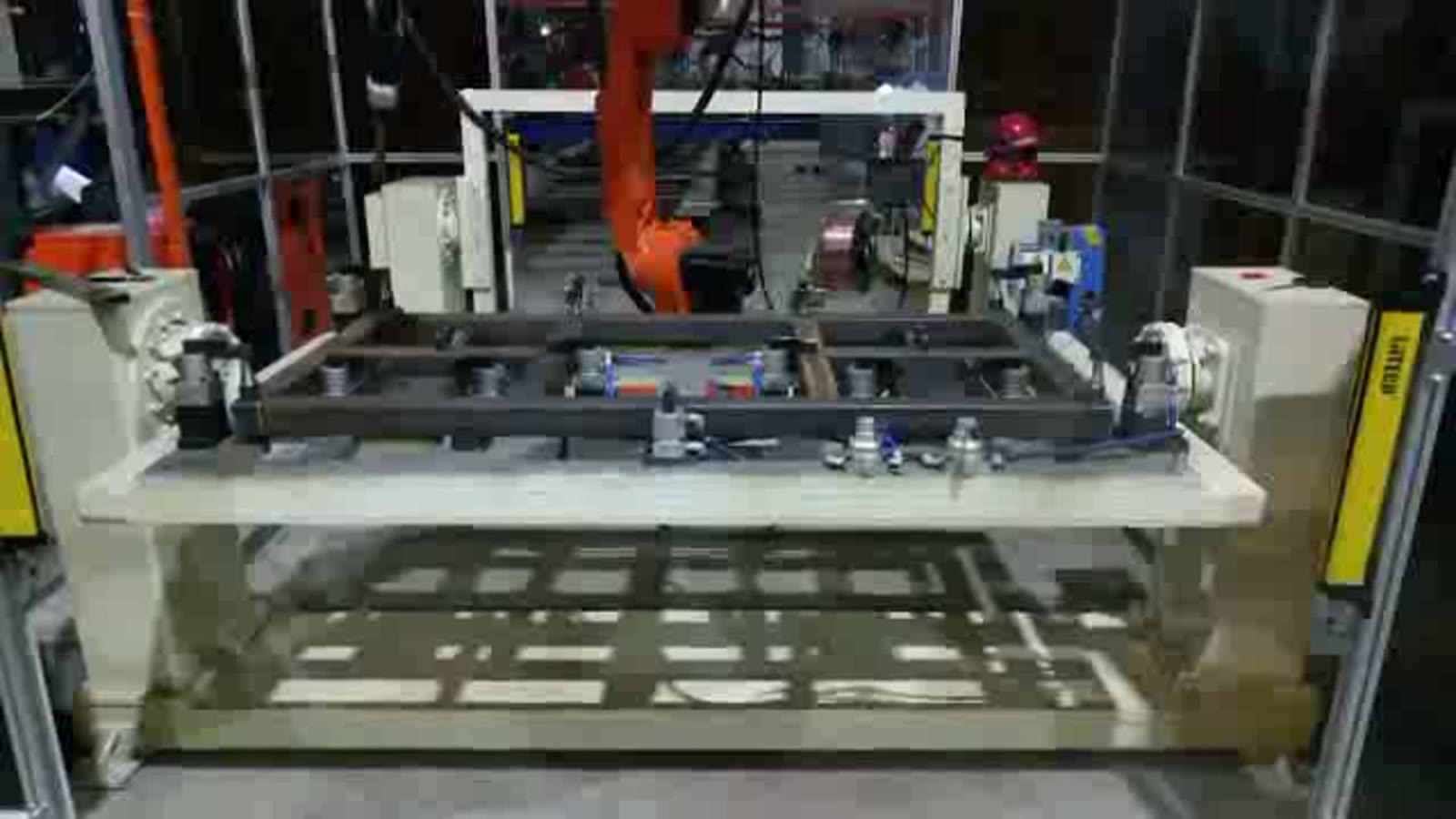
The frame in this cell stays flat from the first joint to the last, so every joint is reached from one side. That keeps a layout simple. Many real frames are not that kind. If some welds fall on the underside, there are three general options:
- redesign the joint or the frame so all welds can be reached from above;
- clamp the frame a second time, which adds handling and a second location;
- carry the fixture on a positioner between two end stands, so that a controlled turn brings the far side up to the torch.
Each has a price. A positioner means the clamps must hold the frame when it is inverted, the torch and cables must clear the frame as it turns, and the turning sweep takes floor space. Whether it is worth it depends on how many joints sit on the far side. That count is the first thing to find in a drawing.
Sequence: the order seen, and the general rule behind any order
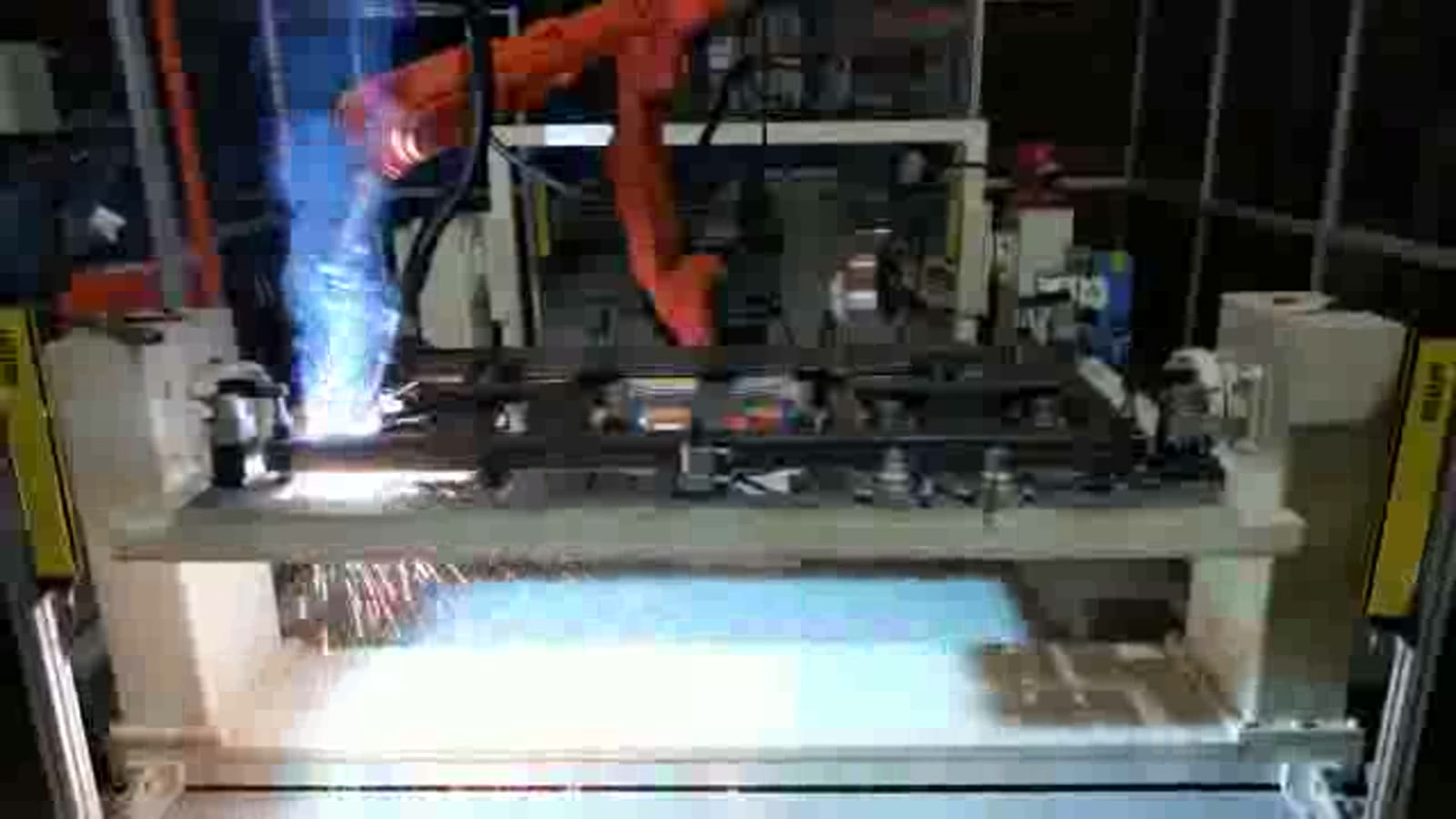
Here is the order in which the robot works. After each joint the torch lifts and moves to the next, with sparks falling below.
- At first it alternates between joints on the left and right sides of the frame, one on this side, then one on the other.
- It then works joint by joint towards the middle, welding the joint at the far right end once on the way.
- Last come the joints in the middle of the frame.
Separately, as a general principle: every weld shrinks as it cools and pulls its neighbours toward it. Weld several joints on one side of a frame first and the frame can bend toward that side, however firmly it was clamped, and it may spring when released. Weld order therefore affects distortion, and the right order for a given frame depends on its geometry and has to be proved on trial frames, not assumed from a drawing. A robot has one advantage here: once an order is chosen, it is repeated identically on every frame, so the distortion becomes consistent and easier to correct in the fixture.
Light curtains and the way in and out
Yellow light curtains stand on posts at both sides of the weld room. In general, a light curtain is wired so that the cell stops when someone crosses it, and it sets a constraint on layout, because frames still have to get in and out. Decide where the operator loads the fixture and where finished frames leave, and check that this route does not run through the arc and spark area. Which stops the curtain triggers, and how the cell restarts, belong in the design from the start.
Short answers for frame buyers
Can one cell weld more than one frame? Yes, if the fixture can be changed or adjusted and each variant’s joint list is known. Send all variants, not just the main one.
Do we need a positioner? Only if welds fall where the torch cannot reach with the frame flat. Count the joints on the far side first.
Will the robot find the joint itself? A fixed path relies on the fixture; if fit-up varies, sensing can be added. This depends on your tubes, not on the robot.
Your drawing is the input
Send the frame drawing with the joint list marked, the tube sizes and wall thickness, how many frames you need per day, and any joints you already know are awkward to reach. With those we can propose a cell and estimate the cycle time.
Ready to talk through your frame? ဒီနေရာမှာကျွန်တော်တို့ကိုဆက်သွယ်ပါ သို့မဟုတ် sales@evsrobot.com သို့ စာရေးပါ။
This article describes how one robot works along a flat tube frame and general design principles for such cells; it does not state weld parameters, tube sizes or cycle time.