
By EVST အယ်ဒီတာအဖွဲ့ · ပြန်လည်သုံးသပ်သူ EVST အယ်ဒီတာအဖွဲ့ · ၂၀၂၆ ခုနှစ်၊ စက်တင်ဘာလ ၂၄ ရက်နေ့တွင် နောက်ဆုံးအပ်ဒိတ်လုပ်ခဲ့သည် · အယ်ဒီတာ့အာဘော် · အမှားပြင်ဆင်ခြင်းမူဝါဒ · စည်းမျဉ်းစည်းကမ်းများ
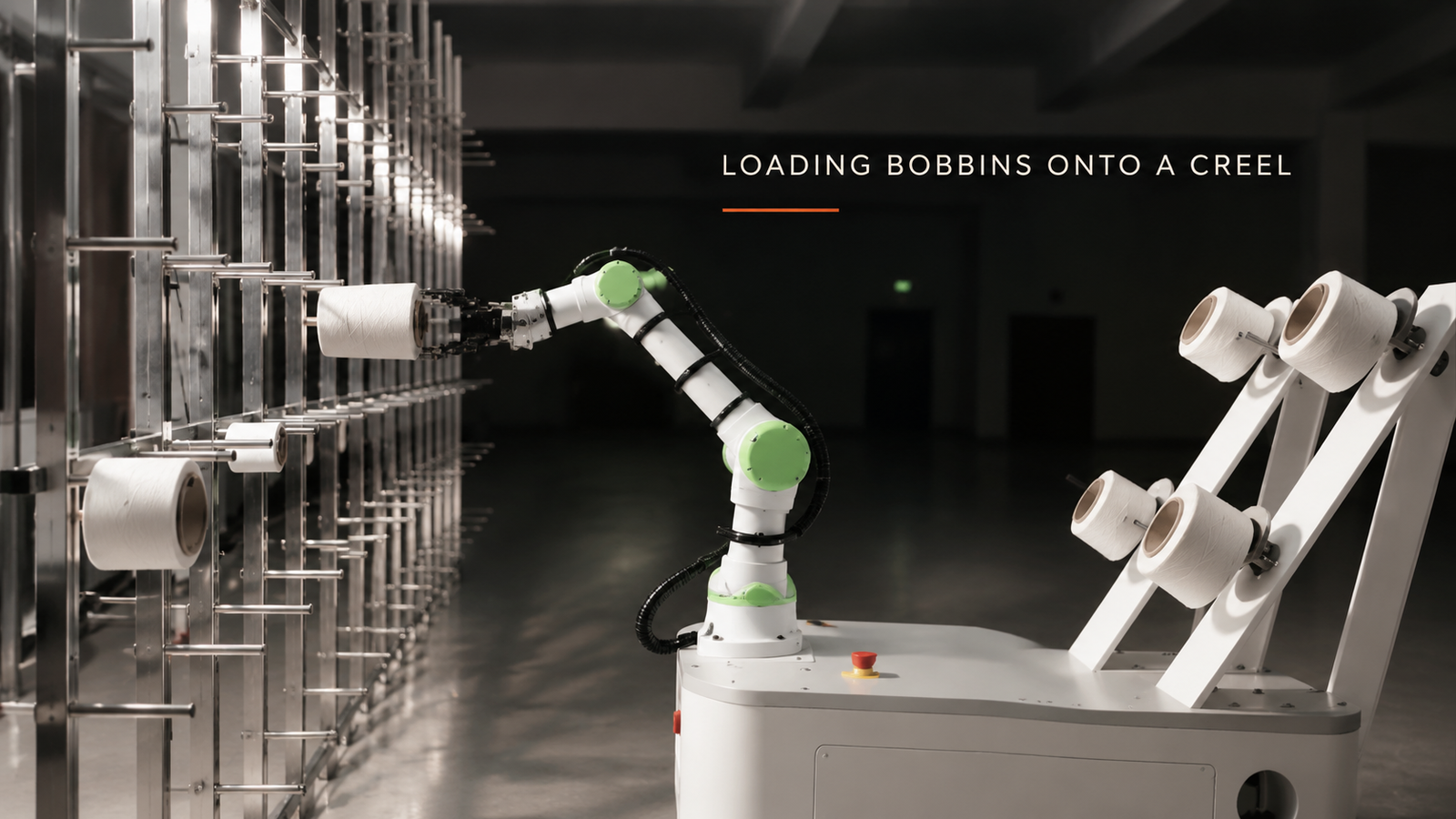
A creel-loading cobot has to get three things right on every bobbin: it must hold the bobbin somewhere that never touches the yarn, it must bring the bobbin’s bore onto the peg in line with the peg, and it must be able to do both at the highest and the lowest peg on the creel. A fourth question, whether the cobot stays in one place or rides on a mobile base, follows from the length of the creel. In the cell described here, a cobot on a mobile base takes white yarn bobbins off an angled rack and pushes them onto the pegs of a multi-level creel, one at a time.
Planning to automate bobbin loading on your creels? သင့်ရဲ့ အစိတ်အပိုင်းပုံဆွဲခြင်းနှင့် နေ့စဉ်ထုတ်လုပ်မှုကို ကျွန်ုပ်တို့ထံ ပေးပို့ပါ။၊ ထို့နောက် ကျွန်ုပ်တို့သည် ဆဲလ်သဘောတရားနှင့် ዑደንበኞችခန့်မှန်းချက်ဖြင့် ပြန်လည်ဖြေကြားပါမည်။
Why creel loading is a placement problem, not a lifting problem
In textile plants, yarn bobbins go onto creels one at a time. A creel is long and several levels high, so loading it by hand means walking, bending and reaching up, over and over. Repetitive work with awkward reach is what makes it a candidate for a robot.
A bobbin is light, so payload is rarely the deciding factor. Placement is: the yarn must arrive untouched, the bobbin must slide on without catching, and every peg must be within reach. Each depends on the others, so they are best analysed together.
How the cycle runs in this cell
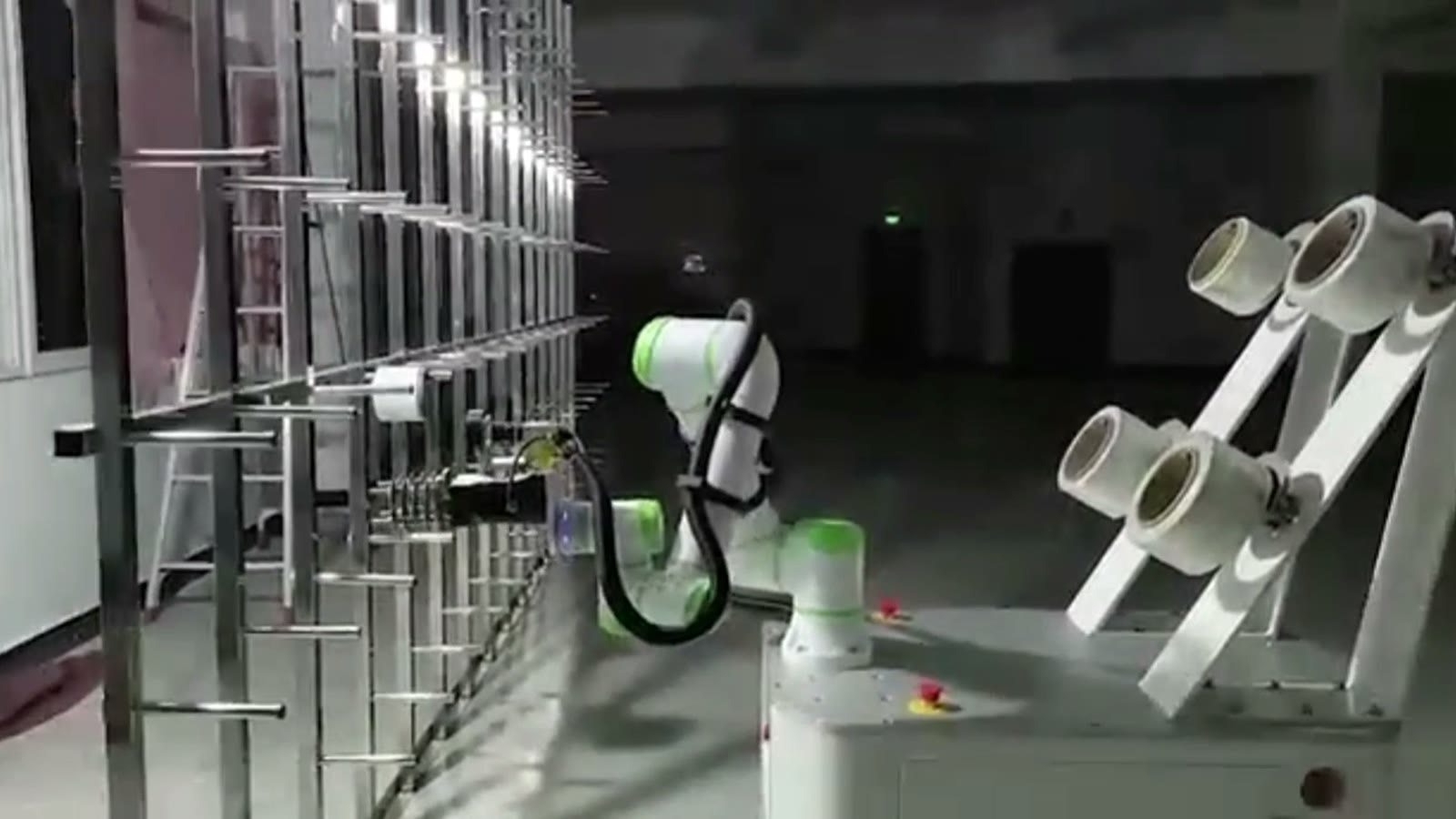
White bobbins hang on the pegs of an angled rack to the right of the cobot; to its left stands the creel, with rows of pegs on several levels. The cycle is short and repeats:
- The cobot reaches into the angled rack and lines its gripper up with a bobbin.
- It lifts the bobbin off the rack peg.
- The arm turns towards the creel and brings the bobbin level.
- It lines the bobbin up with a creel peg and pushes it on.
- The gripper lets go and pulls back.
- The cobot returns to the rack for the next bobbin, and pegs at different heights on the creel fill up one after another.
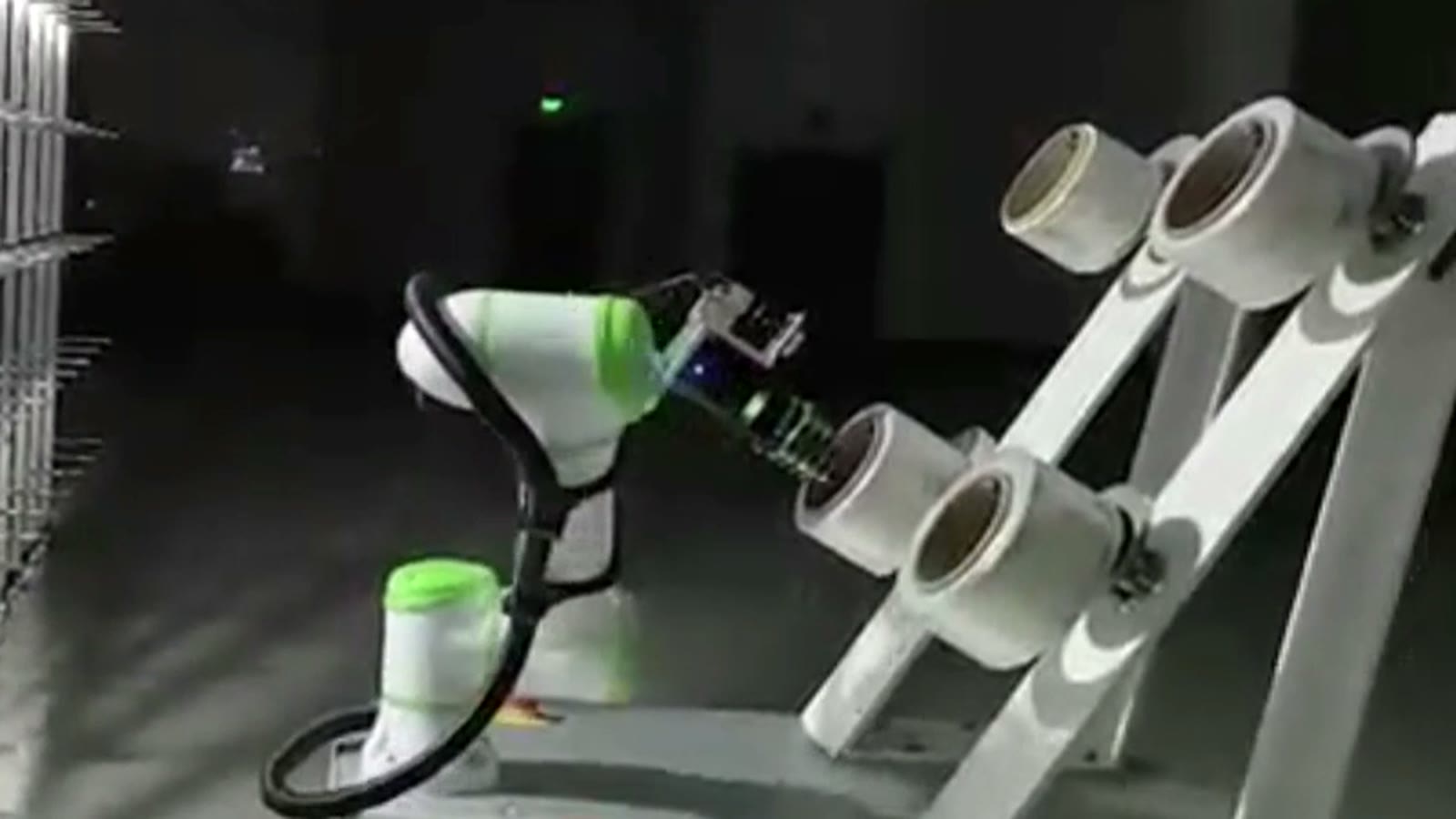
Two orientations meet in this cycle. The bobbin comes off an angled rack, and before it reaches the creel the arm brings it level. The turn between rack and creel is where that change of attitude happens, so the angle of the rack pegs and of the creel pegs both need to be known when the cell is designed.
The three things the cell has to get right
1. Grip: holding the bobbin without touching the yarn
The yarn wound on the bobbin is the product. A gripper that closes on the package can press, mark or disturb the outer layers, and a bobbin damaged at loading causes trouble later, when the yarn runs off it. As a design principle, the gripper should hold the bobbin only by its tube: at the exposed end, or from inside the bore.
That choice links directly to the next constraint. The grip must leave the bore free to slide onto a peg, and the fingers must clear the peg and its neighbours. A grip that is safe for the yarn but blocks the bore does not work, so grip and peg approach are designed together.
Tube dimensions can differ from one yarn type to the next. If your plant runs more than one tube size, the gripper range, or a quick finger change, is part of the specification.
2. Peg alignment: bringing the bore onto the peg in line
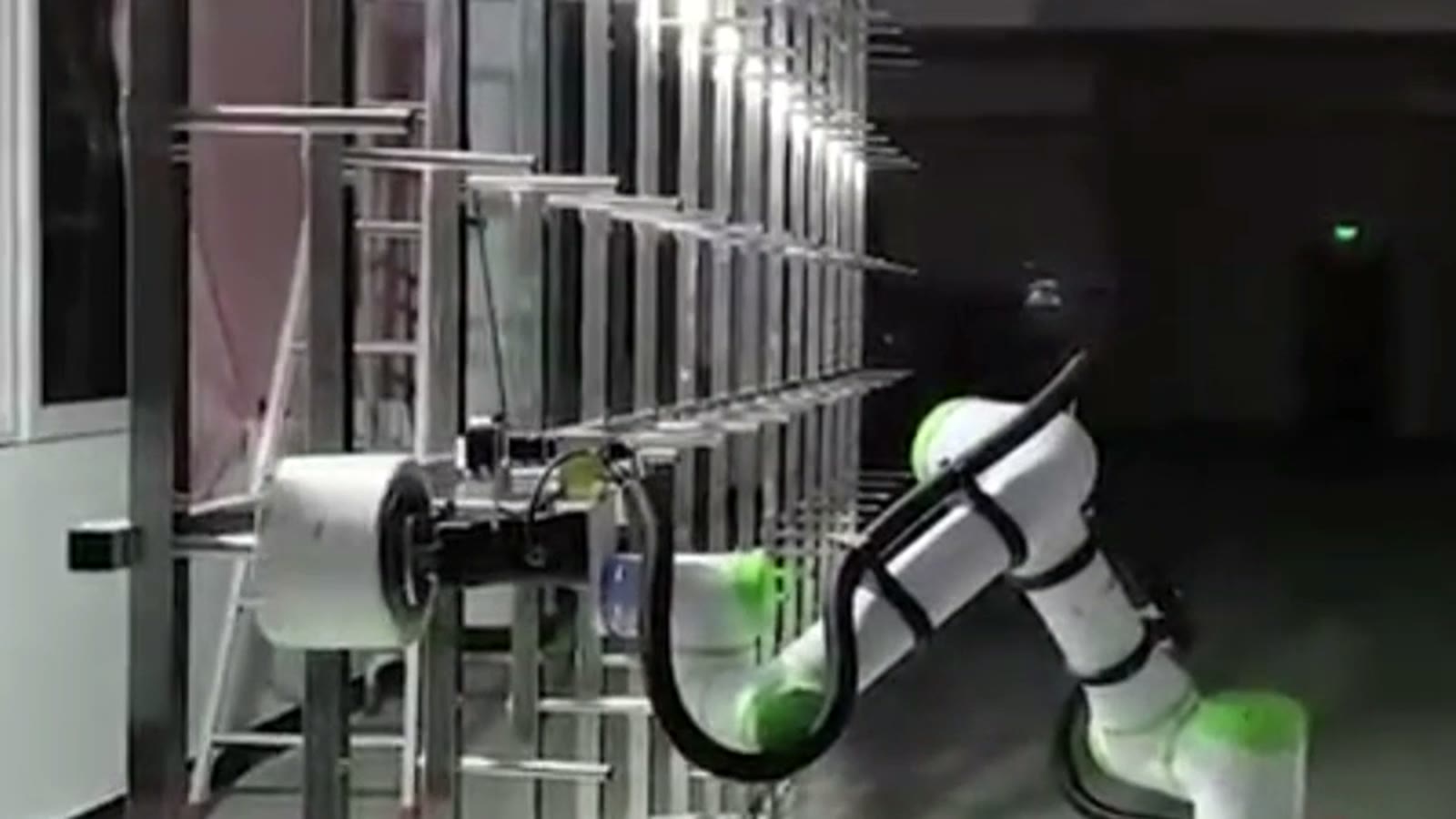
If the bore is tilted relative to the peg, or offset from it, the bobbin catches on the tip instead of sliding on. Two design principles follow. First, the approach should run along the peg’s own axis for the last part of the move, not arrive on a curve. Second, the cell has to know where each peg really is.
A creel is a long frame, and its pegs do not all sit exactly where a drawing puts them. For a robot that works from taught positions, peg-to-peg variation becomes placement error. The usual answers are to teach or measure each peg position, to check pegs and frame straightness before commissioning, or to add a sensor that finds the peg before the push. Which of these is needed depends on how much play the bore has over the peg.
3. Reach: covering the highest and lowest pegs
In this cell, the cobot fills pegs at different heights on the creel. The top and bottom rows are the hardest positions: at the top the arm is near full extension, and at the bottom it has to reach low without the gripper, the bobbin or the arm meeting the frame or bobbins already loaded below. Both extremes also have to allow the in-line push described above.
The check is easy to skip: from the creel height, peg depth and bobbin length, confirm the arm reaches every peg with the bobbin level and room left for the straight push. If not, the options are a larger arm or a different mounting height.
| ကန့်သတ် | ၎င်းဆုံးဖြတ်သောအရာ | ဘာကို အရင်စစ်ဆေးရမလဲ |
|---|---|---|
| ဆုပ်ကိုင် | Gripper type and where it holds the bobbin | Tube dimensions at the ends and inside the bore |
| Peg alignment | Approach path and whether a sensor is needed | Peg position spread and bore-to-peg play |
| လက်လှမ်းမမီ | Arm size and mounting height | Top and bottom peg heights, bobbin length |
Where a mobile base fits
A fixed cobot covers only the part of the creel within its reach. Mounting the cobot on a mobile base is one way to serve a longer creel: the base moves to a section, the arm loads the pegs there, and the base moves on. The alternatives are several fixed cobots or a cobot on a linear track.
A mobile base adds one requirement that a fixed cobot does not have: after every move, the robot needs to know where the creel is again, because its taught peg positions are relative to the creel, not the floor. A docking point, reference markers or a camera check at each stop are the common answers; the tighter the bore fits the peg, the more this matters.
Where this approach fits and where to look closer
It fits well when bobbins arrive on a rack in a known arrangement, tube sizes are few and stable, and the creel is in good condition. It needs a closer look when the creel is old or bent, tube sizes change often, bobbins arrive loose in bins, or a mobile base would have to pass close to people or machines.
အမြဲမေးလေ့ရှိသောမေးခွန်းများ
Does the cobot need a camera to find the pegs?
Not always. A straight creel with consistent pegs can run from taught positions. A sensor earns its place when pegs vary more than the bore tolerates, or when a mobile base must find the creel again at each stop.
Can one gripper handle several bobbin sizes?
Often, if the tube sizes are close. For larger differences, a gripper with a wider range or quick-change fingers is the usual answer.
Can a creel-loading cobot also take empty tubes off the creel?
In principle, yes: it is the same cycle in reverse, but the gripper and approach must be checked for the empty tube as well.
အကဲဖြတ်ချက်အတွက် ဘာတွေပို့ရမလဲ
- A drawing of the creel: length, number of levels, peg spacing, peg angle
- Bobbin and tube dimensions, including the bore, for each size you run
- How full bobbins arrive at the creel (rack, cart, bin) and how many
- Daily output and how many creel positions are loaded per shift
သင့်ရဲ့ အစိတ်အပိုင်းပုံဆွဲခြင်းနှင့် နေ့စဉ်ရလဒ်ကို ပေးပို့ပါ။ သို့မဟုတ်အီးမေးလ် sales@evsrobot.com၊ ထို့နောက် ကျွန်ုပ်တို့သည် ဆဲလ်သဘောတရားနှင့် ዑደንበኞችခန့်မှန်းချက်ဖြင့် ပြန်လည်ဖြေကြားပါမည်။
This article describes the loading cycle seen in the published video of this cell; base travel, cycle time and yarn type are not covered and must be confirmed for your plant.